 Whatsapp


Mouthwash is much more than just a refreshing accessory: it is an effective tool for reducing bacterial plaque, keeping breath fresh and preventing oral diseases such as gingivitis and tooth decay. Its function varies depending on the type of product, and choosing the right one can make the difference between superficial hygiene and real protection.
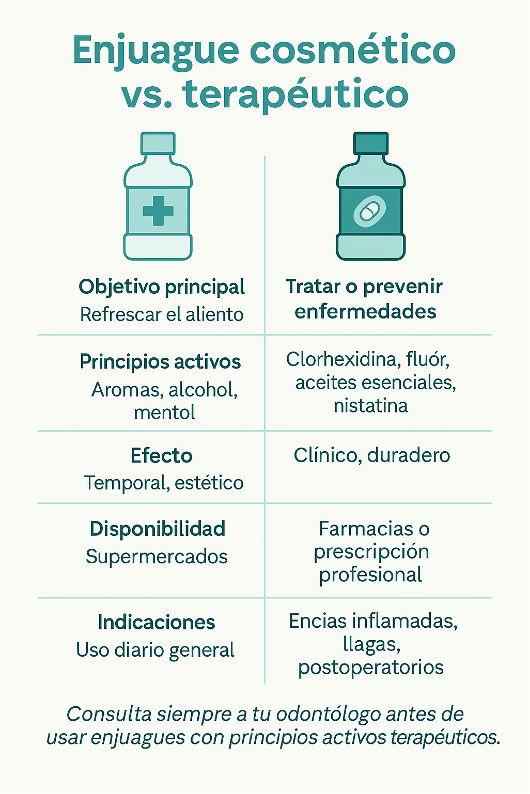
It is commonly believed that all mouthwashes are the same, but this is not the case. There are two main groups with different purposes:
- Cosmetic mouthwashes: these temporarily improve breath and provide a feeling of cleanliness, but they do not eliminate bacteria or treat diseases. They are readily available in supermarkets and usually contain alcohol and menthol flavours.
- Therapeutic rinses: formulated with active ingredients such as chlorhexidine, fluoride, essential oils or nystatin, they act directly on the causes of inflammation or infection. They are recommended by dentists to treat inflamed gums, mouth ulcers, infections or after surgical procedures.
The choice of the right mouthwash depends on the objective:
- If you want to freshen your breath, an alcohol-free cosmetic product will suffice.
- If the purpose is to treat sensitive gums, sores, or infections, a therapeutic mouthwash recommended by a professional should be used.
Daily use, combined with thorough brushing and flossing, helps maintain balanced oral flora, reducing plaque build-up and strengthening the health of teeth and gums.
Composition and function of mouthwash
Behind every mouthwash is a carefully designed chemical formulation to act on bacteria, fungi, or acids that damage enamel. Its purpose is not only to freshen, but also to maintain the balance of the oral microbiome and protect teeth, gums, and mucous membranes from irritants.
Although formulas vary depending on the brand or purpose, most mouthwashes contain a common base that may include:
Main components
- Antiseptics:
Substances such as chlorhexidine, cetylpyridinium or essential oils (menthol, thymol, eucalyptol) that eliminate bacteria and prevent plaque formation. - Fluoride:
Strengthens tooth enamel and prevents tooth decay. It is the main ingredient in daily mouthwashes recommended for children and adults. - Soothing or anti-inflammatory agents:
Natural extracts (such as chamomile or aloe vera) or compounds such as zinc lactate help reduce gum inflammation. - Antifungals (nystatin, clotrimazole):
Found in specific mouthwashes for the treatment of oral thrush, a common infection in immunocompromised patients or those with dentures. - Alcohol (ethanol):
Traditionally used as a preservative and flavour enhancer, but it can irritate the mucous membranes, especially in people with dry mouth or sensitivity. - Hydrogen peroxide:
Found in some whitening mouthwashes, although its use should be occasional and controlled, as it can cause irritation if used for prolonged periods. - Flavourings and colourings:
They provide a sensation of freshness and enhance the user experience, but do not influence the therapeutic action.
The key to proper use lies in understanding which active ingredient each mouth needs: a mouthwash with chlorhexidine is not the same as one with fluoride, and a natural, alcohol-free product may be ideal for maintaining daily hygiene without irritating the tissues.
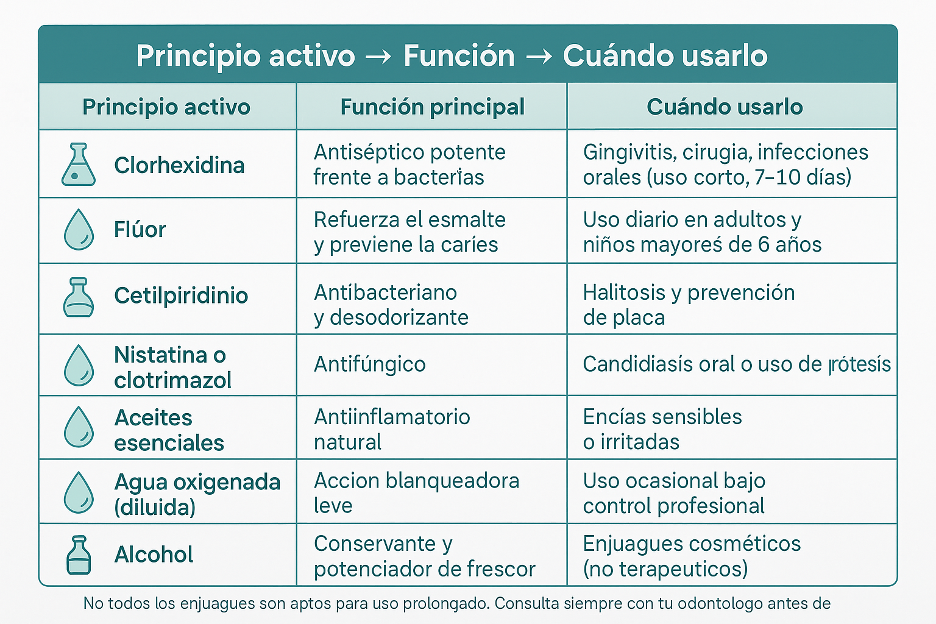
Active ingredient | Primary function | When to use it |
Chlorhexidine | Powerful antiseptic against bacteria | Gingivitis, surgery, oral infections (short-term use, 7–10 days) |
Flúor | Strengthens enamel and prevents tooth decay | Daily use in adults and children over 6 years of age |
Cetylpyridinium | Antibacterial and deodorising | Halitosis and plaque prevention |
Nystatin or clotrimazole | Antifungal | Oral thrush or use of dentures |
Essential oils | Natural anti-inflammatory | Sensitive or irritated gums |
Hydrogen peroxide (diluted) | Mild whitening action | Occasional use under professional supervision |
Alcohol | Preservative and freshness enhancer | Cosmetic (non-therapeutic) rinses |
“No todos los enjuagues son aptos para uso prolongado. Consulta siempre con tu odontólogo antes de iniciar un tratamiento terapéutico.”
Types of mouthwash according to their use
Not all mouthwashes serve the same purpose. Some are formulated for daily use, while others are designed for specific treatments, such as infections, mouth ulcers, or dental surgery. Understanding the differences allows you to choose the right product for each situation and avoid excessive use that could irritate or upset the balance of your oral flora.
The main types are presented below:
1. Chlorhexidine mouthwash
It is the most powerful and one of the most widely used in dentistry. Chlorhexidine is a broad-spectrum antiseptic effective against bacteria and fungi. It is used in:
- Gingivitis and periodontitis.
- Post-operative dental procedures or extractions.
- Treatment for mouth ulcers or sores. It should be used for short periods (7 to 10 days), as prolonged use may stain teeth or alter taste.
2. Alcohol-free mouthwash
Ideal for people with sensitive mucous membranes, dry mouth, or undergoing cancer treatment. Alcohol-free products maintain their antiseptic effectiveness without causing burning or irritation, making them suitable for children and pregnant women.
3. Fluoride mouthwash
Strengthens tooth enamel and prevents tooth decay, especially useful for teenagers and adults who are more exposed to acidic or sugary foods. It can be used daily and is usually available in different fluoride concentrations (0.05–0.2%).
4. Antifungal mouthwash (with nystatin or clotrimazole)
Indicated for treating oral thrush, a common fungal infection in people with dentures, prolonged antibiotic use, or low defences. Its use should be monitored by a dentist and, in some cases, alternated with topical treatments.
5. Natural or homemade mouthwashes
Gentle alternatives that can complement daily hygiene:
- Sea salt water: anti-inflammatory and healing.
- Coconut oil (oil pulling): helps reduce bacterial plaque.
- Chamomile infusion: soothes irritation.
They must be prepared safely, without adding vinegar, bleach or undiluted hydrogen peroxide, to avoid burns.
6. Branded or specifically formulated mouthwashes
Some commercial lines combine several active ingredients and are targeted at specific problems:
- Vitis or Lacer: gum care and plaque prevention.
- Perio·Aid or Parodontax: antimicrobial control in periodontal treatments.
- Listerine or Oral-B: antiseptic action and fresh breath.
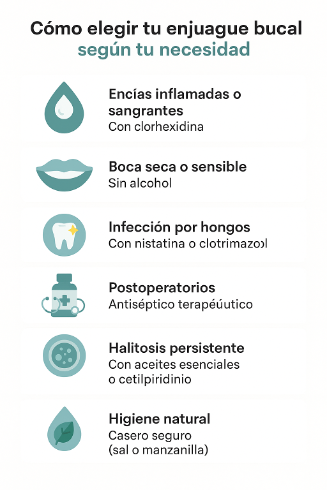
Primary need | Recommended type of rinse |
Inflamed or bleeding gums | With chlorhexidine |
Dry or sensitive mouth | Alcohol-free |
Prevention of tooth decay | With daily fluoride |
Fungal infection | With nystatin and clotrimazole |
Postoperative | Therapeutic antiseptic |
With essential oils or cetylpyridinium | |
Natural hygiene | Safe homemade remedy (salt or chamomile) |
When and how to use mouthwash correctly
Using mouthwash seems like a simple task, but most people do it incorrectly: some use it right after brushing (reducing the effect of fluoride), others apply it several times a day unnecessarily, or choose it without knowing its ingredients. Learning how to use it correctly is essential for it to be a real ally for oral health.
Ideal frequency of use
- Rinses for daily use with fluoride or without alcohol: once or twice a day, preferably at night.
- Rinses with chlorhexidine or nystatin: only for the period indicated by the dentist (usually 7 to 10 days).
- Natural rinses (salt or chamomile): these can be used daily, provided they do not irritate the mucous membranes.
Before or after brushing?
It depends on the type of rinse:
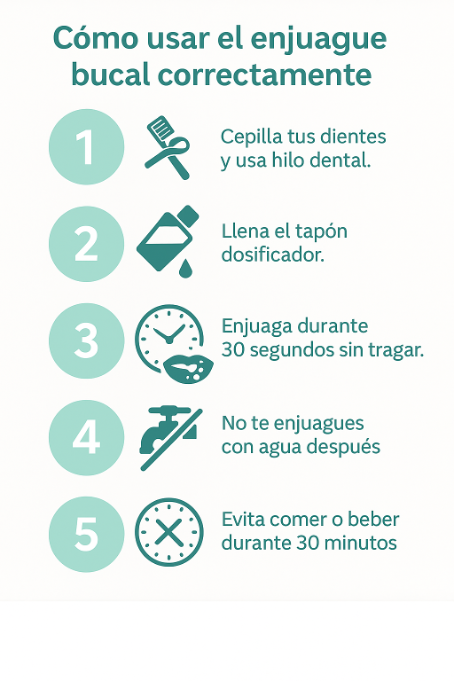
- If it contains fluoride, it is recommended to use it after brushing, without rinsing with water afterwards so that the fluoride remains active.
- If it contains chlorhexidine or nystatin, it is best to use the mouthwash a few minutes after brushing, once all traces of toothpaste have been removed, to prevent the components from neutralising each other.
Rinsing time and method
- Use the indicated amount (usually 10–15 ml).
- Keep it in your mouth for 30 seconds to 1 minute, without swallowing.
- Use gentle movements to allow the liquid to reach all areas, including the gums and interdental spaces.
- Do not eat or drink for the next 30 minutes.
Common errors
- Using alcohol-based mouthwashes continuously: this can dry out the mucous membrane and alter the bacterial balance.
- Rinsing with water immediately afterwards cancels out the effect of the fluoride or antiseptic.
- Replacing brushing with rinsing: rinsing does not mechanically remove plaque, it only reduces it.
- Mixing different products (e.g., chlorhexidine and fluoride): may reduce their effectiveness or cause irritation.
Professional advice
Mouthwash should be personalised, just like a treatment. There is no such thing as a “best mouthwash for everyone”, but rather the most suitable one for each patient according to their oral health, age and ongoing dental treatments.
When to use chlorhexidine (and when not to)
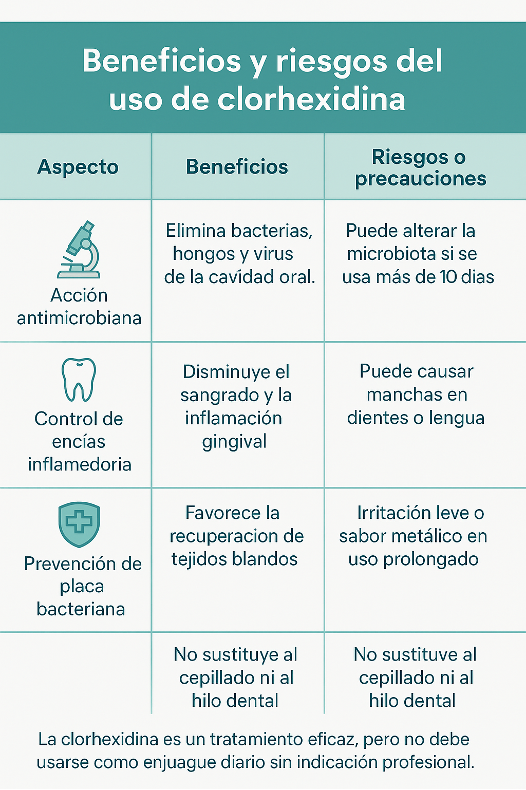
Chlorhexidine is one of the most effective active ingredients in modern dentistry. Its ability to eliminate bacteria and fungi makes it a key ally in controlling oral infections and accelerating healing after procedures. However, its use should be occasional and supervised by a professional, as prolonged use can have adverse effects.
Main indications for chlorhexidine
- Periodontal treatments: combats bacteria associated with gingivitis and periodontitis.
- Post-operative care and tooth extractions: prevents infections in surgical wounds and promotes healing.
- Extensive mouth ulcers or canker sores: reduces bacterial proliferation and pain.
- Prosthetics and orthodontics: prevents plaque build-up in hard-to-reach areas.
- Patients with reduced mobility or bedridden patients: facilitates oral hygiene when brushing is not possible.
How to use chlorhexidine mouthwash correctly
- We recommend use for 7 to 10 days, twice a day, after brushing.
- The simultaneous use of fluoride toothpaste or lauryl sulphate toothpaste should be avoided, as they can neutralise its effect.
- It should not be mixed with other mouthwashes or diluted.
- Avoid smoking, eating, or drinking for at least 30 minutes after application.
Side effects if used improperly
- Brown stains on teeth and tongue (temporary, can be removed with professional cleaning).
- Taste disturbance and metallic taste in the mouth.
- Mild flaking or dryness of the mucosa.
- With prolonged use, it may affect the natural oral microbiota.
Alternatives to chlorhexidine
If the patient experiences irritation or requires longer treatment, there are gentler options available:
- Cetylpyridinium: antiseptic for daily use, less aggressive.
- Essential oils: a good option for long-term maintenance.
- Nystatin: specific alternative if oral candidiasis is present.
- Alcohol-free rinses: ideal for sensitive mucous membranes.
Homemade and natural mouthwashes
In recent years, interest in natural remedies has led many people to seek alternatives to commercial mouthwash. Some of these homemade preparations can be useful as a supplement, but not all are safe or effective. The key is to know which ingredients really help maintain oral health and which ones can damage it.
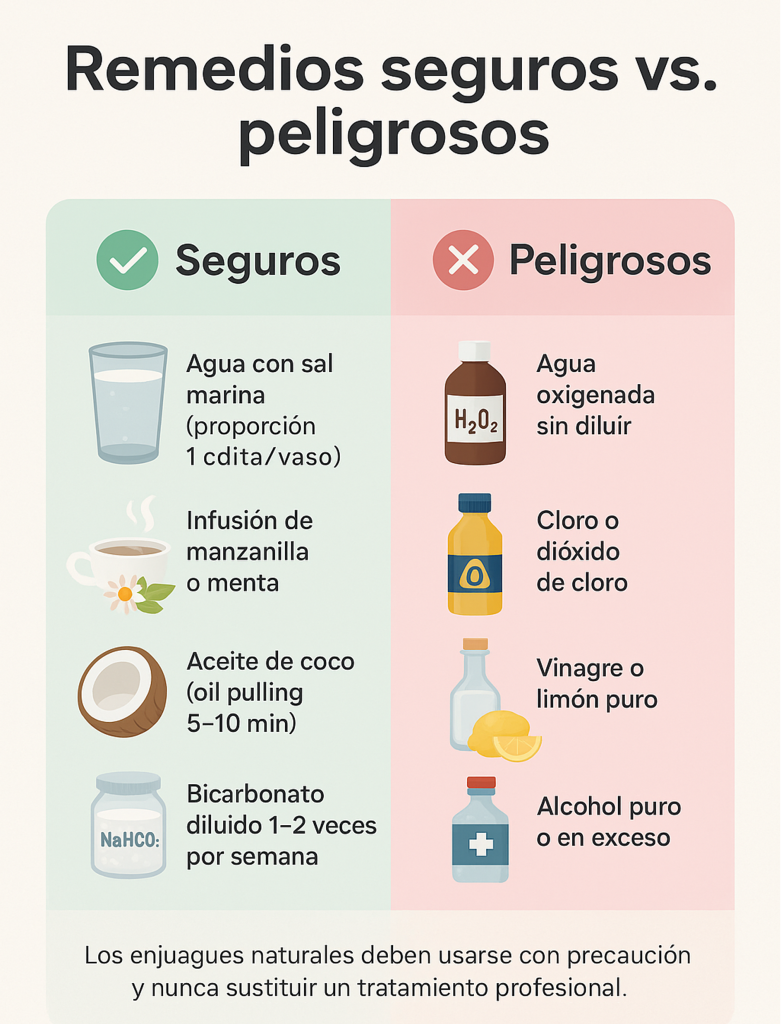
1. Sea salt water: the safest classic
Rinsing your mouth with warm water and a pinch of sea salt (one teaspoon per glass of water) is one of the oldest and most effective remedies.
- Reduces inflammation and promotes healing of wounds or sores.
- Restores the pH balance in the mouth, creating an environment that is less favourable for bacteria.
- Ideal after tooth extractions or periodontal treatments.
Caution: do not use a high concentration of salt, as it may irritate the gums or dry out the mucous membranes.
2. Baking soda: useful in moderation
Bicarbonate has an acid-neutralising effect and can help reduce halitosis or mouth burning.
- It can be used dissolved (half a teaspoon in a glass of water) once or twice a week.
- Helps balance pH and refreshes the mouth.
Caution: excessive use may erode the enamel or alter the bacterial flora, so it should not be used on a daily basis.
3. Aceite de coco (oil pulling)
This traditional Ayurvedic medicine method consists of holding a tablespoon of coconut oil in your mouth for 5 to 10 minutes before spitting it out.
- Helps reduce plaque and bacterial load.
- Improves the feeling of cleanliness and freshness.
- It has no side effects if performed with high-quality oil and without swallowing.
Caution: does not replace brushing or therapeutic mouthwash.
4. Soothing herbal teas (chamomile, mint, sage)
They act as natural anti-inflammatories and pain relievers, especially useful for irritations or sores.
- They can be used warm, once or twice a day.
- They are safe, even for children and pregnant women.
Caution: do not add alcohol, vinegar or concentrated essential oils, as these may irritate the mucous membrane.
5. Ingredients to avoid
Some folk remedies can be dangerous or counterproductive, even in small doses:
- Undiluted hydrogen peroxide: causes burns and irritation.
- Chlorine or chlorine dioxide: highly toxic to oral tissues.
- Vinegar or lemon: they erode tooth enamel.
- Pure alcohol or alcohol in high concentrations: dries out the mucosa and alters the oral microbiome.
Natural mouthwashes can be an excellent preventive supplement, but they should never replace treatment prescribed by a dentist. Safety and proportion are essential: a poorly applied prescription can cause more harm than good.
Mouthwash and special conditions
Although mouthwashes are marketed as general-purpose products, not all are suitable for everyone. There are circumstances—such as age, pregnancy, or the use of dentures—that require specific formulas, either to avoid irritation or to enhance the effectiveness of treatment.
Knowing what type of mouthwash to use in each situation is essential for maintaining safe hygiene tailored to individual needs.
1. Mouthwash for children
The use of mouthwashes in children should always be supervised by an adult and, preferably, recommended by a paediatric dentist.
- From the age of 6, mouthwashes containing low-concentration fluoride (0.05%) can be used once a day.
- It is important that you do not swallow them and learn how to rinse correctly.
- Products containing alcohol or chlorhexidine should be avoided, as they may irritate the mucous membranes or alter taste.
Recommendation: Children’s mouthwashes usually have mild flavours and natural colours to make them more acceptable.
2. Mouthwash during pregnancy
During pregnancy, gums are more sensitive due to hormonal changes, which can lead to gestational gingivitis.
- The use of alcohol-free mouthwashes with soothing ingredients such as aloe vera, chamomile or cetylpyridinium chloride is recommended.
- Avoid prolonged use of chlorhexidine, unless medically indicated.
- In case of nausea, choose mouthwashes with mild or neutral flavours.
Important: Oral health during pregnancy is directly related to the health of the baby, so proper hygiene is a priority.
3. Mouthwash for orthodontic appliance or denture wearers
Fixed or removable structures can make it difficult to clean between teeth.
- Rinsing with fluoride and a mild antiseptic (such as cetylpyridinium or essential oils) is recommended.
- Following surgery or orthodontic adjustment, chlorhexidine may be used for 7 days.
- In users of removable dentures, rinses containing nystatin or clotrimazole help prevent candidiasis.
Tip: Also clean the prosthesis or device with specific products to prevent reinfection.
4. Mouthwash after tooth extractions or surgery
The aim is to promote healing and prevent infections.
- Rinses with 0.12% or 0.2% chlorhexidine are the most effective, but should be started 24 hours after the procedure, never before.
- In cases with a risk of fungal infection, it can be alternated with nystatin.
- Avoid products containing alcohol, as they delay recovery.
5. Mouthwashes for patients with dry mouth (xerostomia)
In elderly people or those undergoing drug treatments that reduce saliva, conventional mouthwashes containing alcohol are contraindicated.
- Opt for moisturising formulas containing xylitol, hyaluronic acid or panthenol.
- They can be combined with moisturising sprays or gels to keep the mouth fresh.
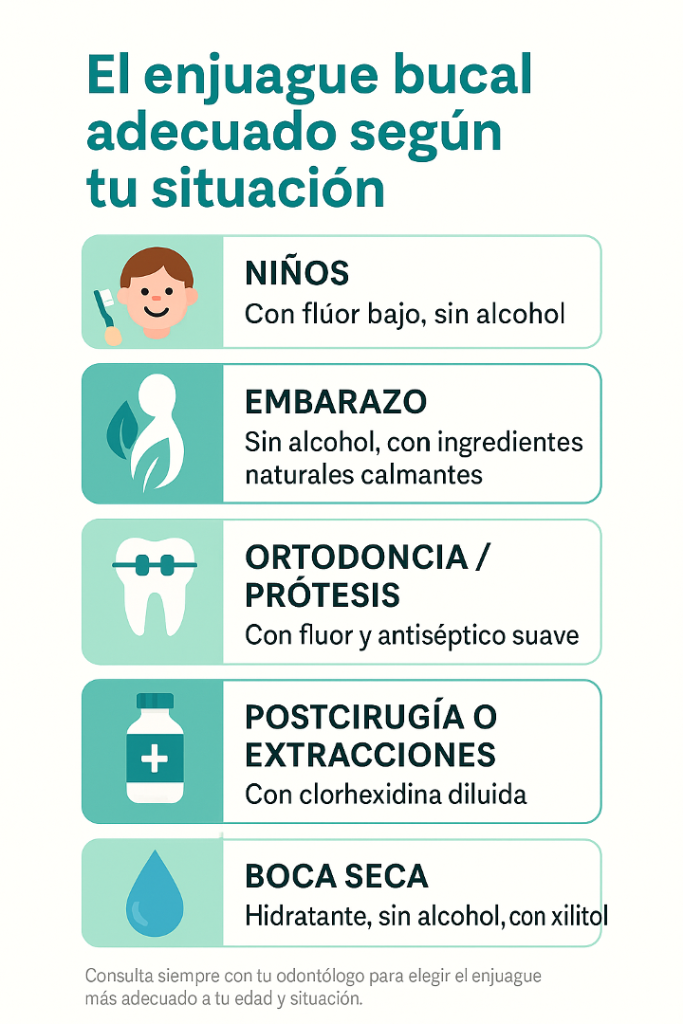
Situation | Recommended type of rinse | Suggested icon |
Children | Low fluoride, alcohol-free | 🧒 Children’s toothbrush |
Pregnancy | Alcohol-free, with soothing natural ingredients | 🤰 Green leaf |
Orthodontics / prosthetics | With fluoride and mild antiseptic | 🦷 Dental braces |
Post-surgery or extractions | With diluted chlorhexidine | 🩺 Medical bottle |
Dry mouth (xerostomia) | Moisturising, alcohol-free, with xylitol | 💧 Drop of water |
8 Common myths and misconceptions about mouthwash
Mouthwash is an effective addition to your oral hygiene routine, but its popularity has led to a long list of misconceptions and bad habits. Many users believe they are using it correctly when, in reality, they are negating its benefits or even damaging their oral health. Below, we debunk the most common myths based on scientific and dental evidence.
1. “Mouthwash replaces brushing” → ❌ False
Mouthwash does not remove adhered dental plaque, but rather reduces the amount of bacteria in suspension. It complements brushing and flossing, but cannot replace them.
Fact: brushing cleans mechanically; rinsing acts chemically. Both are necessary.
2. “The stronger it stings, the better it cleans” → ❌ Common misconception
A burning sensation is not synonymous with effectiveness. In fact, it is usually caused by the presence of alcohol or menthol, which can irritate the mucous membranes and dry out the mouth. Recommendation: choose alcohol-free products, especially if you have sensitive gums or suffer from dry mouth.
3. “You should use it after every brush” → ⚠️ Not always
It depends on the type of rinse:
- Therapeutic products (such as chlorhexidine or nystatin) should only be used under professional guidance and for short periods.
- Those for daily use (fluoride or alcohol-free) can be used once or twice a day. Excessive use can alter the bacterial balance and cause irritation.
4. “Hydrogen peroxide whitens teeth” → ❌ Dangerous
Hydrogen peroxide has a whitening effect only in controlled concentrations and under dental supervision. Using it as a home rinse can burn the mucosa and damage the enamel. Safe alternative: seek professional whitening treatment or use toothpastes with approved whitening agents.
5. “All mouthwashes are the same” → ❌ False
There are mouthwashes for very different purposes: some are cosmetic, others therapeutic, and others antibacterial. Each has specific ingredients, pH levels and concentrations.
Tip: always check the label or consult your dentist before choosing the most suitable product for you.
6. “Alcohol-based mouthwashes eliminate more bacteria” → ⚠️ Persistent myth
Alcohol has an antiseptic effect, but it does not increase the antibacterial efficacy of the mouthwash. Instead, it can dry out tissues and alter the oral microbiota, promoting bad breath.
Better option: products containing chlorhexidine, cetylpyridinium or essential oils.
7. “It’s okay if I use it indefinitely” → ❌ Serious error
Some mouthwashes, especially those containing chlorhexidine, should only be used for limited periods. Prolonged use can cause tooth staining, taste disturbance and imbalance in the oral microbiome.
Solution: reserve therapeutic treatments for specific occasions and opt for mild maintenance formulas for everyday use.
8. “Natural mouthwashes have no contraindications” → ⚠️ False
Although many natural ingredients are safe, others—such as vinegar, lemon, or diluted bleach—can be corrosive. Natural does not always mean harmless. The key is to use safe homemade formulas, such as salt water or chamomile tea.
Frequently asked questions about using mouthwash
Below are the most common questions patients ask during dental appointments about mouthwashes: from their effectiveness and compatibility with other treatments to their correct use in specific situations such as pregnancy or oral sensitivity.
1. Is it necessary to use mouthwash every day?
Not always. If it is a cosmetic or fluoride mouthwash, it can be used daily.
However, therapeutic rinses (such as those containing chlorhexidine or nystatin) should only be used for short periods or as directed by a dentist.
2. Does mouthwash replace brushing?
Never. Mouthwash does not remove adhered dental plaque, but rather reduces bacteria in suspension. It should be a supplement to, not a substitute for, brushing and flossing.
3. Which mouthwash is best for inflamed gums?
The most effective ones contain chlorhexidine or essential oils with anti-inflammatory properties. It is recommended to use it for 7 to 10 days and then continue with an alcohol-free maintenance product.
4. Can mouthwash stain teeth?
Yes, rinses containing chlorhexidine can cause temporary brown stains, especially if used for more than 10 days in a row. These stains are easily removed with professional cleaning.
5. Can mouthwash be used during pregnancy?
Yes, but products containing alcohol or chlorhexidine in high concentrations should be avoided.
Natural mouthwashes containing aloe vera or chamomile are preferable, always under dental recommendation.
6. Is it dangerous to use mouthwashes containing alcohol?
In people with sensitive mucous membranes or dry mouth, alcohol can cause irritation and burning. That is why more and more brands are offering alcohol-free versions with a mild flavour that are just as effective.
7. Can I use hydrogen peroxide as a mouthwash?
Only if it is highly diluted (1 part hydrogen peroxide to 3 parts water) and used occasionally.
In higher concentrations, it can burn the mucous membrane and damage tooth enamel.
8. Which mouthwash is best after a tooth extraction?
One containing 0.12–0.2% chlorhexidine is recommended, starting 24 hours after surgery, never before.
It helps prevent infections and promotes healing.
9. Is it true that mouthwash cures bad breath?
Yes, but it depends on the cause. Mouthwashes containing cetylpyridinium or essential oils temporarily reduce bad odour, but if halitosis persists, it may be caused by digestive or periodontal issues.