 Whatsapp


The Silent Impact: Why Flossing is Crucial
cannot eradicate. Interdental plaque is a sticky film that accumulates in the narrowest spaces of our mouth, triggering a host of problems that often go unnoticed until it is too late.
Interdental plaque: the silent enemy between your teeth
Every day, food particles and bacteria form a persistent film between the teeth, in areas that are inaccessible to toothbrush bristles. This accumulation of plaque is not only the main cause of bad breath, but also the starting point for gum diseases such as gingivitis, an inflammation characterized by bleeding gums.
If plaque is not removed regularly, it mineralizes to form tartar, a hard substance that can only be removed by professional dental hygiene. In Spain, it is estimated that more than 80% of adults have some degree of periodontal disease, with plaque buildup being the main cause.
Consequences of neglect: from bleeding to systemic health
Chronic gum inflammation can progress to periodontitis, a more serious disease that destroys the supporting tissue and bone that holds the teeth in place, even leading to tooth loss. In addition, this plaque is the perfect breeding ground for bacteria that cause cavities, eroding the enamel on the interproximal surfaces.
But the impact of poor oral hygiene goes beyond the mouth. Studies have shown a bidirectional connection between periodontal health and systemic diseases such as diabetes, cardiovascular conditions, and even complications during pregnancy. At Platón Dental, we understand this holistic perspective and advocate for treatments that prioritize the patient’s overall well-being.
Failing to address this silent threat carries tangible risks: from constant pain and inflammation to the need for costly treatments such as dental implants in Mallorca to replace lost teeth. Ignoring flossing is, in essence, underestimating prevention and its immense long-term benefits.
Flossing: your shield against disease and the key to prevention
Daily flossing is a simple and effective tool for disrupting and removing this hidden plaque, interrupting its formation and preventing its devastating consequences. It is a habit that completely transforms the health of your gums and the freshness of your breath, making it an irreplaceable pillar of any hygiene routine.
Integrating flossing into your routine is a minimal investment of time with immeasurable returns for your oral and overall health. For personalized guidance and to ensure you are using the correct technique, we recommend consulting your trusted dentist. This small daily step makes a monumental difference, proactively protecting your smile and overall well-being.
The Silent Threat in Numbers
In Spain, it is estimated that more than 80% of adults have some degree of periodontal disease. This alarming statistic reveals the magnitude of the “silent impact” of interdental plaque, the main cause of these conditions that go beyond simple discomfort.
Navigating the arsenal: types of dental floss and auxiliary tools
Choosing the right dental floss is a fundamental step in maintaining optimal oral health, adapting to the particularities of each mouth. Knowing the options available allows us to maximize the effectiveness of our hygiene routine, ensuring that every corner of our smile receives the attention it deserves.
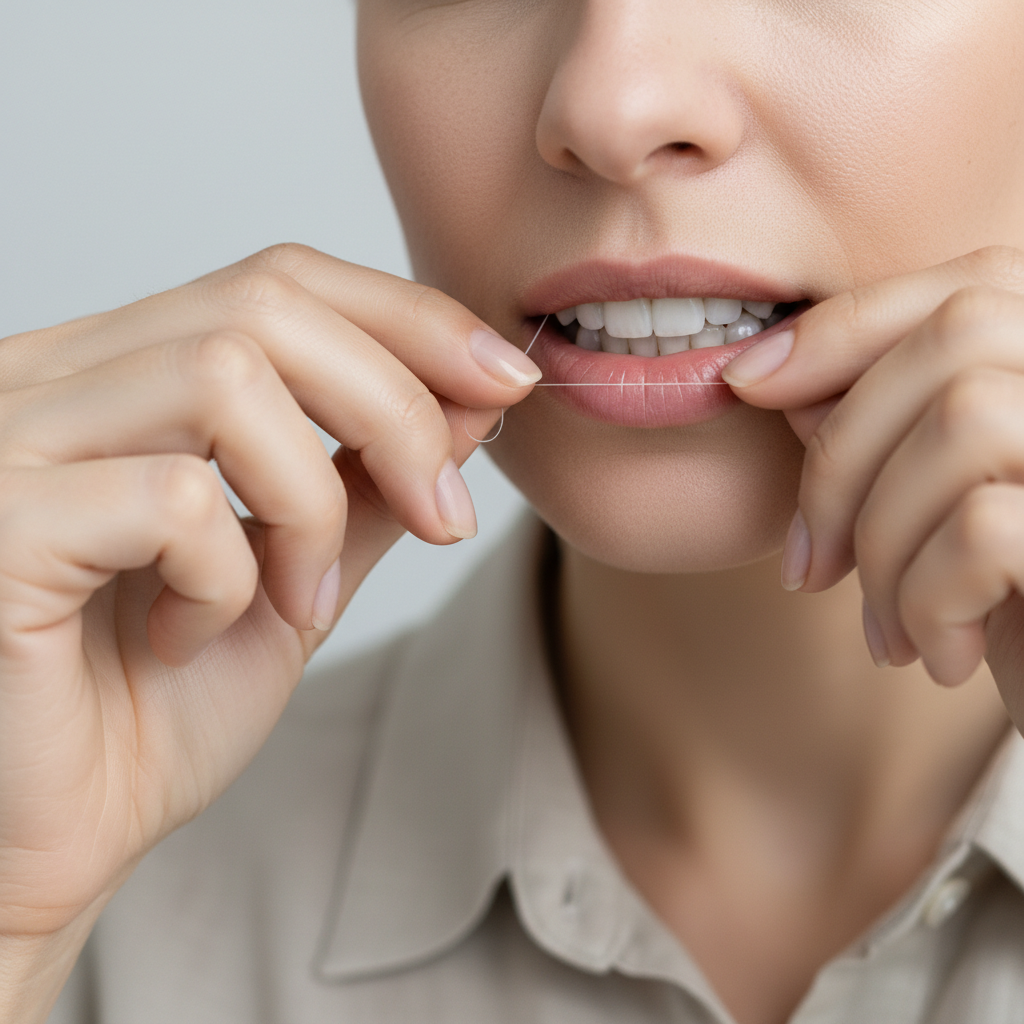
Waxed dental floss: smoothness and adaptability
Waxed dental floss is a popular choice, especially for those who are new to flossing or have very narrow dental contacts. Its wax coating allows it to glide smoothly between teeth, minimizing the risk of fraying or breaking during use.
This type is less likely to get stuck, providing a more comfortable experience and reducing gum irritation. However, the wax can leave residue on the tooth surface if not used correctly, which is an important consideration for some users.
Unwaxed dental floss: friction for deep cleaning
On the other hand, unwaxed dental floss offers a rougher texture that creates greater friction against the tooth surface. This feature makes it highly effective for removing plaque and food debris accumulated between teeth.
This type of floss is particularly valued by those who seek a “squeaky clean” feeling and have slightly wider interdental spaces. However, it can be more challenging to insert between tightly spaced teeth and is more prone to fraying or breaking.
Choosing the perfect ally for your smile
The decision between waxed and unwaxed dental floss depends largely on your oral characteristics and personal preferences. If you have crowded teeth or dental crowns, waxed floss may be your best option because of its ease of gliding, while unwaxed floss is ideal for those seeking a more abrasive clean.
To ensure you make the most informed decision, it is advisable to consult a professional. At Platón Dental, we offer an approach focused on the overall well-being of the patient, guiding you in selecting the most suitable product for professional dental hygiene, which complements the cleaning provided by our dental clinic in Palma</ .
The constant practice of interdental cleaning is what is truly crucial. Whatever your choice, the main objective is the effective removal of plaque. If you have any doubts or experience difficulties, do not hesitate to seek the advice of a trusted dentist to optimize your technique and ensure maximum benefits.
| Feature | Waxed Dental Floss | Unwaxed Dental Floss |
|---|---|---|
| Texture and Glide | Wax coating for smooth glide. | Rougher texture, greater friction. |
| Cleaning Effectiveness | Effective; minimizes clogging and breakage. | Highly effective at removing plaque and debris. |
| Ease of Use | Ideal for tight contacts, crowded teeth, or crowns. | Can be challenging in very tight teeth; better for slightly wider spaces. |
| Prone to Fray | Less prone to fraying or breaking. | More prone to fraying or breaking. |
| Post-Use Feel | Comfortable and soft, reduces irritation. | Deep “squeaky clean” feeling. |
| Additional Considerations | May leave wax residue if not used correctly. | Requires greater technique and care with crowded teeth. |
The art of deep cleaning: mastering the technique of flossing
Mastering the technique of flossing is essential to ensure thorough oral cleaning that goes beyond brushing. This deep cleaning method removes food debris and bacterial plaque from between the teeth and below the gum line, areas that are inaccessible to the toothbrush.
Proper daily flossing prevents problems such as cavities and gingivitis, which are the cornerstones of good oral health. With this step-by-step guide, we will transform a simple task into an art that ensures maximum hygiene at home.
Preparation and proper floss grip
To begin, cut approximately 45-50 centimeters of dental floss. This generous length is crucial because it will allow you to use a clean section for each tooth, preventing the redeposition of bacteria.
Wrap most of the floss around your middle fingers, leaving about 3-5 centimeters free to work with. Use your thumbs and index fingers to guide the floss firmly and with control, ensuring adequate tension for smooth and effective gliding.
The “C” technique: cleaning without trauma
Gently insert the floss between your teeth, avoiding sudden movements that could damage your gums. Once between the tooth surfaces, form a “C” around a tooth, sliding it up from the gum line.
Repeat this movement two or three times on each side of the tooth, carefully cleaning both surfaces. It is vital not to forget the gum line, where a large amount of plaque accumulates, and to always use a clean section of floss for each interdental space. If you experience flossing and bleeding gums, this is a sign of gingivitis, which can improve with consistent flossing.
Solutions for complex teeth and professional care
For more difficult areas, such as wisdom teeth or crowded teeth, the use of specific tools such as floss picks or Teflon floss can be very helpful. Constant practice will perfect your ability to reach every corner without causing trauma.
If, despite following these guidelines, difficulties or discomfort persist, a visit to your trusted dentist is recommended. At Platón Dental, for example, our specialists can offer you professional dental hygiene and personalized advice to ensure the best technique, reinforcing a comprehensive approach to your oral well-being.
Important: Bleeding when flossing
If you experience bleeding gums when flossing, don’t ignore it. It is often an indicator of gingivitis (gum inflammation). The good news is that *consistent and proper* flossing can significantly improve this condition. If bleeding persists or worsens, see your dentist for a professional evaluation.
Beyond brushing: integrating flossing into your daily ritual
Transforming the use of dental floss from an occasional task to a pillar of your oral health is an achievable goal. This essential step ensures that every corner of your smile receives the attention it deserves, effectively complementing daily brushing.
The ideal time for your flossing routine
The question of when to floss, before or after brushing, is a common one. Many professionals suggest doing it before brushing, as it removes particles and plaque, allowing the fluoride in toothpaste to work better on clean surfaces.
As for how long it takes, forget the idea that it has to be a tedious task. Spending between two and three minutes once a day is enough to ensure a thorough cleaning and reap the benefits of flossing, covering all interdental areas.
The science of consistency: tips for a lasting habit
Creating a new habit requires consistency, not perfection. You can set a daily reminder or link flossing to an existing routine, such as just before your morning shower or after dinner, so that it becomes a natural part of your day.
To overcome initial resistance, focus on the long-term results. Think of flossing as a minimal time investment that will protect you from more serious problems, such as cavities or gingivitis, a vital part of your professional dental hygiene.
Maintaining this habit is crucial; regularity far outweighs occasional intensity. You can even use tracking apps or checklists to see your progress, turning the chore into a rewarding part of your daily self-care.
Platón Dental: Your ally for optimal hygiene
Integrating flossing into your routine is a testament to your commitment to comprehensive oral health. At Platón Dental, we offer the support you need to make every aspect of your hygiene effective, from personalized advice to advanced treatments.
Our dental clinic in Palma is dedicated to guiding you toward total well-being, with an emphasis on prevention. We believe that a solid daily routine, including proper flossing, is the foundation for a healthy, long-lasting smile, backed by our attentive care and cutting-edge technology.
Your Flossing Routine: Keys to Success
For optimal oral health, make flossing part of your daily routine:
- Ideal Time: Do it **before brushing** to allow the fluoride in the toothpaste to act on clean surfaces.
- Duration and Frequency: Spend just **2 to 3 minutes, once a day**, for deep and effective interdental cleaning.
- Key Benefit: Daily consistency is your best defense against cavities and gingivitis—a minimal investment with great results.
Customized solutions: dental floss for special situations and common challenges
Maintaining impeccable oral hygiene with braces presents unique challenges. Brackets and wires can make cleaning difficult, but with the right tools and techniques, it is possible to prevent plaque buildup and maintain healthy gums.
Specialized tools for effective cleaning
Using floss for braces is essential for reaching areas that a toothbrush cannot. Floss threaders, small plastic loops, make it easier to pass the floss under the orthodontic wires.
Another option is super floss, a type of dental floss that combines a stiff section for insertion, a spongy section for cleaning, and a regular section for the rest of the teeth. In addition, interdental brushes are excellent accessories for cleaning around individual braces.
Mastering the technique of flossing with braces
For proper use, cut about 45 cm of dental floss and, with the help of a floss threader, gently pass it under the orthodontic arch. Then slide the floss up and down between the teeth and under the gum line, cleaning each surface.
It is vital to gently clean each side of each tooth, moving the floss carefully so as not to damage the braces or gums. Repeat this process for each interdental space, using a clean section of floss for each one, to ensure a thorough cleaning.
Additional tips and professional support
Consistency is key: it is recommended to floss at least once a day, preferably at night. In addition, regular check-ups with a professional are essential for complete professional dental hygiene during treatment.
At Platón Dental, we understand the importance of detailed care in treatments such as orthodontics Palma. Our team offers personalized guidance to ensure that, even with braces, your smile remains healthy and radiant, guaranteeing a comprehensive wellness experience.
Wire Threaders
Small loops that guide the thread under the orthodontic wires.
Super Floss
Dental floss with three sections (stiff, spongy, and regular) for versatile cleaning.
Interdental Brushes
Perfect for cleaning around braces and narrow spaces individually.
The fruits of consistency: long-term benefits of proper flossing
Consistent use of dental floss not only provides an immediate feeling of freshness, but also lays the foundation for lasting oral health. This simple habit becomes an essential investment in preventing future problems and maintaining a radiant smile over the years.
The impenetrable barrier against periodontal disease
Regular flossing is the first line of defense against gingivitis, the initial stage of periodontal disease. By sliding the floss between the teeth, we remove bacterial plaque and food debris that the toothbrush cannot reach, preventing inflammation and bleeding of the gums.
If gingivitis is not controlled, it can progress to periodontitis, a more serious condition that affects the tissue supporting the tooth. The science behind gum health shows us that flossing is crucial to stopping this cycle, protecting the bone and periodontal ligament from irreversible damage and possible tooth loss.
Guaranteed freshness and significant savings
One of the most appreciated benefits of flossing is the elimination of bad breath or halitosis. This common problem often originates from food particles and bacteria that accumulate between the teeth and below the gum line, with flossing being the simplest and most effective solution to combat it.
In addition, prevention has a direct impact on your pocket. Consistent use of dental floss drastically reduces the occurrence of cavities between teeth, decreasing the need for fillings or more complex treatments such as crowns or dental implants Mallorca. This small daily routine avoids considerable costs and discomfort in the long term.
Daily investment, lifelong gain
Incorporating flossing into your daily routine is a practice of comprehensive dentistry that aligns with a preventive approach to health. At clinics such as Platón Dental, we value clinical excellence and attentive care, guiding our patients toward habits that ensure their overall well-being and consistent results.
By maintaining optimal professional dental hygiene at home, the need for costly and complex dental procedures is minimized. This minimal investment of time each day translates into a great gain for your oral health, providing confidence, comfort, and a healthy smile for a lifetime.
Barrier against Periodontitis
Removes plaque and prevents gingivitis and periodontitis, protecting your gums and dental support structure.
Long-lasting Fresh Breath
Combats halitosis by removing particles and bacteria accumulated between teeth, ensuring fresh, clean breath.
Savings on Dental Costs
Drastically reduces the occurrence of interdental cavities and the need for complex and costly long-term treatments.
Healthy Smile for Life
A small daily investment that translates into a big gain for your oral health, providing confidence and comfort.
Debunking myths and truths: answers to your most frequently asked questions about flossing
The use of dental floss is essential for complete oral hygiene, but questions often arise, especially at the beginning. One of the most common concerns is whether bleeding gums when using it for the first time is normal, causing fear and sometimes abandonment of this essential practice.
Why do gums bleed when you start flossing?
It is common to experience slight bleeding when using dental floss for the first time or after a period of not using it. Far from being a sign of damage, this phenomenon usually indicates the presence of bacterial plaque buildup between the teeth and below the gum line.
Plaque irritates the gums, causing inflammation, known as gingivitis, which makes them more sensitive and prone to bleeding. When floss cleans these inflamed areas, bleeding is an expected reaction, indicating that the source of irritation is being removed.
When bleeding gums are a warning sign
While initial mild bleeding is common, it should not continue indefinitely. If bleeding persists after a week or two of regular and proper flossing, or if it is excessive and painful, it is crucial to seek professional advice. This could signal a larger problem, such as advanced periodontal disease.
In cases of persistent bleeding, it is vital to consult a trusted dentist. A professional can assess the health of your gums and determine the underlying cause. At Platón Dental, our specialists offer highly accurate diagnoses, ensuring care focused on your overall well-being and personalized solutions.
Key techniques for healthy, non-bleeding gums
To minimize bleeding and ensure the effectiveness of flossing, technique is paramount. Gently slide the floss between your teeth, curving it into a “C” shape around each tooth and sliding it delicately under the gum line, avoiding sudden movements or excessive pressure.
Consistency is key: with proper professional dental hygiene and daily flossing, gum inflammation will decrease and bleeding will gradually stop.
Maintaining this habit is the best defense against plaque buildup and periodontal disease, promoting optimal long-term oral health.
Initial Bleeding (Normal)
Light and occasional, especially the first 1-2 weeks. Indicates plaque buildup and gingivitis.
Persistent Bleeding (Alert)
Continues after 2 weeks of regular use, is heavy or painful. Could be a sign of periodontal disease.
What to Do?
If the bleeding is persistent or worrisome, consult your dentist. Early diagnosis is key.
Conclusions and final recommendations
Integrating flossing into our routine is a fundamental pillar of complete oral health, transcending simple brushing to achieve deep, preventive cleaning. We have explored its crucial role in eradicating silent threats, revealing an essential commitment to our oral well-being.
Key points to remember
- Undeniable Necessity: Flossing is an indispensable complement to brushing, effectively addressing the interdental spaces where plaque accumulates and the toothbrush cannot reach.
- Diversity at Your Fingertips:
There is a wide range of types of dental floss and auxiliary tools designed to meet every need and preference, from traditional to the most advanced. - Mastering the Technique: Learning how to floss correctly is vital to maximizing its effectiveness and ensuring thorough cleaning without damaging gums or teeth.
- Long-Lasting Benefits: Consistent flossing translates into significant long-term flossing benefits, such as the prevention of cavities, gingivitis, and halitosis.
- A Transformative Habit: Integrating flossing into your daily ritual is a simple but powerful step toward better overall health and a radiant smile.
Practical Recommendations
We encourage you not to underestimate the transformative power of this small daily action. Experiment with different types of dental floss until you find the one that best suits your needs, such as waxed floss for tight spaces or unwaxed floss for deeper cleaning in other cases, allowing you to determine which is the best dental floss for you. The key is regularity: daily use, preferably before brushing at night, will make a noticeable difference in your oral health. Remember that proper technique is essential; if you have questions about how to floss, don’t hesitate to seek professional guidance.
Invest in your smile with the confidence of knowing that you are adopting a practice backed by science. If your concerns persist or you need personalized guidance, we invite you to visit a clinic such as Platón Dental. Our philosophy focuses on comprehensive well-being, combining clinical excellence with highly accurate diagnosis and exceptional human experience to offer you minimally invasive treatments and natural aesthetics that prioritize your long-term health. Trust our experts to accompany you on this journey toward optimal oral health.
Prioritizing interdental care is a smart investment in your overall well-being, ensuring a healthier smile and a better quality of life. Your commitment today is the foundation for splendid oral health tomorrow.
Essential Need
Dental floss is key to cleaning where the toothbrush cannot reach, removing plaque and food debris between teeth.
Variety of Options
Discover the wide range of threads and tools to find the one that best suits your preferences and needs.
Mastering the Technique
Learning how to floss correctly is vital to maximizing its effectiveness and protecting the health of your gums.
Long-lasting benefits
Consistent use prevents cavities, gingivitis, and bad breath, ensuring long-term oral health and a radiant smile.