 Whatsapp


Imagine you have been waiting months for this moment: the implant is already placed, the surgeon has discharged you and you leave the clinic with the feeling that the hardest part is over. And then, in the car, you light a cigarette. It seems like an innocent gesture. You have been smoking for years; one cigarette is not going to sink a piece of titanium. Or so you think.
The clinical reality is considerably harsher. That cigarette — and the ones that follow during the weeks of healing — can be the difference between an implant that lasts decades and one that fails before the bone has fully embraced it. This is not an exaggeration: it is biology.
What happens in your mouth during the weeks after placement
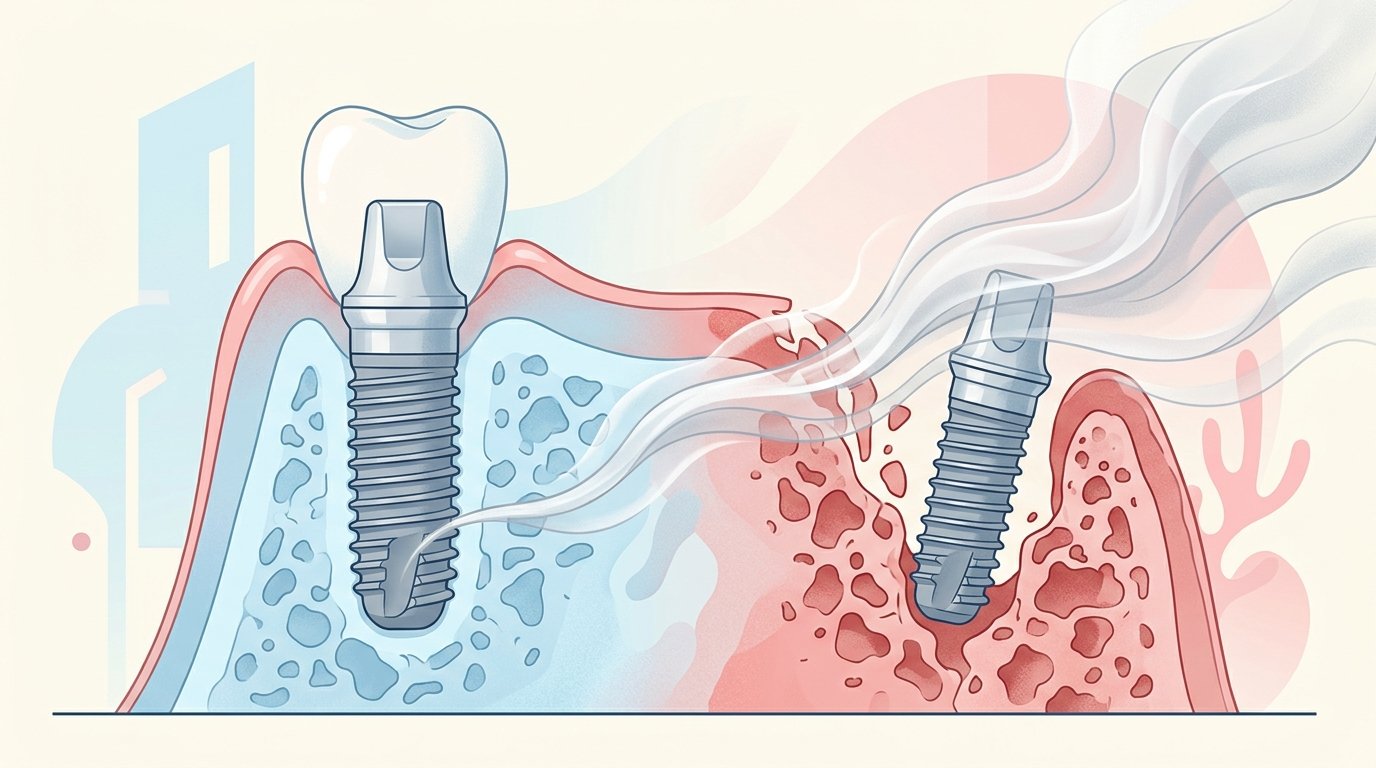
Placing a dental implant is not like screwing a bolt into wood. It is a surgery that triggers a precise and delicate biological cascade. As soon as the titanium implant is anchored in the bone, the body begins working to integrate it: bone cells called osteoblasts migrate towards the implant surface and begin depositing new bone tissue that gradually surrounds and embraces the metal piece.
This process is called osseointegration, and it is the core of the entire treatment. The success of an implant requires good osseointegration, meaning a perfect union between the titanium and the bone. Without that solid union, the crown placed on top has no firm foundation and the implant, sooner or later, becomes loose.
In non-smoking patients with good oral health, the union of bone and implant generally requires a period of between one and three months after placement. During those months, the tissue is vulnerable. Any factor that interferes with blood supply or the local immune response can slow down or block that process.
The mechanism: how tobacco sabotages poor healing
Here lies the core of the problem, and it deserves to be explained precisely because it is what many patients do not understand. Tobacco does not act in just one way: it acts on several fronts at once, and all of them point in the same direction: towards poor healing.
Vasoconstriction: the supply blackout
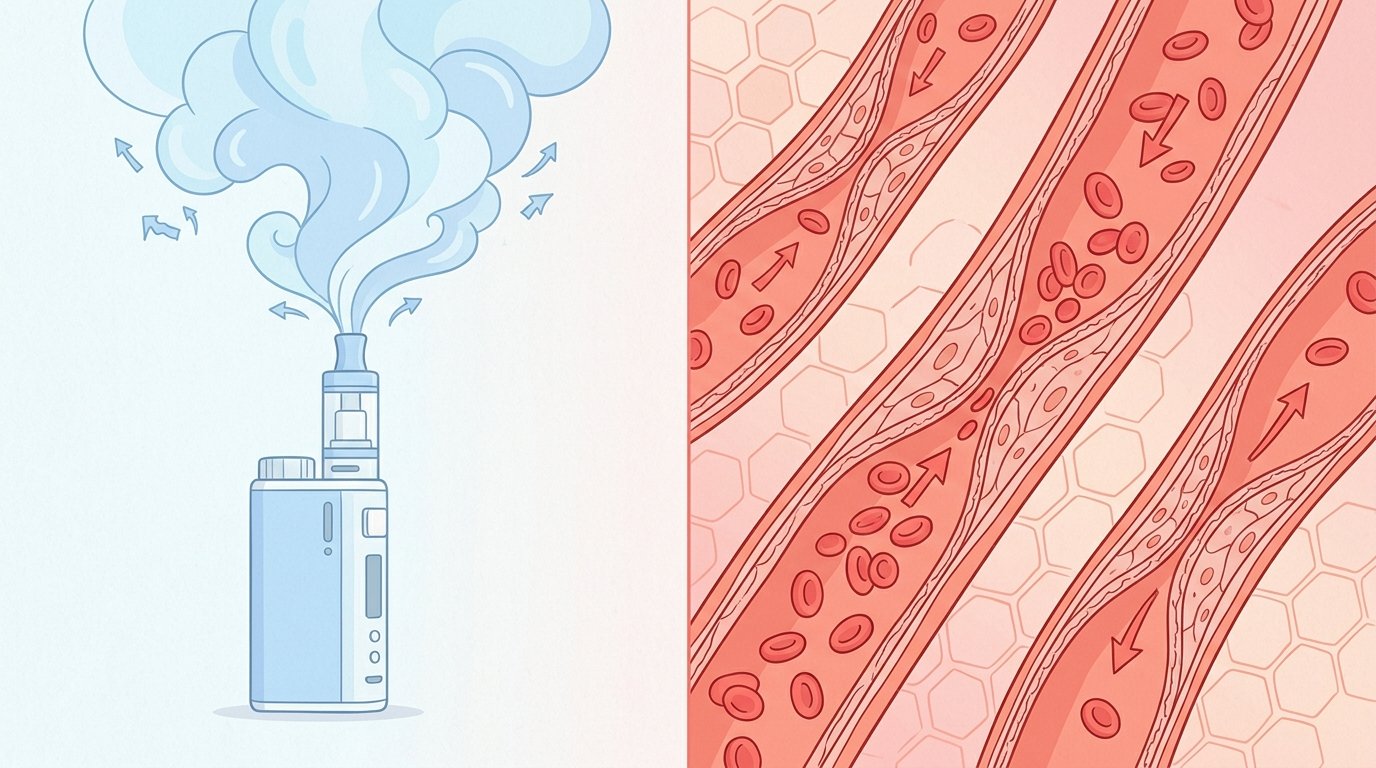
Nicotine causes vasoconstriction, meaning the narrowing of blood vessels, which reduces irrigation in the tissues and hinders healing after surgery. Think of it this way: the operated area needs a constant flow of blood rich in oxygen, nutrients and repair cells. Nicotine literally narrows the pipes through which that supply arrives.
Nicotine constricts the blood vessels of the gum; as less blood reaches the operated area, fewer nutrients and defence cells also arrive, which are indispensable for repairing tissues after surgery. It is like trying to build a house with half the materials and half the workers. The work progresses, but poorly and slowly.
To this is added the carbon monoxide from the smoke. Nicotine and carbon monoxide are the main culprits: both substances cause vasoconstriction and drastically limit the supply of oxygen and nutrients to the tissues. The result is localised tissue hypoxia right where the bone needs the most oxygen to regenerate.
Immunosuppression: the open door to infection
Smoking affects the immune system, which increases the likelihood of infections after surgery and can compromise the stability of the implant. A weakened immune system cannot contain bacterial colonisation around the surgical wound. And an infected wound does not heal; it inflames.
The toxic substances released when consuming tobacco reduce the effectiveness of the immune system, so it will not be able to fight off an infection. Smoking patients are more prone to suffering infections when the wound has not yet healed.
Direct cellular damage: fibroblasts in trouble
There is a third, less well-known mechanism that is equally relevant. Nicotine is a vasoconstrictor that has a negative impact on the synthesis of cellular proteins and reduces the adhesion capacity of fibroblasts, which directly and negatively interferes with wound healing.
Fibroblasts are the cells responsible for producing the connective tissue that seals and supports the gum around the implant. Nicotine affects the gingival fibroblasts that create the connective tissue around the teeth; the weakening of these fibroblasts reduces the body’s ability to provide new tissue that effectively supports the implant. Without that well-formed soft tissue, the implant is left exposed and vulnerable.
The figures on implant failure in smokers
So much for the biology. Now the numbers, because they put things in perspective in a way that no anatomical explanation can match.
A Spanish study carried out with 66 patients over five years showed that the failure rate of implants in smoking patients was 15.8%, while in non-smoking patients it was only 1.4%. That is not a marginal difference: it is eleven times the risk.
Recent studies indicate that smokers can have implant failure rates up to three times higher than those of non-smokers. And the fact of smoking is associated with a higher concentration of reactive oxygen that increases the process of bone resorption, which may partly explain the negative effect of smoking on the osseointegration process.
Peri-implantitis: the smoker's silent enemy
Even when initial osseointegration succeeds, tobacco does not stop acting. Peri-implantitis is an inflammation and infection of the tissues surrounding the implant that appears more frequently in smokers, and can cause bone loss and, in the worst case, implant failure.
Peri-implantitis is, in essence, the periodontitis of the implant. The bone surrounding the piece is gradually reabsorbed, without pain in many phases, until the implant loses support and becomes loose. Tobacco not only affects the beginning; in the long term it is responsible for the loss of bone support around fixed crowns or bridges if impeccable hygiene is not maintained.
Peri-implantitis is a silent emergency: it progresses without noticeable symptoms for months, and by the time the patient notices something is wrong, the bone loss is already significant. In smokers, that progression is faster and more aggressive.
What if I use an e-cigarette? The myth of "safe" vaping
This is one of the questions most frequently asked at Platón Dental Clinics, and the answer is not what many smokers expect to hear.
Although e-cigarettes do not generate the heat of conventional tobacco combustion, the vast majority of vaping liquids still contain nicotine. Therefore, they maintain the vasoconstrictive effect and continue to be harmful to implant healing.
The nicotine in e-cigarettes can cause blood vessels to constrict, which reduces blood flow to the gums and bone tissue surrounding dental implants; reduced circulation can slow implant healing and prevent bone from growing properly around it. The mechanism is identical to that of conventional tobacco because the active agent — nicotine — is the same.
The critical window: how long you should stop smoking
There is no single answer, but there is clinical consensus on the minimum periods that make a difference.
Stopping smoking at least two weeks before treatment improves blood circulation and platelet count. Afterwards, not smoking for the eight weeks following implant placement, which is the healing phase, is essential. Those eight weeks are the window in which osseointegration determines its future.
Why two weeks before and not just after? Because scientific evidence recommends quitting tobacco at least 48–72 hours before the procedure to reduce carbon monoxide levels in the blood and improve tissue oxygenation, although the real benefit in tissue quality begins to be felt with a longer period of prior abstinence.
What is clear is that the first 24–48 hours after surgery are the most critical. Smoke alters the blood clot that protects the wound and the chemicals can penetrate directly into the freshly treated bone area. That clot is the first shield of healing; destroying it in the hours following surgery is a very serious mistake.
| Factor | Active smoker | Abstinence ≥ 8 weeks post-surgery |
|---|---|---|
| Implant failure rate | Up to 11 times higher than in non-smokers | Significantly reduced risk |
| Speed of osseointegration | Slower and with lower bone density | Comparable to non-smoking patient |
| Risk of peri-implantitis | Elevated throughout the life of the implant | Reduced if rigorous hygiene is maintained |
| Soft tissue healing | Slow, with greater exposure to bacteria | Normal or close to normal |
Can I get an implant if I am a smoker?
Yes. Dental implants are not contraindicated in smoking patients, as long as they understand that there is a greater risk of failure or rejection due to tobacco. At Platón Dental Clinics we evaluate each case individually, assessing the amount of available bone, the periodontal condition and the smoking history before planning treatment.
That said, being a smoker requires a real commitment. It is not about signing a consent form and forgetting about it. It is about understanding that compromised osseointegration is not an abstract possibility: it is the most likely scenario if you smoke during healing. And a failed implant does not only mean losing the piece: it means losing bone, time and money, and starting from scratch with fewer resources.
Being a smoker does not automatically disqualify you from recovering your teeth, but it does require a health commitment. That commitment begins well before surgery and extends, at a minimum, two months after it.
What you can do to protect your implant if you are a smoker
Clinical information without practical action is not much use. These are the specific measures that demonstrably reduce risk:
- Stop smoking at least two weeks before surgery. It improves circulation and the quality of the tissue that will receive the implant.
- Do not smoke during the eight weeks following placement. This is the critical window for osseointegration. Every cigarette during that period is a step backwards.
- Do not replace tobacco with vaping during healing. The nicotine in e-cigarettes produces the same vasoconstrictive effect.
- Maintain impeccable oral hygiene. Brushing, flossing and using an irrigator around the implant reduce bacterial colonisation that tobacco facilitates.
- Attend check-ups without fail. Peri-implantitis progresses silently; only periodic clinical examination allows it to be detected before it causes irreversible damage.
- Tell your implantologist your actual consumption. Not what you think they want to hear: the real figure. Treatment planning depends on that information.
Frequently asked questions
How many cigarettes a day are “too many” for an implant?
There is no safe threshold. Between the first and third month, the basal bone begins to bond to the implant; in heavy smokers — more than ten cigarettes a day — this bond tends to be of lower density and quality. But even moderate smokers present vasoconstriction and increased risk. The clinical recommendation is total abstinence during healing, not reduction.
Is implant failure caused by tobacco reversible?
It depends on when it is detected. If compromised osseointegration is identified early, re-implantation can be attempted after a period of abstinence and bone recovery. If there is already significant bone loss due to peri-implantitis, a prior bone graft may be necessary. In any case, the process is longer, more costly and with less guarantee of success than the original treatment.
Can I smoke after the implant is already integrated?
Tobacco promotes the appearance of peri-implantitis, meaning bone loss around the already integrated implant. Initial osseointegration is not a permanent shield. A well-integrated implant can lose bone support over the years if the periodontal environment deteriorates, and tobacco is one of the main accelerators of that deterioration.
Does tobacco affect implants in the upper jaw the same as in the lower jaw?
The upper jaw generally has lower bone density than the lower jaw, which already requires more careful osseointegration. Tobacco aggravates that disadvantage. In patients who have needed prior bone grafts, there are significant differences in implant survival between non-smokers (82%) and smokers (65%). If your implant is in the upper jaw and has required bone regeneration, the risk from tobacco is multiplied.
When can I start smoking again after an implant?
The honest answer is: the later, the better. The minimum clinically accepted to reduce the risk of implant failure is not smoking for the eight weeks following surgery. After that period, the risk of implant loss decreases, although tobacco remains a risk factor for peri-implantitis in the long term. If you are considering quitting smoking definitively, implant surgery is a moment of real motivation: use it.
Sources
{"@context":"https://schema.org","@type":"FAQPage","inLanguage":"en","mainEntity":[{"@type":"Question","name":"How many cigarettes a day are \"too many\" for an implant?","acceptedAnswer":{"@type":"Answer","text":"\u003Cp\u003EThere is no safe threshold. Between the first and third month, the basal bone begins to bond to the implant; in heavy smokers —more than ten cigarettes a day—, this bond tends to be of lower density and quality. But even moderate smokers present vasoconstriction and increased risk. The clinical recommendation is total abstinence during healing, not reduction.\u003C/p\u003E"}},{"@type":"Question","name":"Is implant failure caused by tobacco reversible?","acceptedAnswer":{"@type":"Answer","text":"\u003Cp\u003EIt depends on when it is detected. If compromised osseointegration is identified early, re-implantation can be attempted after a period of abstinence and bone recovery. If there is already significant bone loss due to peri-implantitis, a prior bone graft may be necessary. In any case, the process is longer, more costly and with less guarantee of success than the original treatment.\u003C/p\u003E"}},{"@type":"Question","name":"Can I smoke after the implant is already integrated?","acceptedAnswer":{"@type":"Answer","text":"\u003Cp\u003ETobacco promotes the appearance of peri-implantitis, meaning bone loss around the already integrated implant. Initial osseointegration is not a permanent shield. A well-integrated implant can lose bone support over the years if the periodontal environment deteriorates, and tobacco is one of the main accelerators of that deterioration.\u003C/p\u003E"}},{"@type":"Question","name":"Does tobacco affect implants in the upper jaw the same as in the lower jaw?","acceptedAnswer":{"@type":"Answer","text":"\u003Cp\u003EThe upper jaw generally has lower bone density than the lower jaw, which already requires more careful osseointegration. Tobacco aggravates that disadvantage. In patients who have needed prior bone grafts, there are significant differences in implant survival between non-smokers (82%) and smokers (65%). If your implant is in the upper jaw and has required bone regeneration, the risk from tobacco is multiplied.\u003C/p\u003E"}},{"@type":"Question","name":"When can I start smoking again after an implant?","acceptedAnswer":{"@type":"Answer","text":"\u003Cp\u003EThe honest answer is: the later, the better. The minimum clinically accepted to reduce the risk of implant failure is not smoking for the eight weeks following surgery. After that period, the risk of implant loss decreases, although tobacco remains a risk factor for peri-implantitis in the long term. If you are considering quitting smoking definitively, implant surgery is a moment of real motivation: use it.\u003C/p\u003E"}}]}