 Whatsapp


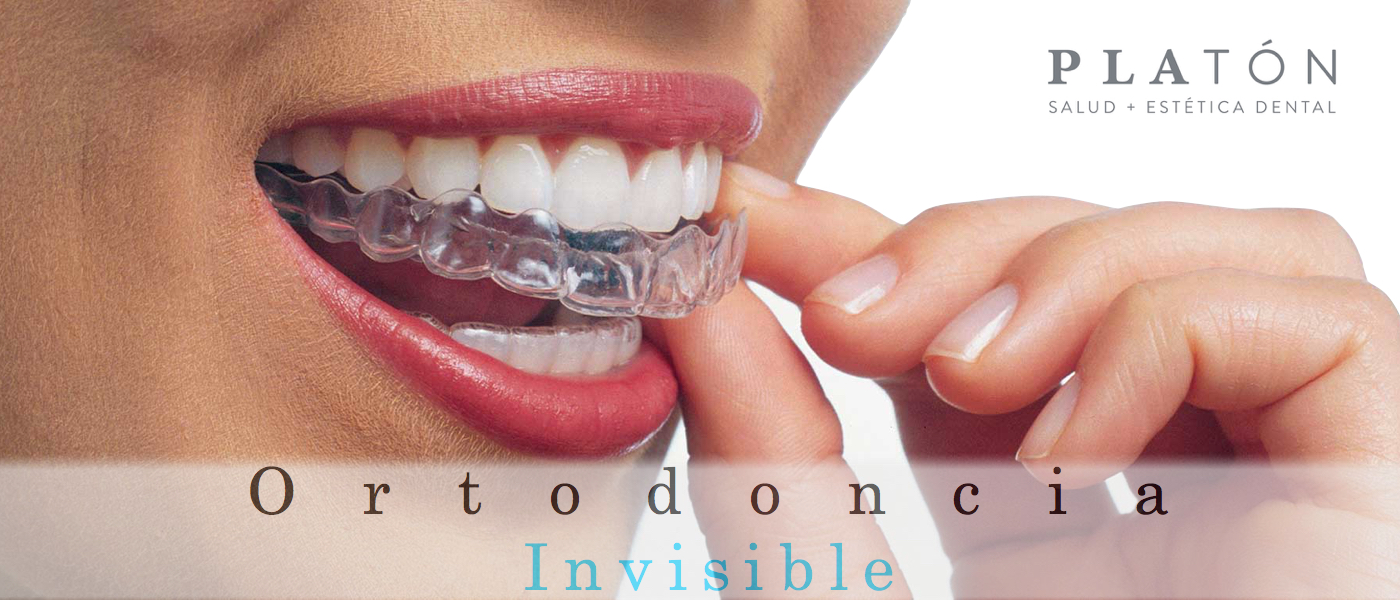
You’ve spent years avoiding a real smile in photos. Not because you don’t want to, but because metal braces feel like a public sentence: months or years with a mouth full of wire, sores, and the feeling that everyone looks at your teeth before your eyes. We understand. But that dilemma — aesthetics or dental correction — no longer exists. The invisible orthodontics is today a consolidated clinical reality, not a promise for the future, and it covers a very wide spectrum of cases.
If you are considering correcting the position of your teeth discreetly, this guide explains what options exist, who can benefit from them, how much they cost, what the process is like and what you can expect from the results. All with concrete data and no beating around the bush.

The two main types of invisible orthodontics
The two major representatives of aesthetic dental correctors are lingual orthodontics and transparent aligners. Each has a different mechanism, and the choice between them depends on your clinical case, your lifestyle and your preferences.
Lingual orthodontics
In lingual orthodontics, the brackets are fixed to the inner surface of the teeth, so they are completely invisible to others. As it is a fixed system, the patient cannot remove it: tooth movement is continuous and does not depend on the user’s discipline.
It does, however, have a real drawback worth knowing in advance: because it is placed in the area of the tongue and palate, patients may experience some speech difficulties during the first few days. According to lingual orthodontics specialists, during the first 2–4 weeks it is common to notice a lisp or difficulty pronouncing certain sounds, especially “s”, “t” and “d”, although most patients adapt within two or three weeks. It also requires more thorough hygiene, as access for brushing is somewhat more difficult than with external brackets.
Invisalign (transparent aligners)
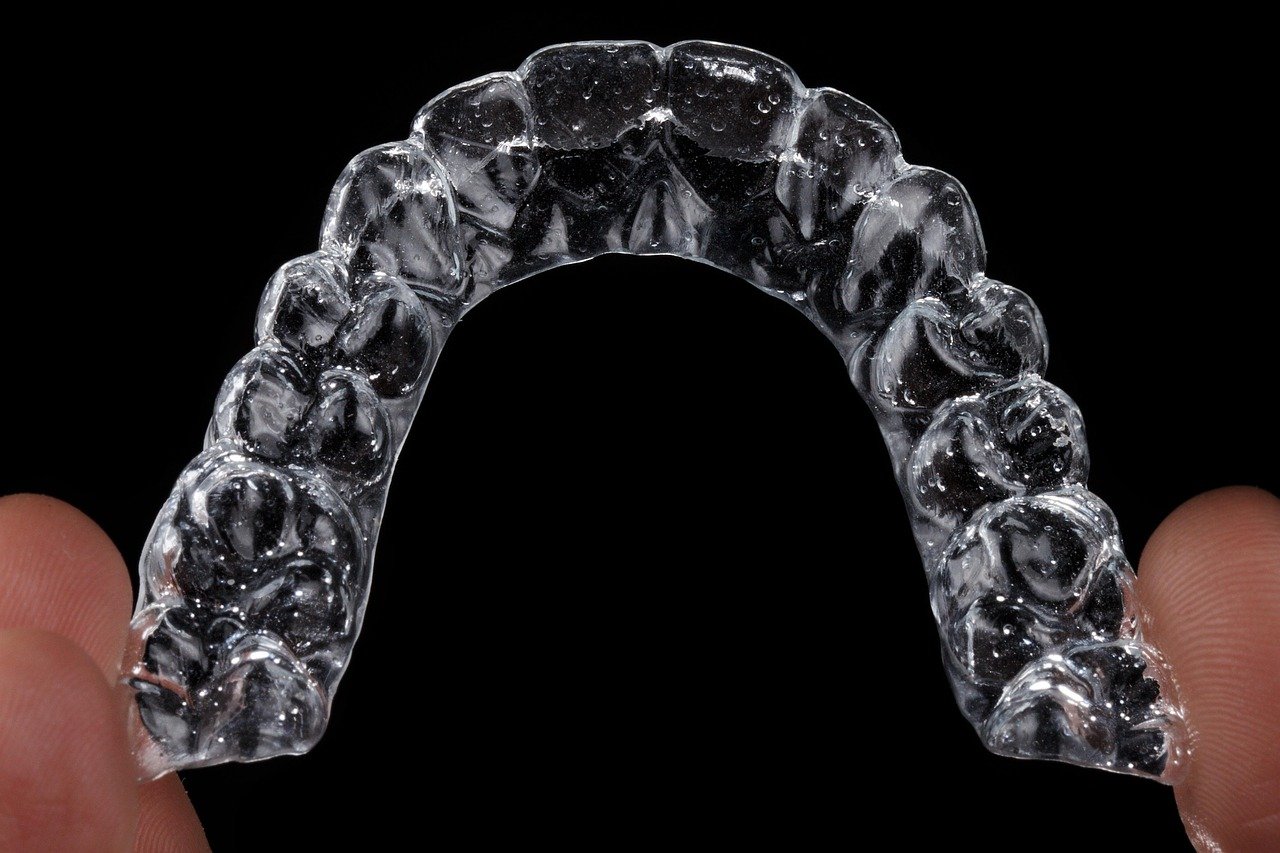
Invisalign is the best-known commercial name for transparent aligners. Think of it as a wrench that progressively adjusts: each new mould applies a slightly different force from the previous one, shifting the teeth millimetre by millimetre to their ideal position. The treatment is planned and controlled digitally, which gives it great precision and predictability. The aligners are changed every one or two weeks and are removable.
It is a predictable, effective and comfortable system that changes the smile with barely any interference in daily life. As explained by Harmonía Dental, invisible orthodontics has become the most chosen option among adults who want to correct the position of their teeth with efficacy and discretion.
Comparison: lingual orthodontics vs. transparent aligners
Before deciding, it is worth seeing the key differences at a glance:
- Visibility: both options are invisible from the outside; lingual because it is on the inner surface of the tooth, Invisalign because it is transparent.
- Removable: lingual orthodontics is fixed (only the specialist removes it); Invisalign can be taken out for eating and brushing.
- Initial comfort: Invisalign is more comfortable in the first few weeks; lingual can cause sores and phonetic adaptation.
- Discipline required: with Invisalign, the aligners must be worn between 20 and 22 hours a day for the treatment to be effective; forgetting to wear them compromises the results.
- Hygiene: Invisalign makes brushing easier as it can be removed; lingual requires more care and technique.
- Complex cases: lingual orthodontics can address more severe malocclusions; Invisalign is especially effective in mild and moderate cases.
- Cost: in general, Invisalign tends to be somewhat less expensive than lingual orthodontics, although both vary depending on the complexity of the case.
Are you a good candidate for invisible orthodontics?
Invisible orthodontics is not universal, but it does cover a very wide spectrum of patients. The short answer: most adults and adolescents with mild or moderate malocclusions are suitable candidates.
The profiles that benefit most are:
- Adults who did not receive treatment in their day and now want discretion at work or in their social life.
- Adolescents with a fully developed permanent dentition who reject metal braces.
- Patients with mild or moderate crowding, diastemas (spaces between teeth) or small crossbites.
- People with professions that involve speaking in public who prefer the least possible interference with their speech.
For cases of severe malocclusion, pronounced dental rotations or skeletal problems, the specialist will assess whether lingual orthodontics, conventional orthodontics or a combination of both is the most appropriate option. An individualised diagnosis is the only reliable starting point: no online guide can replace it.
Indicative prices and financing options

Cost is usually the patient’s first real question. The honest answer is that it depends on the complexity of the case, but the ranges are well known in the Spanish market.
According to data from several specialist clinics and the market study by Ferrus&Bratos, the average price of Invisalign in Spain in 2025 is around €3,300, with a range from €1,500 to €5,000 depending on complexity:
- Mild cases (6–12 months): between €1,500 and €2,600.
- Moderate cases (12–18 months): between €2,900 and €3,800.
- Complex cases (more than 18 months): from €3,900 to €5,000.
- Lingual orthodontics: usually above €4,500, given that the brackets are individually customised for the inner surface of each tooth.
Before comparing quotes, check what each one includes. Some quotes do not include the initial study, check-ups, refinements or final retainers, which can significantly increase the real cost. Always ask for a closed and detailed quote.
As for financing: most clinics offer interest-free instalment payments to make the treatment more accessible. Some dental insurance plans (DKV, Adeslas, Sanitas) cover part of the cost of invisible orthodontics, although it is worth reviewing the conditions of each policy before assuming coverage.
What the treatment process looks like step by step
Knowing what will happen at each stage reduces uncertainty and makes it easier to commit to the treatment. This is the usual journey:
- Initial diagnosis (1 session). Includes clinical examination, X-rays, 3D intraoral scan and digital simulation of the result. At Platón Dental we study each case in depth to determine which system best suits your situation.
- Digital planning. From the 3D model, the specialist virtually designs each tooth movement. With Invisalign, this simulation allows you to see in advance how the treatment will evolve and estimate its duration before manufacturing any aligner.
- Fabrication of the aligners (2–4 weeks). Once the plan is validated, the aligners are custom-made in the laboratory. In lingual orthodontics, the brackets are likewise customised for the inner surface of each tooth.
- Active phase (6–24 months). The patient wears the aligners in the established order, changing them every 1–2 weeks, with periodic check-ups every 6–8 weeks to verify that tooth movement is following the planned schedule.
- Refinement (if necessary, 2–6 additional months). In some cases a second set of aligners is designed to fine-tune the final result.
- Retention phase (indefinite). Once the correction is complete, retainers are used to maintain the position achieved. This step is as important as the active treatment: without retention, teeth tend to return to their original position.
Retainers: fixed vs. removable
The retention phase is not an extra: it is part of the treatment. Teeth have memory and tend to return to their original position if that movement is not contained. There are two main types:
- Fixed retainer: a thin metal wire bonded to the inner surface of the front teeth. It is permanent, requires no discipline from the patient and goes completely unnoticed.
- Removable retainer (splint type): it resembles a transparent aligner and is worn mainly at night. It allows easier hygiene than the fixed type, but depends on patient compliance.
The most common approach is to combine both: a fixed retainer on the front teeth and a removable night-time retainer for the rest of the arch. Your specialist will determine the most appropriate combination for your case.
How long does invisible orthodontics take?
The honest answer is that it depends on the complexity of each case, but the indicative ranges are well known:
- Mild cases (minimal crowding, small diastemas): 6 to 8 months.
- Moderate cases: between 12 and 18 months.
- Complex cases: up to 24 months or more.
A 2020 study showed that patients with mild malocclusion completed their treatment in an average of 6 months, while more severe cases required up to 18 months. Age also plays a role: adolescents and young adults tend to experience faster tooth movement because their bones are still developing.
The most determining factor within your control is compliance: wearing the aligners for the recommended 20–22 hours a day makes the difference between finishing within the planned timeframe or prolonging the treatment.
Clinical efficacy: does orthodontics without braces really work?

The answer is yes, with important nuances. A systematic review published in Progress in Orthodontics (Papadimitriou et al., 2018; DOI: 10.1186/s40510-018-0235-z) concluded that Invisalign is a viable alternative to conventional orthodontics for correcting mild and moderate malocclusions in adult patients who do not require extractions. For more complex cases, multidisciplinary evaluation remains the recommended approach.
A more recent review published in Cureus (2025) confirmed that, compared with fixed appliances, Invisalign offers shorter treatment duration and greater comfort and aesthetics, although with less predictable results for very specific movements such as pronounced rotations or arch expansion.
The key differentiator of invisible orthodontics compared to conventional braces is not only aesthetic: digital planning allows the result to be predicted before starting treatment, something that traditional metal orthodontics cannot offer with the same level of detail. This reduces surprises and facilitates informed decision-making by the patient.
Debunking the most common myths
"Invisible orthodontics hurts a lot"
False, though with nuances. Transparent aligners exert gentle, distributed forces over the entire surface of the tooth, not at a specific point as metal brackets do. It is normal to feel slight pressure during the first few days with each new aligner, a sign that the tooth is moving. But it is not comparable to the sharp pain that metal archwires sometimes cause when tightened. With lingual orthodontics, the first few weeks can be somewhat more uncomfortable due to the tongue’s adaptation.
"I can't eat normally during treatment"
With Invisalign, completely false: the aligners are removed for eating and drinking anything other than water. You can continue to enjoy your usual diet without restrictions. You just need to remember to brush your teeth before putting them back in. With lingual orthodontics, being fixed, it is advisable to avoid very hard or sticky foods that could damage the brackets.
"Transparent aligners are not as effective as braces"
This myth has less and less scientific basis. For the majority of cases seen in practice — mild and moderate malocclusions — the efficacy of aligners is comparable to that of conventional braces, with the added advantage of comfort and aesthetics. Where braces remain the reference option is in cases of great skeletal complexity or very specific movements. Your specialist will honestly tell you whether your case falls into that category.
"It's a treatment only for adults"
No. Invisalign has a specific line for adolescents (Invisalign Teen) designed to adapt to the changes typical of that stage. The necessary condition is that the permanent dentition is sufficiently developed, something the specialist verifies at the initial diagnosis.
"Once I finish, my teeth stay that way forever"
If only that were the case. Teeth have memory and tend to return to their original position if retainers are not used. The retention phase is part of the treatment, not an extra: without it, the results are not maintained in the long term.
FAQ: everyday questions about aligners
Beyond clinical questions, there are daily-use doubts that cause a lot of anxiety. Here are the most frequent ones with a direct answer:
What do I do if I lose or break an aligner?
Notify your clinic as soon as possible. In the meantime, the safest solution is to go back to the previous aligner so as not to lose the position gained. If the lost aligner was the last in the series, you can move on to the next one, but always with the specialist’s approval. Do not improvise: skipping a step in the sequence without supervision can throw the entire movement plan off.
How are the aligners cleaned?
The routine is simple but important: rinse the aligners with cold water every time you remove them and brush them gently with a soft-bristled toothbrush without toothpaste (abrasive paste can scratch them and make them opaque). There are specific effervescent tablets for aligners that eliminate bacteria and stains. Never use hot water: it deforms the plastic and ruins the fit.
Can I drink coffee or herbal teas with the aligners in?
It is not recommended. Hot drinks deform the material and pigmented drinks (coffee, tea, red wine) stain them permanently. The practical rule is simple: only water with the aligners in. For any other drink, remove them, drink, brush your teeth and put them back in. Yes, it requires habit, but it becomes routine within a few days.
How many hours a day do I really need to wear them?
The effective minimum is 20–22 hours a day. The remaining 2–4 hours are for eating, drinking and oral hygiene. Every hour the aligners are out of the mouth is time during which the teeth are not moving — or may even shift back slightly. Wearing them for less than 20 hours on a regular basis is the most frequent cause of treatment taking longer than planned.
Do I have to brush my teeth after every meal?
Yes, and it is one of the hidden benefits of the treatment: oral hygiene improves noticeably because the patient brushes more frequently than usual. Placing the aligners over food residue promotes cavities and gingival inflammation, so brushing after every meal is not optional.
At Platón Dental: personalised diagnosis for each case
At Platón Dental we do not apply the same protocol to all patients. Our professionals study each case in depth — with clinical examination, X-rays and, when necessary, an intraoral scan — to determine which treatment is most advisable: whether lingual orthodontics, transparent aligners or another alternative, including conventional orthodontics when the case requires it. The goal is not to sell a specific system, but to offer you the most predictable and lasting result for your specific situation.
One concrete detail worth mentioning: the diagnosis always includes a digital simulation of the final result, which allows you to see how your teeth will look before a single aligner is manufactured. That is something traditional metal orthodontics cannot offer you with the same level of detail.
We have no doubt: your smile is ours.
[CTA_CONSULTA_GRATUITA]
Sources
- Clinical effectiveness of Invisalign® orthodontic treatment: a systematic review – PMC
- Factors Influencing the Predictability and Success of Invisalign Aligners: A Systematic Review
- Factors Influencing the Predictability and Success of Invisalign Aligners: A Systematic Review – PMC
- A systematic review of the accuracy and efficiency of dental movements with Invisalign® – PMC
- Clinical effectiveness of Invisalign® orthodontic treatment: a systematic review