 Whatsapp


You look in the mirror before an important meeting and notice your smile is not what it used to be. It’s not that you’ve neglected brushing; it’s that time, your morning coffee, and the occasional glass of red wine on Fridays have been doing their work, little by little, almost without you noticing. That progressive yellowing is one of the most common reasons patients come to Platón Dental asking about teeth whitening.
The good news is that today there are real, safe, and supervised options to recover several shades of color. The less good news is that not all of them work the same way, and some of the solutions circulating on the internet can do more harm than good. In this article we tell you what you need to know before making any decision: what stains teeth, what options exist, how the clinical process works, and which myths are worth debunking once and for all.
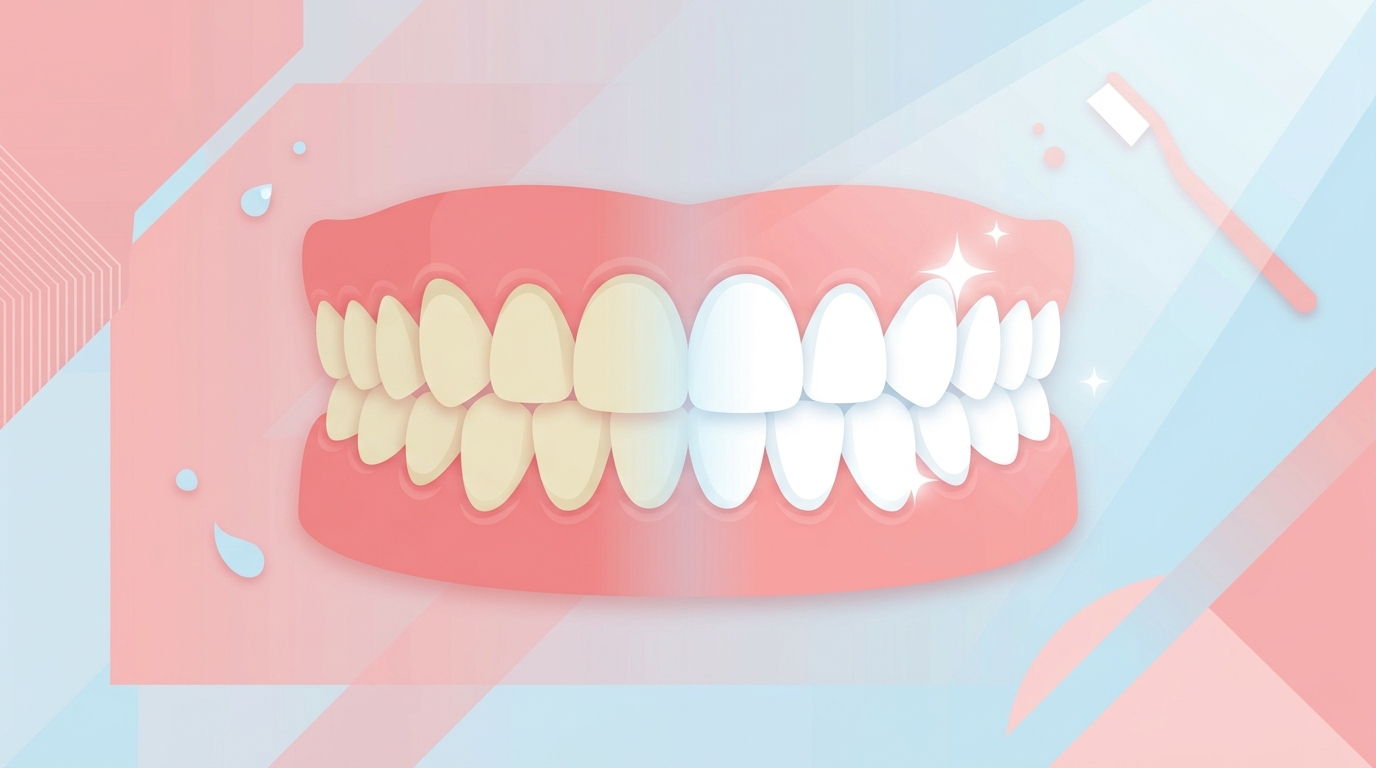
What Stains Teeth? The Three Main Enemies of Enamel
Before talking about solutions, it’s worth understanding the problem. The color of teeth depends on both intrinsic factors—the structure and thickness of the enamel, the underlying dentin—and extrinsic factors that accumulate on the surface over the years. It is these latter factors that we can act upon.
Tobacco
Smoking yellows teeth with devastating efficiency. The nicotine and tar in smoke adhere to the enamel and generate stains that, over time, become increasingly resistant. Beyond the aesthetic damage, tobacco compromises gum health and multiplies the risk of failure of any whitening treatment if the habit is not abandoned.
Dark Beverages
Coffee, tea, cola drinks, and red wine share a common denominator: they contain chromogens, pigments that easily bind to the porous surface of the enamel. Regular consumption without precautions ends up staining teeth in a cumulative way. A simple trick: using a straw when possible and rinsing with water afterwards significantly reduces enamel exposure.
Insufficient Dental Hygiene
The third factor is the most avoidable. Many patients neglect brushing or do it superficially, which allows bacterial plaque and tartar to accumulate and encourages the appearance of stains. Prevention remains the most effective and most affordable tool for maintaining a bright smile in the long term.
Types of Teeth Whitening: Which One Suits Your Case?
There is no single type of teeth whitening. Depending on the degree of discoloration, the patient’s sensitivity, and the time available, the professional may recommend one option or another. Knowing them helps you arrive at the appointment with realistic expectations.
In-Office Clinical Whitening
This is the treatment carried out entirely at the clinic, in one or two sessions. In a single session of 60 to 90 minutes, a lightening of 4 to 8 shades can be achieved; to do this, a 35–40% hydrogen peroxide gel is applied to the teeth, with the gums previously protected by a light-cured resin barrier. It is the fastest option and the most suitable when there is a special occasion coming up. The effect of in-office whitening lasts, on average, between 1 and 3 years.
At-Home Whitening with Trays
In this case, the dentist takes impressions of the patient’s mouth and fabricates custom trays that are filled with a lower-concentration whitening gel. The trays are usually worn at night, over approximately 10 days depending on the initial shade and each person’s dental sensitivity; this method offers progressive, safe, and controlled whitening, with clinic check-ups to monitor results. It is the preferred alternative for patients with more sensitive teeth, as the lower gel concentration reduces discomfort.
Combined Treatment
Combined whitening is the most comprehensive protocol, as it unites the immediate efficacy of in-office treatment with the continued use of personalized at-home trays; it is especially recommended for patients with very darkened teeth or those who have never undergone whitening before. With good habits, the result of a combined treatment can last more than 3 years. If you are looking for the best possible result and the greatest durability, this is the most complete option.
How Clinical Whitening Works at Platón Dental: Step by Step
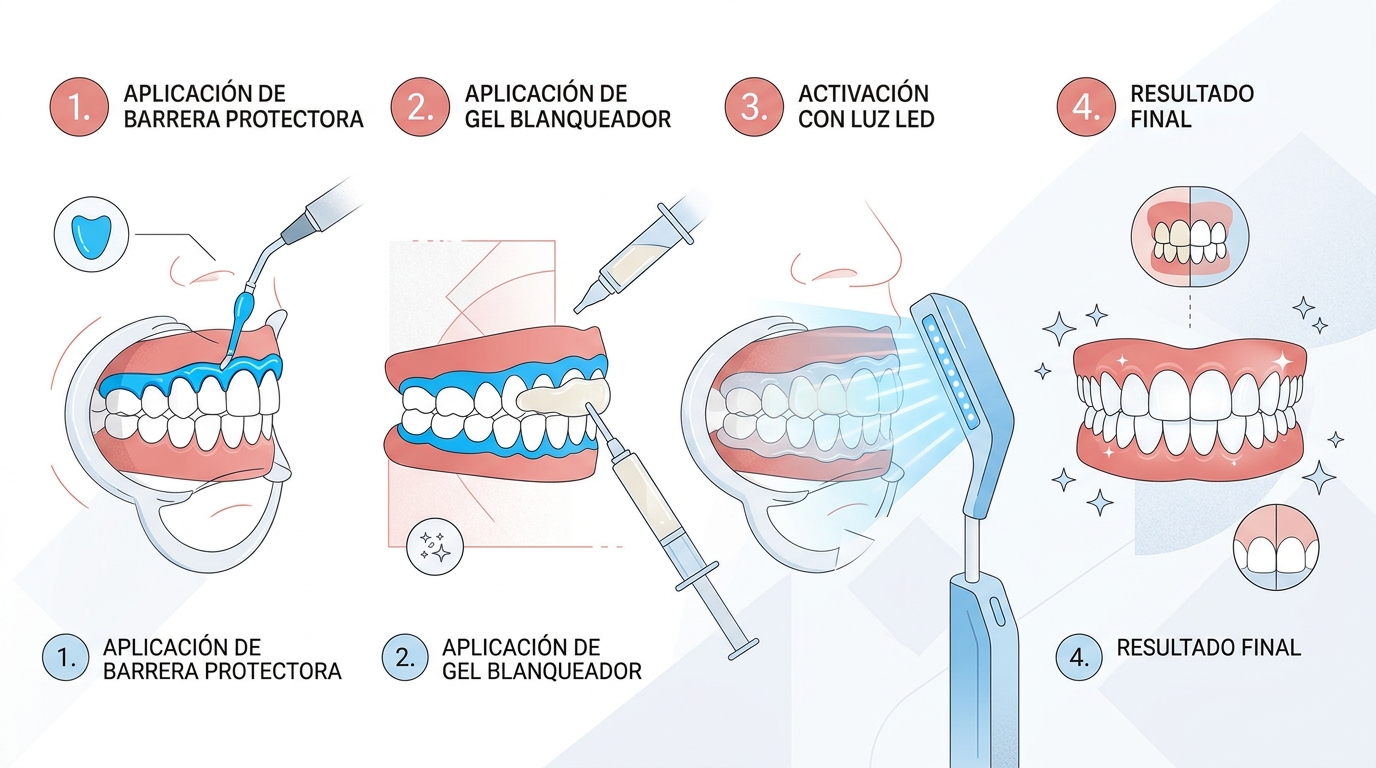
Knowing what is going to happen at the clinic before sitting in the chair considerably reduces anxiety. The process is not complicated, but it does require rigor at each stage to guarantee both efficacy and safety.
1. Examination and Prior Diagnosis
The medical history and clinical-radiographic examination are essential for evaluating the patient’s expectations, the causes of dental darkening, and the presence of risk factors such as cracks, unsatisfactory restorations, carious lesions, gingival recession, or dental sensitivity. No treatment should be started without this prior assessment: whitening is not indicated if there is active decay, untreated periodontal disease, or uncontrolled severe sensitivity.
2. Recording the Initial Shade
Before applying anything, the professional records the starting shade using a standardized color guide—usually the Vita scale—and takes photographs. This step is essential for objectively measuring the result at the end of the treatment. What happens during teeth whitening is a progressive lightening within the original dental shade, not a jump to an artificial white.
3. Protection of Gums and Soft Tissues
Before applying the gel, a light-cured resin barrier is placed on the marginal gum. The 35% hydrogen peroxide can cause lesions on soft tissues, so their protection is essential when performing the treatment. This step is what makes the difference between a safe clinical procedure and any home attempt.
4. Gel Application and Light Activation
The oxidizing gel is applied to the buccal surface of the teeth. Hydrogen peroxide is a powerful oxidizing agent that can penetrate through the dental enamel to the pulp within the first few minutes after application; the oxygen molecules react with the compounds that stain the enamel to lighten them. Light activation—LED or photopolymerization lamp—accelerates the chemical reaction and shortens the session time. The gel acts during cycles of between 8 and 15 minutes, which are repeated two or three times in the same visit.
5. Fluoride Application and Post-Treatment Care
At the end of the session, the gel is removed, any excess is eliminated, and fluoride is applied to remineralize the enamel and reduce transient sensitivity. The General Council of Dentists advises maintaining strict dental hygiene, not smoking, and following a “white diet” during the first days after treatment, as during this period the enamel is more porous and can absorb unwanted pigments. Coffee, tea, red wine, and sauces with colorants are the main foods to avoid during that 48–72 hour window.
How Long Do Results Last and What Affects Them?
Specialists emphasize that the expected effect is a lightening of up to eight shades, not a dazzling white, since natural teeth are not pure white but rather an ivory tone. That lightening, well executed, has a lifespan that depends largely on the patient’s habits.
With a well-performed professional whitening, the result lasts between 1 and 3 years; after that time, it does not disappear all at once, but fades progressively. The factors that most accelerate the loss of shade are tobacco, frequent consumption of pigmented beverages, and poor hygiene. Periodic maintenance sessions—every 12 or 18 months—allow the result to be preserved without needing to repeat the full treatment.
Who Is Not a Good Candidate for Teeth Whitening?
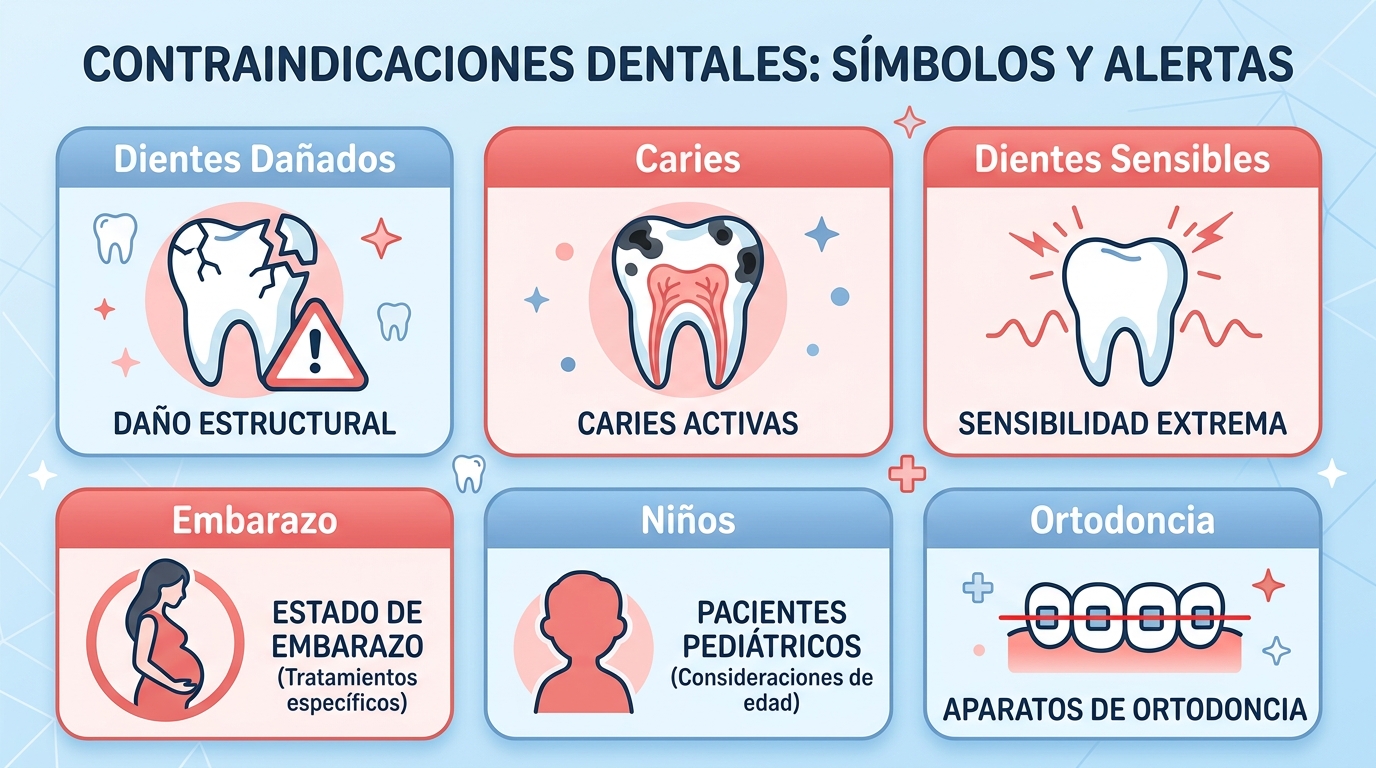
Teeth whitening is safe when performed under professional supervision, but it is not suitable for everyone. There are situations in which the treatment must be postponed or ruled out:
- Pregnancy and breastfeeding: as a precaution, it is recommended to wait until after the breastfeeding period before undergoing any whitening treatment.
- Active decay or periodontal disease: these must be treated first. Applying gel to a tooth with decay can worsen the lesion and cause intense pain.
- Severe dental sensitivity: patients with very sensitive teeth tolerate at-home whitening with low concentrations better than in-office treatment with high concentration. The professional will assess which protocol minimizes discomfort.
- Under 18 years of age: the enamel has not completed its maturation and the dentinal tubules are wider, which increases the risk of sensitivity.
- Visible restorations in the anterior zone: the gel does not act on crowns, veneers, or composite fillings; if the natural teeth lighten and the restorations do not, the result may be uneven.
Myths About Teeth Whitening Worth Debunking
The internet is full of miracle recipes for achieving white teeth at home. Before trying any of them, it’s worth knowing what the evidence says.
"Baking Soda Whitens Teeth"
Baking soda has a certain abrasive action that can remove surface stains, but its continued use irreversibly wears down the enamel. It does not whiten in depth and, in the long term, can leave teeth looking more yellow because the dentin—which is darker in color—becomes more exposed as the enamel thins.
"Activated Charcoal Is a Natural Whitener"
Activated charcoal has been popularized on social media as a miracle remedy. The reality is that, like baking soda, it works through surface abrasion and there is no scientific evidence to support its efficacy as a dental whitener. There is evidence that its frequent use erodes enamel and can stain the gums.
"Pharmacy Kits Give the Same Results as the Clinic"
The difference between a professional whitening and a pharmacy one is enormous, both in result and in safety. Over-the-counter products in Spain have a very limited peroxide concentration due to European regulations, which restricts their efficacy. Furthermore, the indiscriminate use of products sold online, abrasive pastes, or home methods without supervision can lead to halitosis, enamel wear, or chronic dental sensitivity.
"If It Hurts, It's Working"
False. Transient sensitivity during or after whitening is normal and usually disappears within 24–48 hours. But intense or persistent pain is not a sign of efficacy: it is a warning sign indicating that something is wrong, whether due to excessive concentration, undetected decay, or incorrect application of the product.
The Platón Dental Approach: Continuous Care, Not Immediacy
At Platón Dental we have spent years insisting that teeth whitening is not a shortcut, but part of continuous oral health care. The technique we apply in the clinic—oxidizing gel on the dental surface activated by light—is backed by proven clinical protocols and always under the supervision of a dentist, since professional whitening products are regulated and have been shown to be safe for enamel and soft tissues.
But the chair session is only one part of the equation. A beautiful smile and white teeth are synonymous with confidence, security, and well-being, and keeping them that way requires habits: correct brushing, regular clinic visits, moderation with pigmenting foods, and, if you smoke, seriously considering quitting. Prevention remains, today as always, the best investment in dental health.
If you have doubts about whether teeth whitening is right for you, or simply want to know where your smile stands, the first step is a no-obligation examination. Every case is different, and the only way to know what result you can expect is for a professional to assess it in person.