 Whatsapp


Understanding its origin is crucial for an effective preventive strategy and proper management. This technical analysis will explore what tooth decay is, its main causes, and the symptoms that alert us to its presence. We will also address prevention strategies and the various options for treating tooth decay.
Tooth decay: what it is and how it develops
Dental caries is much more than just a “hole” in the tooth. It is a complex multifactorial disease that progressively affects hard dental tissues such as enamel, dentin, and root cementum. Understanding what caries are from a biological perspective allows us to combat them more effectively, especially if we do not have in-depth knowledge of the subject.
Defining dental caries: a multifactorial disease
From a medical point of view, tooth decay is an infectious disease caused mainly by bacteria, such as *Streptococcus mutans*, that reside in our mouths. These bacteria feed on the sugars we consume, producing acids that attack the surface of the tooth. According to the World Health Organization, it is one of the most prevalent chronic noncommunicable diseases globally.
>>> Do you live in Mallorca? Book your free first appointment <<<
For tooth decay three key elements are needed: a susceptible host (the tooth), microorganisms (acid-producing bacteria), and a substrate (sugars in the diet). The length of exposure to these acids is also crucial, determining whether demineralization becomes an irreversible lesion.
The stages of caries lesion progression
The evolution of caries can be divided into several distinct phases. The first is the initial demineralization of the enamel, visible as a “white spot” without a cavity, which may still be reversible. In this phase, the enamel loses minerals such as calcium and phosphate, but its structure remains intact.
If left untreated, the decay progresses and a small cavity forms. In this second stage, the lesion penetrates the enamel and reaches the dentin, a softer and more porous tissue. This is where the first symptoms of tooth decay often begin, such as slight sensitivity or the dreaded toothache when consuming something cold or sweet.
Finally, if the progression is not stopped, the decay can reach the dental pulp, where the nerve and blood vessels are located. This is the most advanced and painful stage, which usually requires more complex decay treatment, such as a root canal, to save the tooth. Early intervention is always the best solution.
Molecular impact and the importance of early prevention
At the molecular level, bacterial acids dissolve the crystalline structure of the enamel,
creating microscopic pores. This demineralization process can be counteracted by natural remineralization with saliva and fluoride, but only if hygiene is adequate and exposure to sugars is limited. Caries prevention is essential.
Therefore, regular visits to a trusted dentist are essential to detect these lesions in their earliest stages, even before symptoms appear. At Platón Dental, we understand the complexity of this disease, and our approach, focused on the overall well-being of the patient, seeks to identify and treat caries with minimally invasive interventions. Our advanced technology allows for highly accurate diagnosis at our dental clinic in Palma, ensuring that each patient receives the best care.
Susceptible Host
The tooth, especially with vulnerable enamel or areas that are difficult to clean, is the field of action.
Microorganisms (Bacteria)
Mainly *Streptococcus mutans*, which metabolize sugars and produce corrosive acids.
Substrate (Sugars)
Sugars and carbohydrates in the diet, a source of energy for cariogenic bacteria.
Risk factors and main causes of dental caries
Understanding dental caries goes beyond simply pointing the finger at sugar. Its development is a multifactorial process, a complex interaction between our oral environment, the microorganisms present, and our daily habits. Deciphering these elements is key to effective prevention.
The oral ecosystem: bacteria and the decisive pH
The real protagonists in the formation of the causes of tooth decay are cariogenic bacteria. Species such as Streptococcus mutans and Lactobacillus are especially voracious in our mouths.
These bacteria feed on the fermentable sugars and carbohydrates we consume. As a result of their metabolism, they produce acids that attack tooth enamel, drastically reducing the oral pH below 5.5 and causing its demineralization.
The influence of our diet and daily habits
A diet persistently rich in refined sugars and processed carbohydrates, such as soft drinks or pastries, directly feeds these bacteria. Not only the amount, but also the frequency of consumption is crucial, as each acidic intake erodes the enamel.
Dry mouth (xerostomia), whether due to medication, illness, or mouth breathing, is another significant factor. Saliva, which is crucial for neutralizing acids and remineralizing enamel, decreases its protective function, increasing the risk of tooth decay.
Additionally, smoking and excessive alcohol consumption can alter salivary flow and the bacterial composition of the mouth. These habits compromise natural defenses, facilitating the establishment of an environment prone to demineralization.
Individual factors: hygiene, genetics, and general health
Poor oral hygiene, with irregular brushing or inadequate flossing, allows bacterial plaque to accumulate. This plaque is the perfect breeding ground for cariogenic bacteria, accelerating the onset of the problem.
Although not a dominant factor, genetic predisposition can influence enamel composition or tooth morphology, making some people more susceptible. Certain medical conditions, such as gastroesophageal reflux or diabetes, can also increase the risk.
At Platón Dental, we understand this complexity and offer a comprehensive dentistry approach to the prevention and treatment of tooth decay. Our goal is to guide you with a highly accurate diagnosis and personalized solutions for your long-lasting well-being.
Cariogenic Bacteria
Species such as *Streptococcus mutans* and *Lactobacillus* metabolize sugars, producing acids that demineralize enamel.
High-Sugar Diet and Frequency
Persistent consumption of refined sugars and processed carbohydrates, along with frequency of intake, feeds bacteria and erodes tooth enamel.
Poor Oral Hygiene and Habits
Poor hygiene, dry mouth, smoking, and alcohol compromise natural defenses and promote plaque buildup.
Symptoms and warning signs: how to identify tooth decay early
Our teeth, although small, are expert communicators if we know how to listen to them. Identifying the symptoms of tooth decay early is crucial to avoiding major complications and ensuring effective and less invasive treatment of tooth decay.
The echo of pain: from sensitivity to torment
One of the first and most common warning signs is tooth sensitivity. When consuming cold or hot drinks or sweet foods, a brief chill may indicate the onset of enamel erosion, signaling the early stages of tooth decay.
As the decay progresses, the pain becomes more pronounced and persistent. It can manifest as sharp discomfort when biting or a throbbing that does not subside easily, which is clearly a sign of advanced tooth decay pain.
Finally, intense, throbbing pain that interrupts sleep or daily activities is a warning sign that should not be ignored. This suggests that the infection has reached the dental pulp, requiring urgent attention from a trusted dentist.
Silent witnesses: spots and cavities
Beyond pain, visual self-examination of the mouth is vital. Small opaque white spots on the enamel, especially near the gum line, may be the first evidence of demineralization before the appearance of visible tooth decay.
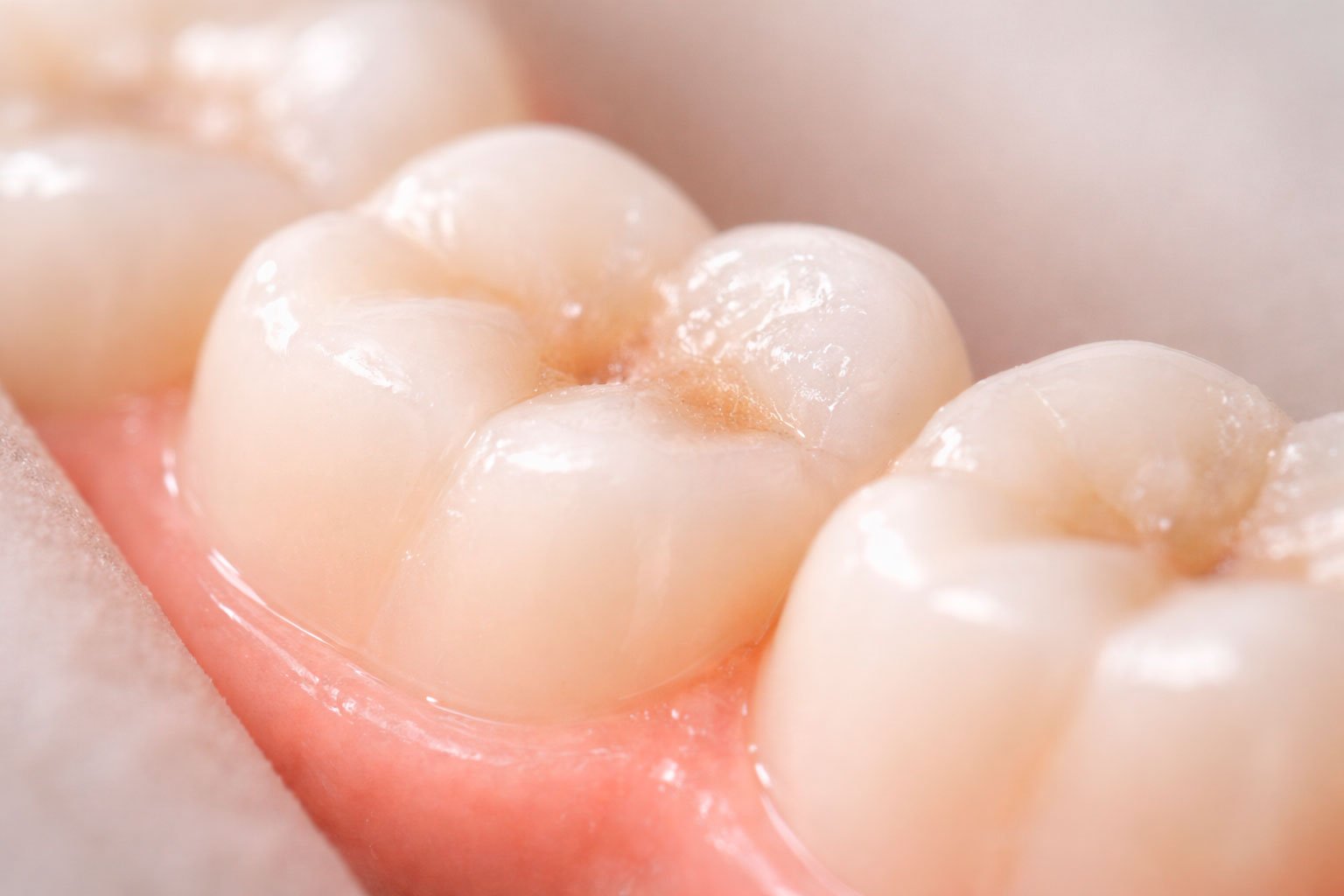
Over time, these spots can progress to brown or even black tones, indicating more developed dental caries. If a cavity is noticeable to the touch with the tongue or to the eye, the caries is already well established and needs professional intervention.
According to recent data, more than 90% of the adult population experiences tooth decay at some point in their lives, underscoring the importance of early detection of these visual signs.
Other warning signs and the importance of early action
Persistent bad breath, known as halitosis, can be another subtle indicator of tooth decay, especially if food gets trapped in cavities that are not visible to the naked eye. Thorough hygiene will not improve this symptom if the cause is an active infection.
If you experience these symptoms of tooth decay, a professional evaluation is key. At Platón Dental, our dental clinic in Palma combines high-precision diagnosis with minimally invasive treatments, restoring your oral health with excellence and confidence.
Acting quickly on these signs not only prevents further damage, but also facilitates a simpler solution. It is essential not to delay visiting a specialist when your teeth are “telling you” about the possible causes of tooth decay.
Tooth Sensitivity
Discomfort or chills when consuming cold or hot drinks or sweet foods, indicating early enamel erosion.
Persistent or throbbing pain
Sharp pain when biting, persistent throbbing, or intense pain that interrupts sleep are signs of advanced tooth decay.
Visible Stains and Cavities
Observation of white, brown, or black stains on the enamel, or the formation of noticeable cavities.
Effective strategies for preventing tooth decay
Protecting our smile against tooth decay is a daily task that combines simple habits with strategic professional protection. It’s not just about reacting when the problem arises, but about adopting a proactive philosophy. A detailed action plan is key to keeping your teeth strong and healthy in the long term.
Daily care: the foundation of a healthy smile
The cornerstone of cavity prevention is meticulous oral hygiene. Brush your teeth at least twice a day, for two minutes each time, using a soft-bristled toothbrush and fluoride toothpaste. Pay special attention to the gum line and the chewing surfaces of your molars.
Brushing alone is not enough; bacteria hide between your teeth. Therefore, daily use of dental floss or interdental brushes is essential to remove food debris and bacterial plaque from these hard-to-reach areas. This simple practice effectively prevents the formation of new dental caries in these critical spaces.
Mindful nutrition and the power of fluoride
A balanced diet plays a crucial role in preventing cavities. Drastically reduce your consumption of added sugars, found in sugary drinks, sweets, and processed foods, as they are the main food source for the bacteria that cause cavities. Choose water as your main beverage and enjoy a diet rich in fruits, vegetables, and dairy products.
Fluoride is an essential mineral that strengthens tooth enamel, making it more resistant to acid attacks from bacteria. In addition to fluoride toothpaste, your dentist may recommend fluoride mouthwashes or topical applications, especially if you are at high risk for developing what is tooth decay.
Professional reinforcements for long-lasting protection
Dental sealants are an excellent preventive measure, especially in children and adolescents. They consist of a thin protective layer that is applied to the chewing surfaces of molars and premolars, sealing the grooves and pits where food and bacteria tend to accumulate. This procedure is quick, painless, and very effective in preventing cavities in children and adults.
The importance of regular dental checkups cannot be underestimated. Visiting your trusted dentist every six to twelve months allows for the detection of any early signs of cavities or dental problems, enabling proactive treatment before complex cavity treatment becomes necessary. At Platón Dental, we combine clinical excellence with a focus on the overall well-being of the patient, offering comprehensive dentistry.
Complement your visits with professional dental hygiene. A deep cleaning performed by specialists removes tartar and plaque that daily brushing cannot remove, protecting your teeth and gums. This preventive and personalized approach ensures that each patient feels supported from the very first minute on their journey to optimal oral health.
Rigorous Daily Care
Brushing twice a day with fluoride and flossing are the basis for removing plaque and debris.
Conscious Nutrition and Fluoride
Reduce sugars, drink water, and take advantage of fluoride to strengthen tooth enamel.
Professional Dental Reinforcement
Sealants, regular checkups, and professional cleanings complement your protection.
Dental treatment options: repairing cavities
When tooth decay has already appeared, it is crucial to act without delay to stop its progression and restore the health of the affected tooth. Fortunately, modern dentistry offers a range of treatments that are tailored to the severity of each case, from small fillings to more complex procedures.
Early intervention is key to avoiding major complications and preserving the natural tooth. At Platón Dental, we understand that each situation is unique, which is why we perform an accurate diagnosis to offer the most appropriate and minimally invasive solution.
Direct restorations: dental fillings
For cavities in their early or moderate stages, fillings are the most common treatment. They involve removing the damaged tooth tissue and replacing it with a restorative material that restores the tooth’s shape and function.
There are two main types: composite resins, which are similar in color to the tooth and ideal for a natural look, and amalgams, which are more durable and resistant, although less aesthetic due to their metallic color. The choice will depend on the location of the decay and the patient’s preferences.
Crowns and root canals: solutions for advanced damage
When the destruction caused by decay is extensive and affects a large part of the tooth structure, a dental crown may be necessary. This artificial “cap” covers and protects the entire tooth, restoring its shape, size, and strength and improving its appearance.
If the decay has reached the pulp, causing an irreversible infection or inflammation, root canal treatment is essential. This procedure involves removing the damaged pulp, cleaning and sealing the root canal, thus saving the tooth from extraction.
Tooth extraction: the last resort and its alternatives
Unfortunately, sometimes the damage caused by decay is so severe that the tooth cannot be saved and tooth extraction becomes the last resort. This happens when the tooth structure is irreversibly compromised or there is a risk of the infection spreading.
In these cases, a dentist in Palma can explore options to replace the lost tooth, such as dental implants or bridges, which restore the functionality and aesthetics of the mouth. At our dental clinic in Mallorca, we always prioritize the overall health and well-being of the patient, seeking long-lasting solutions.
Dental Fillings (Obturations)
Ideal for early or moderate cavities. The damaged tissue is removed and the tooth is restored with composite resin or amalgam.
Dental Crowns
When the damage from decay is extensive. The entire tooth is covered and protected with a “cap” to restore its shape and function.
Root Canal Treatment
Necessary if the decay has reached the pulp, causing infection. The damaged pulp is removed to save the tooth.
Pain Management and Advanced Complications of Cavities
When tooth decay is not treated in time, the situation can escalate from a minor annoyance to a painful and dangerous emergency. Ignoring the early symptoms of cavities not only intensifies the pain, but also opens the door to serious infections with consequences that go beyond the mouth.

Temporary relief and the urgency of acute pain
Advanced tooth decay pain is acute, throbbing, and constant, often unbearable. As a temporary measure, before an urgent visit to the dentist, cold compresses can be applied to the outer cheek to reduce swelling, and over-the-counter pain relievers such as ibuprofen can offer momentary relief.
However, it is crucial to understand that these home remedies are only temporary fixes; the source of the pain persists. The only way to resolve this situation is to see a specialist immediately. A dentist in Palma can provide a diagnosis and appropriate treatment to prevent the problem from worsening.
Dental abscesses and risks of systemic infection
One of the most serious complications is a dental abscess, an accumulation of pus caused by a bacterial infection. This manifests itself as facial swelling, fever, and general discomfort, and is considered a true medical emergency that requires immediate attention to drain the infection and treat the cavity.
If an abscess is not treated quickly, the infection can spread beyond the mouth. This can lead to life-threatening conditions such as facial cellulitis, a soft tissue infection that can spread to other parts of the head and neck, or even sepsis, affecting vital organs. The patient’s overall health is at stake.
Impact on quality of life and the importance of rehabilitation
Advanced complications of tooth decay drastically impact quality of life. Eating, speaking, and sleeping become difficult and painful tasks, causing stress and affecting emotional well-being. Tooth loss and the need for complex treatments are also direct consequences of delayed treatment.
In these extreme situations, emergency care is vital. Subsequently, comprehensive oral rehabilitation is essential to restore function and dental aesthetics. At Platón Dental, we take a comprehensive dentistry approach, prioritizing not only the solution to the crisis, but also the long-term health of the patient with advanced caries treatment and exceptional human care.
Warning! Risks of Systemic Complications
A dental abscess that is not treated in time can spread the infection beyond the mouth, leading to potentially life-threatening conditions such as facial cellulitis (severe soft tissue infection) or even sepsis, which affects vital organs. Emergency dental care is crucial to avoid these dangers.
Debunking myths and truths about tooth decay: tips and facts
Tooth decay is one of the most common oral conditions, but it is often surrounded by misconceptions. Separating fiction from science is crucial to protecting our oral health and making informed decisions.
Educating ourselves about what tooth decay is and how to prevent it can significantly transform our habits. It’s time to debunk some popular beliefs that, far from reality, hinder proper tooth decay prevention.
Debunking popular misconceptions about tooth decay
One of the most widespread myths is that “only children get cavities.” However, the reality is that it affects people of all ages. Older people, for example, may experience gum recession that exposes the tooth root, making them more vulnerable.
It is also mistakenly believed that “cavities are contagious,” as if they were the flu. While the bacteria responsible are transmissible, the disease itself is not directly contagious. Cavities are the result of a complex process influenced by multiple factors.
Another misconception is that “cavities are inevitable with age” or that “pregnancy always causes cavities.” Although hormonal changes during pregnancy can alter salivary pH, pregnancy alone does not cause tooth decay. The key lies in maintaining rigorous oral hygiene and visiting the dentist in Palma regularly.
The science behind a healthy mouth: truths that matter
A fundamental truth is that the frequency of sugar consumption is more harmful than the total amount. Every time we eat or drink something sweet, the pH in our mouth drops, creating an acidic environment that promotes the causes of tooth decay. Repeated acid attacks are the real enemy.
Saliva plays an irreplaceable protective role. It neutralizes acids, remineralizes enamel, and washes away food particles. Factors such as dehydration or certain medications can reduce salivary flow, increasing the risk of tooth decay.
Furthermore, although genetic factors can influence the composition of enamel or the shape of teeth, they do not completely determine our predisposition. With proper professional dental hygiene and care, even people with a certain genetic predisposition can maintain a healthy mouth.
Facts that transform habits and prevent tooth decay
Advances in preventive dentistry offer us powerful tools. From dental sealants to fluoride varnishes, these innovations strengthen our teeth. At Platón Dental, we integrate advanced technology and a minimally invasive approach for long-term protection.
Adopting daily habits such as brushing your teeth after every meal and flossing is crucial for cavity prevention. Regular visits to the dentist are equally important for detecting any problems in their early stages.
| Popular Myth | Scientific Reality | Implications for your habits |
|---|---|---|
| “Only children get cavities” | It affects people of all ages. Adults and seniors may be more vulnerable due to gum recession. | Prevention and oral hygiene are essential throughout life. |
| “Cavities are contagious.” | Bacteria are transmissible, but cavities are a multifactorial disease, not directly contagious. | Focus on your personal hygiene and reducing sugars, not on avoiding “contagion.” |
| “Tooth decay is inevitable with age or pregnancy.” | Neither age nor pregnancy directly cause tooth decay. The risks increase, but with good hygiene it is preventable. | Maintain rigorous hygiene and regular dental visits at all stages of life. |
Final conclusions and recommendations
Tooth decay, that silent challenge to our oral health, is a process that we now understand in depth: from its causes and warning signs to the most effective strategies for prevention and treatment. Understanding what cavities are and how they affect our mouths is the first step toward a healthier, longer-lasting smile.
Key points to remember
- Cavities, a controllable process: It is caused by the interaction of bacteria, sugars, and time, which demineralizes tooth enamel. It is a dynamic condition, but with appropriate preventive measures, its development can be stopped and reversed in its early stages.
- Prevention as a shield: Maintaining impeccable oral hygiene, limiting sugar consumption, and making regular visits to the dentist are the fundamental pillars for preventing the development of cavities.
- Symptoms, warning signs: Pain, sensitivity, or stains on the teeth are signs that should not be ignored. Identifying the symptoms of tooth decay early allows for less invasive and more conservative treatment, avoiding major complications.
- Cavity treatment, effective solutions: From fillings to crowns, there are multiple options for restoring the function and aesthetics of affected teeth. Current technology allows for precise and comfortable interventions, adapted to each need.
- Overall well-being: Oral health goes hand in hand with general health. Neglecting tooth decay not only causes pain and tooth loss, but can also affect other aspects of our well-being.
Practical recommendations
To keep tooth decay at bay and ensure the health of your smile, consistency is your best ally. Adopt a routine of brushing your teeth twice a day with fluoride toothpaste, flossing or using interdental brushes daily, and moderating your consumption of sugary foods and drinks. These simple actions are the most powerful weapons against the advance of tooth decay.
In addition, it is crucial to schedule regular visits to the dentist. Your dentist can detect tooth decay in its earliest stages, even before you notice any symptoms, offering timely intervention. At Platón Dental, we specialize in high-precision diagnostics and minimally invasive treatments, always prioritizing your overall well-being and an exceptional human experience, so that you feel supported from the very first minute in managing your oral health.
Remember that a healthy mouth is an investment in your quality of life. Trust in prevention and professional care to protect your smile, ensuring that it remains strong, functional, and aesthetically pleasing over the years.
Tooth Decay: A Controllable Process
Caused by bacteria and sugars, its development can be stopped and reversed in its early stages with proper prevention.
Prevention: Your Key Shield
Impeccable oral hygiene, a low-sugar diet, and regular visits to the dentist are essential.
Early Detection and Treatment
Identifying symptoms early allows for less invasive and more effective treatments, avoiding complications.