 Whatsapp


You close your mouth. Your molars touch. But between your upper and lower incisors there is a gap through which you could almost pass your tongue. In fact, your tongue is probably there right now, resting in that very space. That is no coincidence: it is the central mechanism of anterior open bite, a malocclusion that many patients discover late and that, for years, they have been told “is just aesthetic.” Spoiler: it is not.
What anterior open bite actually is
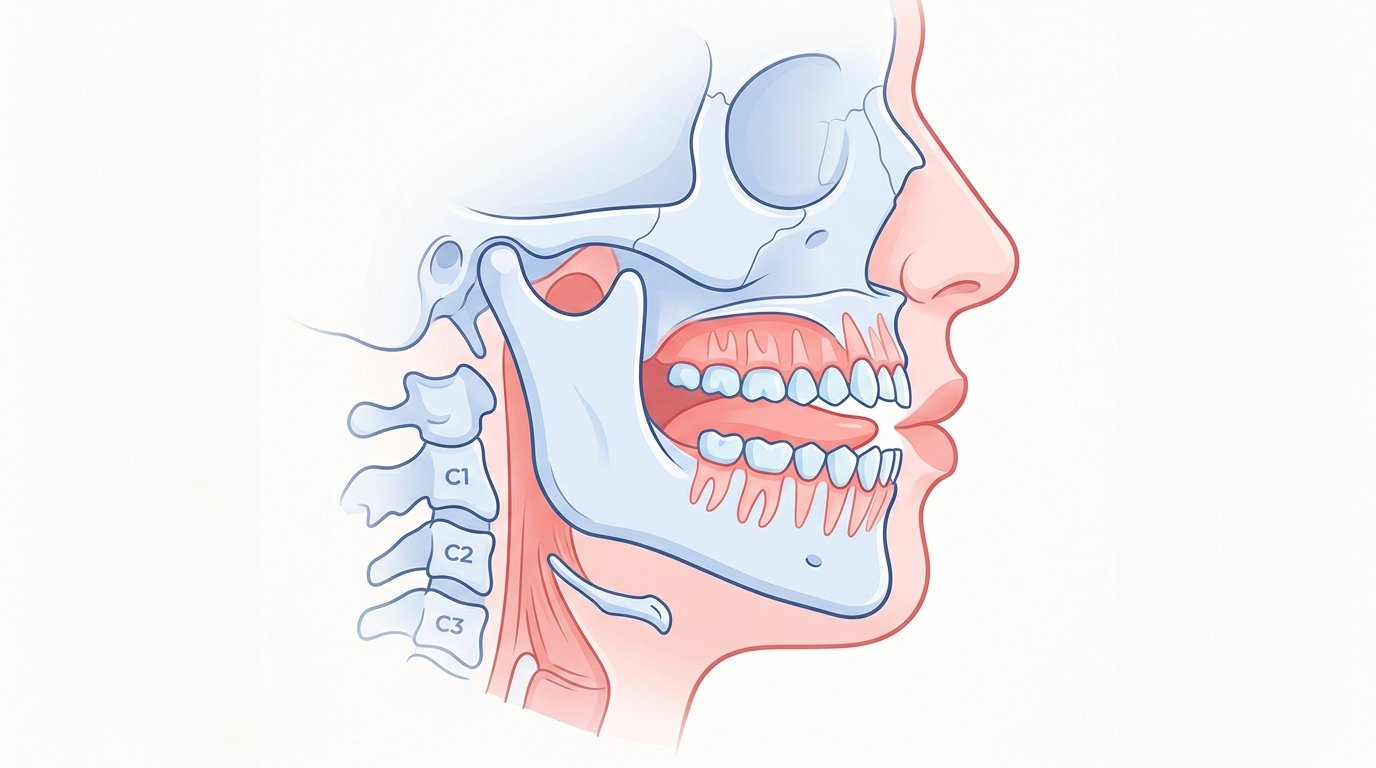
Anterior open bite is a malocclusion in which the upper and lower incisor teeth do not make contact when the mouth is closed, leaving a visible space in the front area. The molars do touch — sometimes with too much force, as we will see — but the front section remains suspended in the air.
This condition is not rare: various epidemiological studies place its prevalence between 1.5% and 11% of the population, with significant variations depending on age and ethnic group, making it a frequent malocclusion in orthodontic practice. The problem is that many of these patients arrive late, when the pattern is already established and the functional consequences have been accumulating for years.
It is important to distinguish two main types: dental open bite, caused by habits such as thumb sucking, prolonged dummy use or tongue interposition during swallowing, in which the teeth shift due to constant pressure without a relevant bony discrepancy; and skeletal open bite, which is rooted in an abnormal jaw growth pattern, more complex to treat and which in adults may require orthognathic surgery combined with orthodontics.
Dental vs. skeletal open bite: comparison table
Before going into causes and treatments, it is worth placing your case. The distinction between dental and skeletal origin changes everything: the prognosis, the tools and the cost. This table summarises the key differences.
| Characteristic | Dental origin | Skeletal origin |
|---|---|---|
| Main cause | Oral habits (dummy, digit sucking, tongue thrust) | Abnormal bone growth pattern (dolichofacial pattern, mandibular rotation) |
| Typical age of onset | Childhood and early adolescence | Adolescence and adulthood |
| Associated facial pattern | Variable; no specific facial features | Frequently dolichofacial (long and narrow face) |
| Cephalometric diagnosis | Minimal vertical overjet index; normal facial axis | Steiner/Ricketts analysis: open facial axis, increased mandibular angle |
| Treatment options | Fixed orthodontics or aligners + myofunctional therapy / orofacial speech therapy | Orthodontics + orthognathic surgery (in adults); functional appliances (during growth) |
| Prognosis without treatment | Progressively worsens; accelerated posterior wear | Does not self-correct; high risk of TMJ dysfunction |
| Risk of relapse | High if the causative habit is not corrected | Low if surgery + orthodontics are correctly combined |
| Indicative cost in Spain | €1,500–€5,000 (orthodontics + myofunctional therapy) | €15,000–€25,000 (surgery + pre- and post-orthodontics) |
The leading role of the tongue: tongue interposition
Here lies the core of the matter. The tongue is the most powerful and persistent muscle in the oral cavity, and when it habitually adopts an incorrect position, it has the capacity to remodel the position of the teeth with an effectiveness that no other factor can match.
Under normal conditions, when swallowing, the tongue presses upward against the palate. But in many people — especially those with dental open bite — the tongue interposes itself between the incisors at the moment of swallowing. This pattern is called atypical swallowing or tongue thrust, and it occurs thousands of times a day: every time you swallow saliva, every time you eat, every time you speak.
It is not a single blow that opens the bite, but the sum of thousands of small daily pushes that, accumulated over months and years, shift the incisors outward and upward, preventing them from erupting to their correct position.
Tongue interposition may be the original cause of the problem or it may be an adaptive consequence: the tongue “learned” to occupy that space because it was the only place it could fit when swallowing. In either case, if the tongue pattern is not corrected, any orthodontic treatment runs the risk of relapsing. That is why myofunctional therapy is not an optional complement, but part of the protocol in most cases of dental open bite.
Other causes: childhood habits, mouth breathing and skeletal factors
Open bite rarely has a single cause. In many patients we find a combination of factors that reinforce each other. Understanding them helps explain why treatment must be comprehensive.
Oral habits in childhood
In childhood, prolonged habits such as continued dummy use, digit sucking or tongue interposition during swallowing can prevent the incisors from erupting correctly or alter their inclination. The key word here is “prolonged”: a dummy used until the age of two rarely leaves permanent consequences; one that persists beyond three or four years, especially during sleeping hours, is a different scenario altogether. The persistence of these habits beyond the first years of life is associated with a higher risk of developing anterior open bite.
The problem is that many of these habits go unnoticed or are minimised. “They’ll grow out of it,” people say at home. And sometimes that happens. But when it does not, the muscular pattern becomes ingrained and the malocclusion sets in. Detecting an open bite in its initial phase — when habits are still modifiable — makes an enormous difference to the treatment prognosis.
Chronic mouth breathing
A child who habitually breathes through the mouth — due to allergies, hypertrophied adenoids or simply out of habit — profoundly alters the muscular balance of their face. Chronic mouth breathing encourages the tongue to adopt a low and forward position instead of resting against the palate. The result, over time, can be an open bite with both a dental and a skeletal component.
Skeletal and genetic factors
In adolescents and adults, anterior open bite often has a skeletal component. Excessive vertical growth of the upper jaw or mandibular rotation — features characteristic of the dolichofacial pattern — can generate the lack of anterior contact. Cephalometric analysis according to Steiner and Ricketts criteria allows the vertical overjet index and the facial axis to be quantified, data that are essential for deciding whether the case can be resolved with orthodontics alone or requires surgery. This is the most complex type to treat and the one that most frequently requires orthognathic surgery in adulthood.
"It's just aesthetic": the myth that needs debunking
This is the belief that causes the most harm. That open bite is an image problem, that if it does not bother you visually there is nothing to be done. The clinical reality is different, and it is worth putting it in perspective.
Anterior open bite produces masticatory, phonetic and articular consequences that accumulate silently over years. This is not a list of possible inconveniences: it is the clinical summary of the real impact of this malocclusion on the daily life of those who suffer from it.
Compromised chewing and posterior overload
One of the first difficulties appears when trying to bite food with the incisors. This limitation, characteristic of untreated open bites, forces the posterior teeth to be overloaded, which can accelerate their wear. Over time, the molars and premolars — which are not designed to take on the entire masticatory function — begin to show signs of premature wear, microfractures and increased sensitivity. It is silent damage that accumulates over years before becoming evident. Many patients with untreated open bites only connect these symptoms to the malocclusion when the wear is already considerable.
Pronunciation problems
Some people with open bite may experience difficulties pronouncing certain sounds. Phonemes that require the tongue to contact the incisors — such as “s”, “z” or “d” — are particularly affected. Many adult patients have lived with these difficulties for so long that they no longer perceive them as abnormal, but their interlocutors do notice them. Orofacial speech therapy specifically addresses these articulatory patterns in coordination with orthodontic treatment.
Temporomandibular joint dysfunction
The imbalance in the bite can cause pain and dysfunction in the temporomandibular joint (TMJ). When the masticatory load is not correctly distributed among all the teeth, the joint that connects the jaw to the skull ends up paying the price: clicking, pain when opening the mouth, headaches of mandibular origin. Not all cases of open bite lead to TMJ problems, but the risk is real and should not be ignored.
How it is diagnosed: beyond looking at the mouth
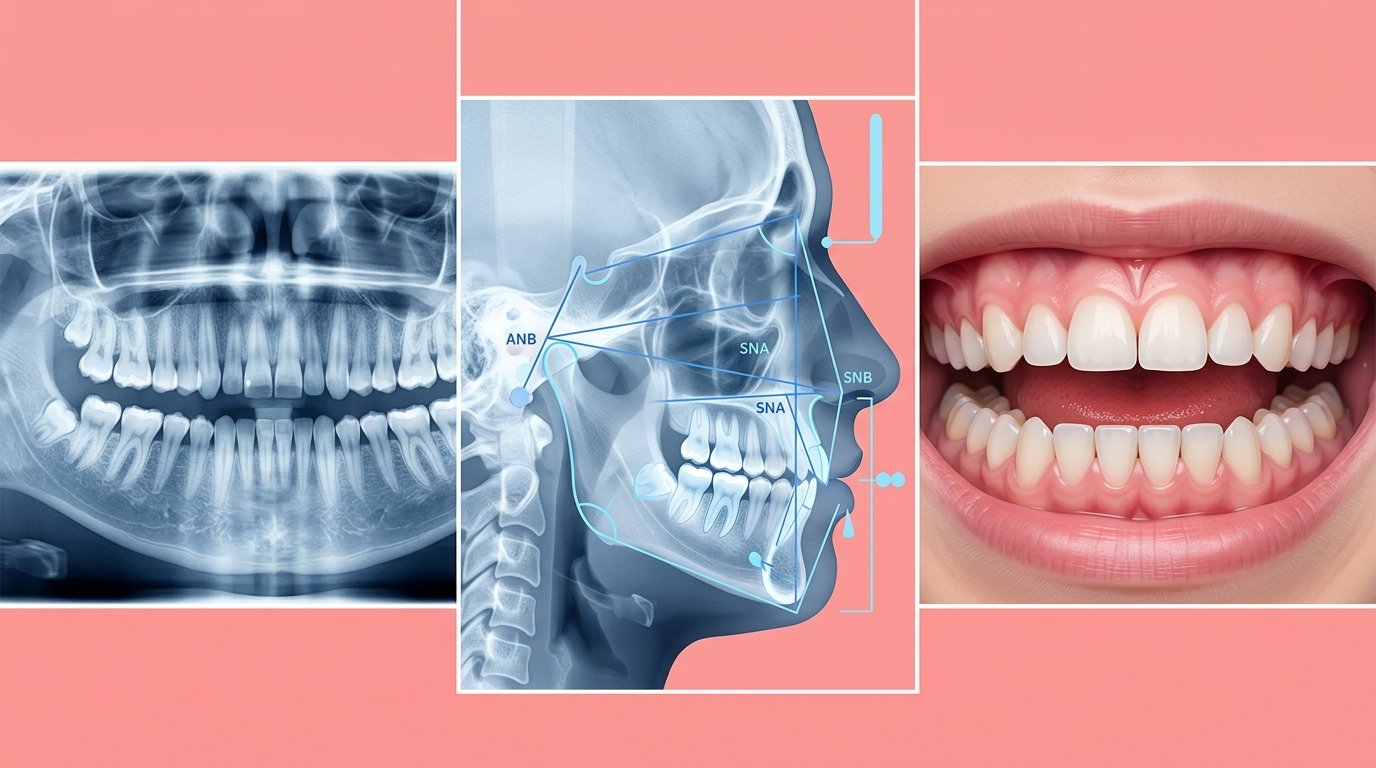
A correct diagnosis of open bite goes far beyond observing that the front teeth do not touch. Correct diagnosis requires a complete cephalometric and radiological analysis, since treating only the position of the teeth without considering the facial pattern can produce unstable results.
At Clínicas Dentales Platón, the study of an open bite includes a panoramic X-ray, a lateral skull teleradiograph with cephalometric analysis according to Steiner and Ricketts parameters, and in many cases a CBCT (cone beam computed tomography) to evaluate the bone structure in three dimensions. The swallowing pattern and tongue posture are also analysed, because without that information it is impossible to design a treatment plan that lasts. The measurement of the vertical overjet index and the facial axis determines whether the origin is dental, skeletal or mixed, and everything that follows depends on that answer.
Treatment in children: the window of opportunity not to be missed
If there is one message that orthodontists repeat in the clinic — and that the evidence supports — it is this: treating open bite during growth is incomparably simpler than doing so in adulthood. The reason is simple: the bones are still forming, habits are more modifiable and functional appliances can redirect development without the need for surgery.
The American Association of Orthodontists (AAO) recommends the first orthodontic evaluation at age 7, when there are already enough permanent teeth to detect malocclusion patterns in their initial phase. In Spain, the clinical consensus places the optimal window for interceptive treatment between the ages of 7 and 11, when the child is still in an active growth phase and appliances work with greater effectiveness.
Functional appliances in mixed dentition
In this age range, the most commonly used appliances for dental open bite are:
- Tongue crib: a fixed or removable device placed in the palate that acts as a physical stop for the tongue, preventing it from interposing between the incisors during swallowing. By eliminating tongue pressure, the lip musculature helps reposition the front teeth to their correct place. Its usual duration is 6 to 12 months.
- Functional appliances (Frankel or Simoes Network type): these act directly on the orofacial musculature — lips, tongue and cheeks — to balance the forces that shape bone development. They are especially useful when there is a mild associated skeletal component.
- Quad-helix: a fixed expander that widens the palate and simultaneously corrects the transverse position of the upper jaw, which is frequently altered in patients with chronic mouth breathing.
A review published in the Revista Científica Sanum (January 2025) underlines that early interceptive treatment can eliminate the alterations that disrupt the balance of oral forces, preventing the open bite from becoming established and significantly reducing the likelihood of needing surgery in adulthood. The child’s motivation and family involvement are determining factors: an appliance left in a drawer treats nothing.
Treatment options in adolescents and adults: beyond braces
When someone discovers in adulthood that they have an open bite, the first question is usually: “Do I have to wear braces?” The honest answer is: it depends. And there are more options than most people imagine.
Fixed orthodontics and clear aligners
In adolescent and adult patients with anterior open bite of dental origin, fixed orthodontics or clear aligners can reposition the teeth precisely and in a controlled manner. Aligners have proven to be especially effective in cases of mild or moderate open bite, and have the advantage of being practically invisible during treatment. Orthodontics acts on tooth position, but does not by itself correct the muscular pattern that caused the problem.
Myofunctional therapy and orofacial speech therapy: retraining the tongue
Imagine you have spent years using a pen with your left hand even though you are right-handed: the muscles have learned that pattern and repeat it automatically. Retraining the tongue works the same way: it requires specific exercises, conscious repetition and time. That is exactly what myofunctional therapy does. If the functional cause — such as tongue thrust or an altered muscular pattern — is not corrected, there is a real risk of relapse in open bite, regardless of how well the orthodontics went. That is why, in certain cases, orthodontics is combined with myofunctional therapy to retrain tongue position and balance the orofacial musculature.
Orthognathic surgery: when and what it involves
In adults with severe skeletal open bite, orthognathic surgery is the only route that offers a stable and definitive correction. It is not a decision taken lightly, but it is not as exceptional as it seems: it is the standard indication when cephalometric analysis confirms a bony discrepancy that orthodontics alone cannot compensate.
What does it involve? The maxillofacial surgeon surgically repositions one or both jaws — upper jaw, mandible or both (bimaxillary surgery) — to correct the skeletal relationship. The procedure is performed under general anaesthesia and usually requires a brief hospital stay, typically less than 24 hours thanks to current minimally invasive protocols.
The treatment has three phases:
- Pre-orthodontics (6–18 months): the teeth are aligned within each arch so that they fit correctly after surgery. Paradoxically, during this phase the open bite may appear to worsen before it improves.
- Orthognathic surgery: the intervention itself. Prior virtual planning allows the movements to be simulated and the functional and aesthetic outcome to be anticipated.
- Post-orthodontics (6–12 months): fine adjustment of the occlusion and a retention phase to stabilise the result.
The functional recovery time — returning to eating normally, speaking without discomfort — is usually between 4 and 8 weeks. Residual swelling may persist for several months.
Is it covered by the National Health Service? The public health system covers orthognathic surgery when there is a documented functional indication: severe dentofacial deformities, significant chewing impairment or congenital malformations. However, access depends on the assessment of the maxillofacial surgery department of the reference hospital and the criteria of each autonomous community, and waiting times can be considerable. Importantly, the orthodontics before and after surgery is normally outside public coverage, even when the surgical intervention itself is covered.
How much does treating open bite cost in Spain: real ranges for 2025–2026
This is the question most asked by those who come to the clinic after reading about the malocclusion. And it makes sense: the cost varies enormously depending on the type of open bite, the patient’s age and the chosen treatment route. Here are the updated indicative ranges, so you can go to your first appointment with a realistic idea of the investment.
| Type of treatment | Indicative range in Spain | Notes |
|---|---|---|
| Interceptive orthodontics (children) | €800–€2,000 | Tongue crib, functional appliances; duration 6–12 months |
| Metal or ceramic braces | €1,500–€4,500 | Complex open bite cases at the upper end of the range |
| Clear aligners | €2,500–€5,500 | Effective in mild-to-moderate cases; complex cases may exceed €5,000 |
| Myofunctional therapy | €500–€1,500 | Essential complement in cases of dental origin; does not replace orthodontics |
| Orthognathic surgery (private) | €12,500–€20,000 (surgery only) | Pre- and post-orthodontics added separately; total cost may exceed €25,000 |
| Post-treatment retention | €200–€500 | Fixed lingual retainer + removable night retainer; essential to prevent relapse |
Some factors that move the price within those ranges: the city (Madrid and Barcelona have rates 15–20% above the national average), the complexity of the case and whether treatment is carried out at a specialist clinic or a dental franchise. Most clinics offer financing over 12, 18, 24 or 36 months interest-free, which allows the cost to be spread without resorting to external financing. Always ask whether the quote includes check-ups, retainers and any possible aligner refinements.
Regarding private dental insurance: some policies cover part of orthodontics, but conditions vary greatly between policies. Before taking out a policy or starting treatment, verify in writing exactly what your insurance covers, whether there are waiting periods and whether orthodontics prior to orthognathic surgery is included — it usually is not.
Retention: what happens when orthodontics ends
Finishing active treatment does not mean the work is done. In open bite, the retention phase is especially critical because the soft tissues — tongue, lips, cheeks — have muscular memory and can exert enough pressure to gradually reopen the space if not controlled.
The standard protocol in open bite cases includes:
- Fixed lingual retainer: a thin metal bar bonded to the inner surface of the lower incisors (and sometimes the upper ones) that passively maintains the achieved position, without the patient having to remember to put it in.
- Removable night retainer: a transparent or acrylic splint worn during sleep. It complements the fixed retainer and acts as a second line of defence against any tendency to relapse.
- Myofunctional follow-up: if the cause was an altered tongue pattern, myofunctional therapy sessions do not end on the day the braces are removed. A follow-up of 6 to 12 months after active treatment consolidates the new swallowing pattern and significantly reduces the risk of the open bite reopening.
Think of it this way: orthodontics moves the teeth to their correct position, but it is the muscles that decide whether they stay there. Retention is the contract between treatment and time.
Warning signs: when to book an appointment without delay
It is not always easy to know whether what you see in the mirror is an open bite or simply a smile with a gap between the teeth. These are the signs that justify a consultation without delay:
- You can see a space between the front teeth when you close your mouth with the molars in contact.
- Your child uses a dummy or sucks their finger beyond the age of 3.
- You notice that when swallowing, the tongue pushes against the front teeth.
- You have difficulty biting certain foods (bread, apple, sandwiches).
- There is visible wear on the molars or increased sensitivity in that area.
- You experience clicking or pain in the jaw joint (TMJ).
- A child has pronunciation problems that persist beyond the age of 5–6.
In any of these cases, an early evaluation commits you to nothing and can save you years of treatment — and several thousand euros — if the problem is detected in its interceptive phase.
Frequently asked questions about open bite
Does open bite close on its own over time?
In young children, some dental open bites — especially those caused by a dummy — can self-correct if the habit is eliminated before the age of three. In adolescents and adults, the malocclusion is already established and does not correct itself without intervention. Waiting only prolongs the time during which the posterior teeth are overloaded and the incorrect muscular pattern remains active.
Can I correct open bite with clear aligners alone?
It depends on the origin and severity. In cases of mild or moderate dental open bite, clear aligners are an effective and increasingly used option. In cases of severe skeletal origin, aligners can improve the situation but do not replace orthognathic surgery. Prior diagnosis is essential to know which tool corresponds to each case.
What is myofunctional therapy and is it really necessary?
Myofunctional therapy is a set of exercises aimed at retraining the position and movement of the tongue during rest, swallowing and speech. It is necessary when tongue thrust or tongue interposition is the cause or a maintaining factor of the open bite. Without it, the risk of the malocclusion reappearing after orthodontic treatment is significantly higher.
How long does open bite treatment take in adults?
Conventional orthodontic treatments for open bite in adults typically range from one to three years, depending on the complexity of the case. Cases requiring orthognathic surgery may take longer, as they include a pre-operative orthodontic phase and a post-operative adjustment and retention phase. Each case is different, and the actual duration can only be estimated after a complete study.
Can open bite cause problems in the jaw joint?
Yes. When the anterior teeth do not make contact, the entire masticatory load falls on the molars and the temporomandibular joint (TMJ). Over time, this imbalance can cause joint pain, clicking when opening the mouth, limited opening and headaches of mandibular origin. Not all patients with open bite develop these symptoms, but the risk is real and justifies treatment beyond aesthetics.
Sources
- Orthognathic surgery: price, what it is, types and how it is performed
- Orthognathic surgery in Spain — get 3 clinics with costs
- What is open bite and how is it corrected? | Smysecret
- Maxillofacial Surgery in the National Health Service | Is it covered?
- How much does orthodontics cost? Prices in Spain in 2025