 Whatsapp


You have had a pasty mouth for weeks, you wake up at night wanting to drink water and you have the feeling that your tongue is sticking to the roof of your mouth. You have been to the doctor, had a check-up and everything seems “normal”. But nobody has asked you what medications you take. That apparently minor detail may be exactly the answer you are looking for. The relationship between medications and dry mouth is one of the most common pharmacological side effects and, paradoxically, one of the least explained to patients. Understanding how drugs and oral dryness are connected is the first step to protecting your oral health.
What is xerostomia and why it is not "just" dryness
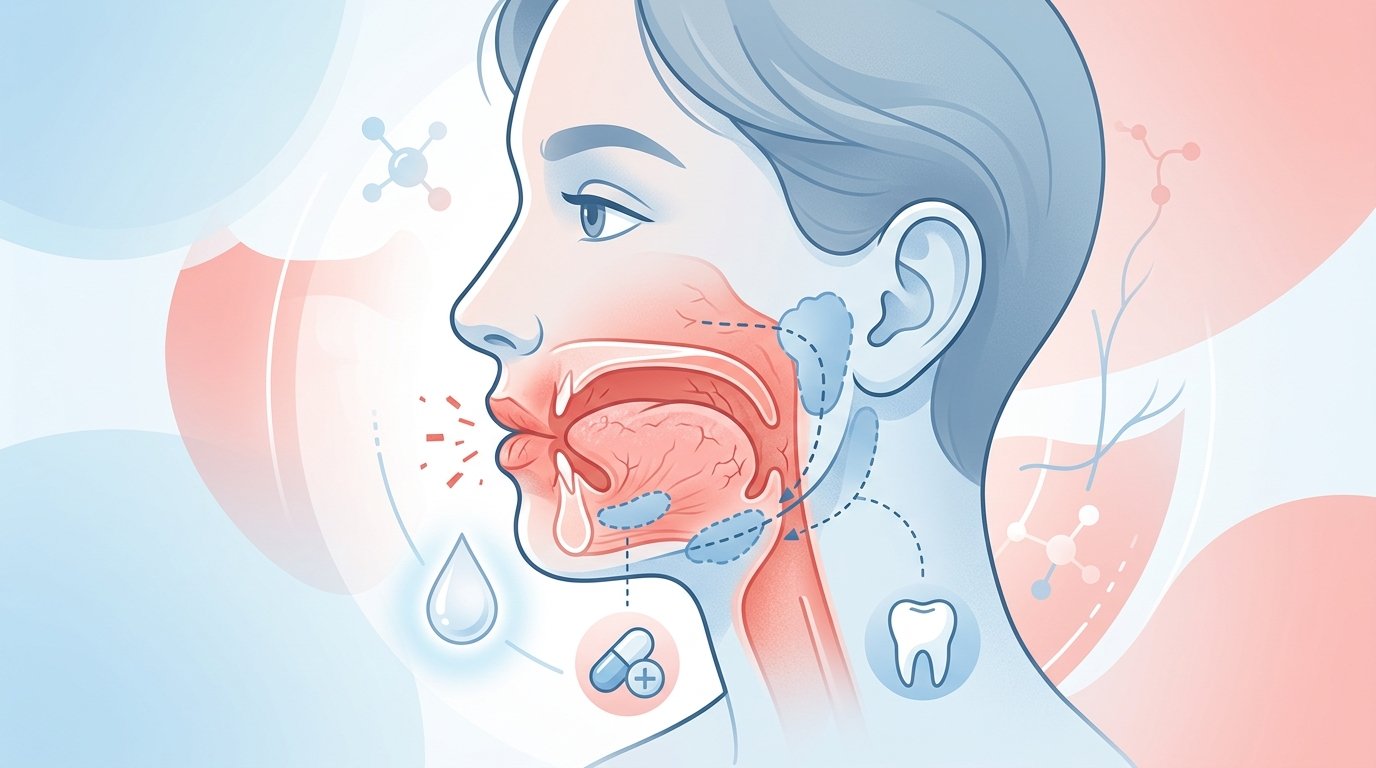
Xerostomia —from the Greek xero (dry) and stoma (mouth)— is the subjective sensation of oral dryness due to lack of saliva. It is not a whim or a minor symptom: it is a signal that the salivary glands are producing less than they need. And when saliva is lacking, the balance of the entire mouth is disrupted. In many cases, the direct cause of that lack of saliva is the very drugs we take daily, turning dry mouth into an everyday complaint that deserves attention.
Saliva is not simply water. It cleans the teeth, neutralises bacterial acids, provides minerals to the enamel and keeps infections at bay. When it is scarce —whether due to disease or the use of medications that cause dry mouth—, the oral mucosa dries out and cracks, cavities advance rapidly —especially at the neck of the teeth— and opportunistic infections such as oral candidiasis become much more likely. Added to this are symptoms such as persistent bad breath, difficulty swallowing dry foods and altered taste.
That said, the good news is that identifying the cause is the first step to taking action. And in most cases, that cause is in the medicine cabinet at home: the relationship between medications and dry mouth is often the origin that nobody has investigated.
Differential diagnosis: when dry mouth is not caused by medications
Before attributing xerostomia to a drug, other causes should be ruled out. Not all dry mouth has a pharmacological origin, and recognising these alternatives is essential to avoid delaying an important diagnosis.
- Sjögren’s syndrome: this is an autoimmune disease that progressively destroys the salivary and lacrimal glands. It mainly affects middle-aged women and produces intense oral and ocular dryness, often accompanied by fatigue and joint pain. Unlike pharmacological xerostomia, it does not improve when any medication is stopped and requires specific rheumatological diagnosis with anti-Ro/SSA and anti-La/SSB antibodies.
- Head and neck radiotherapy: when the irradiation fields include the parotid or submandibular glands, the damage can be permanent. Post-radiotherapy xerostomia is one of the most severe and difficult to treat, as the glandular tissue becomes fibrosed. In these cases, systemic pilocarpine and saliva substitutes are the main therapeutic tools.
- Uncontrolled diabetes: chronic hyperglycaemia causes cellular dehydration and reduces salivary flow. Dry mouth in a diabetic patient may be a signal of poor glycaemic control, not just an isolated symptom.
- Other causes: dehydration, chronic mouth breathing, anxiety, hypothyroidism and HIV disease can also cause xerostomia without any drug being involved.
If oral dryness persists despite reviewing and adjusting medication, referral to rheumatology or internal medicine may be the diagnostic step that changes the approach. The dentist who is well acquainted with this differential diagnosis is the first to detect warning signs.
Why drugs dry out the mouth: the mechanism nobody explains
The salivary glands function under the control of the autonomic nervous system. To produce saliva they need to receive signals from the parasympathetic system, which acts through a neurotransmitter called acetylcholine. When a medication blocks that signal —or interferes with the receptors that receive it—, saliva production drops. This is the central mechanism that explains the relationship between medications and dry mouth.
It is like cutting the wire of a light switch: the bulb does not know that electricity is available, it simply does not receive the order to turn on. This is how drugs with an anticholinergic effect work: they block the muscarinic M1 and M3 receptors of the salivary glands, which are precisely those that regulate secretion. This anticholinergic action is the most frequent cause of drug-induced oral dryness.
But not all drugs act through the same pathway. Some inhibit the sympathetic system, others cause systemic dehydration —such as diuretics— and others act on the central nervous system by reducing the impulses that reach the glands. The end result is the same: less saliva, more dryness. And in patients who take several medications at once, the effects add up in a non-linear way, worsening dry mouth in proportion to the number of drugs involved.
Accumulated anticholinergic burden: when the whole is worse than the sum
When a patient takes several drugs with an anticholinergic effect, the impact on the salivary glands is not simply additive: it can be exponential. To quantify this risk there are validated scales such as the Anticholinergic Risk Scale (ARS) or the Anticholinergic Burden Score (ACB Score), which assign a score to each drug according to its anticholinergic potency. A high total score is associated with a greater risk of severe xerostomia, cognitive impairment and falls in elderly patients.
In practice, this means that a patient who takes a tricyclic antidepressant (high score), a first-generation antihistamine (medium score) and a drug for urinary incontinence (high score) accumulates an anticholinergic burden that can make dry mouth chronic even though each drug on its own might seem tolerable. Understanding this concept is essential for the doctor and dentist to work in a coordinated way when reviewing treatment.
Antidepressants and xerostomia: the most frequent culprit
If there is one group of drugs that tops the list of causes of dry mouth, it is antidepressants. And it is no coincidence: they act directly on the neurotransmitters that regulate salivation.
Tricyclic antidepressants
Tricyclic antidepressants —such as amitriptyline or imipramine— have a potent anticholinergic effect. They strongly block the muscarinic receptors of the salivary glands, producing intense and often persistent oral dryness. According to data collected in the clinical literature, between 30 and 40% of patients treated with tricyclics report severe xerostomia, making this the group with the highest incidence among antidepressants. They are the ones that generate the most intense dry mouth within this group.
Selective serotonin reuptake inhibitors (SSRIs)
SSRIs —fluoxetine, sertraline, escitalopram— are today the most prescribed antidepressants. Although their anticholinergic effect is lower than that of tricyclics, they also cause oral dryness frequently, especially at the start of treatment: pharmacovigilance studies estimate that between 15 and 20% of patients on SSRIs experience moderate-intensity xerostomia. Duloxetine, a dual-action antidepressant (SNRI), shows similar or slightly higher rates due to its greater affinity for noradrenergic receptors.
The clinical reality is simple: if you start antidepressant treatment and in the first few days you notice your mouth is drier than usual, it is not a coincidence, it is pharmacology. Do not abandon the treatment because of this, but do communicate it to your doctor and your dentist, especially if the dry mouth persists or intensifies over time.
Antihistamines: the culprit nobody suspects
Here is one of the great myths worth dispelling: many people associate dry mouth with “strong” or chronically used medications. But antihistamines —those tablets we take without thinking for allergies, colds or hives— are one of the groups with the greatest capacity to dry out the oral mucosa.
First-generation antihistamines, such as diphenhydramine or chlorphenamine, have a marked anticholinergic effect. They dry out not only the nose —which is their therapeutic target— but also the mouth, eyes and throat. Diphenhydramine causes xerostomia in more than 50% of users, according to data from product information sheets and studies of use in the general population. Second-generation antihistamines are somewhat more selective, but the dry mouth effect does not disappear entirely.
The problem is that they are taken intermittently, sometimes without a prescription, and nobody links them to the dry mouth that appears afterwards. If you take antihistamines regularly during allergy season and notice dry mouth, you now have the explanation. That drug-induced oral dryness can be managed, but first it must be recognised.
Antihypertensives: blood pressure under control, mouth without saliva
Drugs for arterial hypertension are probably the most chronically consumed in the adult population. And several of their subgroups have a direct relationship with xerostomia, which is especially relevant given the chronic nature of these treatments.
Diuretics
Diuretics —hydrochlorothiazide, furosemide— work by eliminating fluid from the body to lower blood pressure. The problem is that this systemic dehydration also affects the salivary glands, which produce less saliva because the body has less water available. It is an indirect but real effect: studies in polymedicated hypertensive patients show that the combination of a diuretic with another antihypertensive doubles the prevalence of dry mouth compared to the use of a single agent.
Beta-blockers and other antihypertensives
Beta-blockers —atenolol, bisoprolol, metoprolol— inhibit the sympathetic system, which also participates in the regulation of saliva. Other antihypertensives such as clonidine or methyldopa act on the central nervous system and can reduce salivatory impulses. The result is a progressively drier mouth in patients who have been on these treatments for years, with xerostomia prevalences ranging from 10 to 25% depending on the specific drug and dose. In these patients, dry mouth frequently becomes a silent companion of chronic treatment.
Other drugs that cause dry mouth: the surprising list
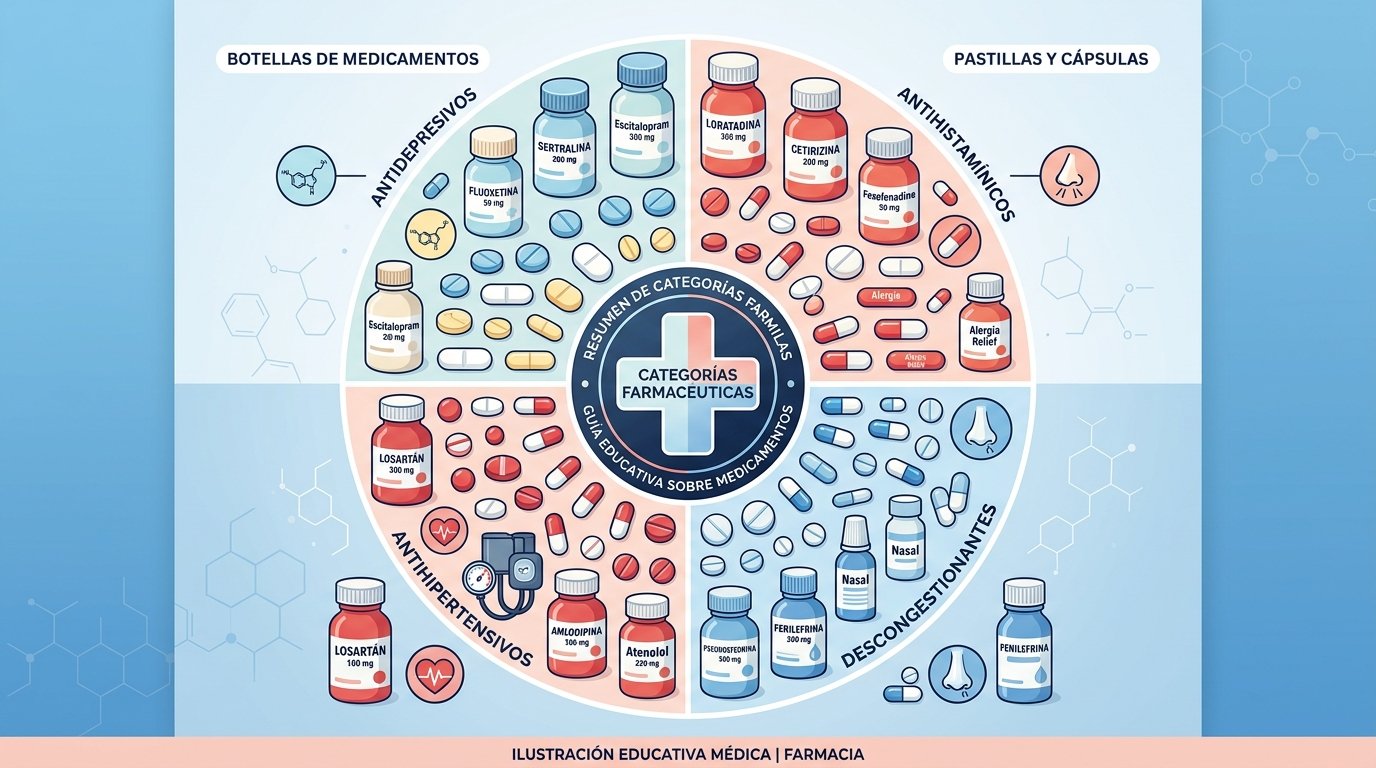
Antidepressants and antihistamines are the best known, but the list of drugs related to side effects on saliva is much longer than you might imagine:
- Anxiolytics and sedatives (benzodiazepines such as diazepam or lorazepam): they reduce the activity of the central nervous system, including the impulses that stimulate salivation. Many patients who take them daily notice dry mouth especially upon waking.
- Antipsychotics (quetiapine, olanzapine, clozapine): they have a potent anticholinergic effect and are among the drugs with the greatest impact on the salivary glands. Clozapine, paradoxically, can produce both xerostomia and sialorrhoea depending on the patient.
- Anticholinergic bronchodilators (ipratropium, tiotropium): used in asthma and COPD, they directly block muscarinic receptors and can thicken and reduce saliva.
- Muscle relaxants: commonly used in chronic pain and contracture treatments, they also reduce salivary flow and can cause dry mouth in a discreet but constant way.
- Opioid analgesics: morphine, codeine and their derivatives have an anticholinergic effect and cause dry mouth in many patients.
- Drugs for urinary incontinence (oxybutynin, tolterodine, solifenacin): they work by blocking muscarinic receptors in the bladder, but that blockade is not selective and also affects the salivary glands. Oxybutynin causes xerostomia in up to 60–70% of patients according to clinical trials, making it one of the drugs with the highest documented rate of this side effect.
- Antiretrovirals: used in the treatment of HIV, they are also associated with dry mouth in some patients, especially with certain protease inhibitors.
- Antiparkinsonian drugs: levodopa and other drugs used in Parkinson’s disease can cause xerostomia as a side effect, adding dry mouth to an already demanding list of symptoms for the patient.
Comparative table: pharmacological groups and dry mouth
This table summarises the main groups of drugs involved in pharmacological xerostomia, their mechanism of action, the usual intensity of the effect and whether oral dryness is reversible upon stopping treatment.
| Pharmacological group | Main mechanism | Xerostomia intensity | Examples | Reversibility |
|---|---|---|---|---|
| Tricyclic antidepressants | Muscarinic M1/M3 blockade | High (30–40%) | Amitriptyline, imipramine | Yes, upon stopping |
| SSRIs / SNRIs | Mild anticholinergic + serotonergic | Moderate (15–20%) | Fluoxetine, duloxetine | Yes, generally |
| 1st-gen. antihistamines | Muscarinic blockade | High (>50%) | Diphenhydramine, chlorphenamine | Yes, rapid |
| Diuretics | Systemic dehydration | Moderate | Hydrochlorothiazide, furosemide | Yes, with hydration |
| Antipsychotics | Potent muscarinic blockade | High | Quetiapine, clozapine | Partial |
| Incontinence drugs | Vesical muscarinic blockade (non-selective) | Very high (60–70%) | Oxybutynin, solifenacin | Yes, upon stopping |
| Beta-blockers | Sympathetic inhibition | Mild–moderate (10–25%) | Atenolol, bisoprolol | Yes |
| Opioids | Anticholinergic + central | Moderate–high | Morphine, codeine | Yes, generally |
What happens to your mouth when saliva is lacking: the real dental consequences
Xerostomia is not just a nuisance. It is a condition that can seriously compromise your dental health if it persists over time without treatment. Dry mouth caused by medications has specific and progressive consequences that are worth knowing:
Rampant cavities. Without saliva to neutralise bacterial acids and remineralise the enamel, cavities advance at an unusual speed. The pattern is characteristic: they appear at the neck of the teeth, at the gum margins and in areas that are normally protected. Dentists recognise it immediately, especially when dry mouth is associated with the intake of certain drugs.
Oral candidiasis. Saliva contains antifungal proteins that keep the fungus Candida albicans at bay. When saliva is lacking —for example, due to medications that dry out the mouth—, oral candidiasis —those whitish plaques or reddened areas on the tongue and mucosa— becomes a frequent complication.
Accelerated periodontal disease. The lack of saliva promotes the accumulation of bacteria in the gum and the periodontal sulcus. In the long term, this can accelerate the bone and attachment loss that characterises periodontitis. Pharmacological xerostomia is therefore a periodontal risk factor that must not be ignored.
Chronic bad breath. Saliva sweeps away food debris and bacteria. Without it, the oral environment becomes more anaerobic and bad breath sets in persistently, resistant to any mouthwash. In many patients, dry mouth caused by medications is the origin of bad breath that does not improve with normal hygiene.
Difficulty speaking and swallowing. In severe cases, the lack of saliva affects basic functions such as chewing, swallowing and speech articulation. Quality of life suffers notably, especially in people who take chronic medication and whose oral dryness is not being treated.
What you can do if your drugs are drying out your mouth
The first thing you should know is that you should not stop any medical treatment for this reason without consulting your doctor. Pharmacological xerostomia is a manageable side effect; the health problem the drug treats, in many cases, is not. But there are things you can do to manage the relationship between your medications and dry mouth.
Talk to your doctor and your dentist
In some cases, the doctor can adjust the dose, change the time of administration or substitute the drug for another with a lower anticholinergic effect. This is not always possible, but it is worth exploring the option when medications are causing significant dry mouth. Your dentist needs to know what medications you take: not to judge your treatment, but to understand why your mouth behaves the way it does and to adapt the review and prevention protocol.
At Clínicas dentales Platón, when a patient arrives with an atypical cavity pattern or persistent oral dryness, the first thing we do is review their pharmacological history. It is an essential diagnostic step that very often completely changes the treatment approach.
Specific pharmacological treatments for xerostomia
In moderate or severe cases where saliva substitutes are not sufficient, there are pharmacological options to stimulate saliva production. Pilocarpine (a muscarinic agonist) and cevimeline are the two drugs approved for the treatment of xerostomia in certain indications —such as Sjögren’s syndrome or post-radiotherapy xerostomia—. They work by directly stimulating the receptors of the salivary glands to increase secretion. Their use requires a medical prescription and is not without side effects (sweating, nausea), but in patients with severe dry mouth they can significantly improve quality of life. Consult your doctor if you think you could benefit from these options.
Everyday measures that make a difference
While the pharmacological origin is being managed, these strategies help to relieve the symptoms of dry mouth caused by medications and to protect dental health:
- Frequent hydration: drinking water in small sips throughout the day, especially during meals. It is the simplest and most effective measure against drug-induced oral dryness.
- Sugar-free gum with xylitol: mechanically stimulates saliva production and xylitol has a protective effect against cavities. It is especially useful for people with mild or moderate dry mouth due to medication.
- Avoid alcohol, caffeine and tobacco: all three significantly worsen oral dryness, especially in people who already suffer from dry mouth due to medications.
- Saliva substitutes: gels or sprays based on carboxymethylcellulose or mucins that moisten the mucosa and relieve dryness, especially at night when pharmacological dry mouth tends to be most intense.
- Specific mouthwashes for dry mouth: alcohol-free, with fluoride and lubricating components. Your dentist can advise you on which is most suitable for your case.
- Professional fluoride application: in patients with chronic xerostomia, high-concentration fluoride applications in the dental practice are a key tool for slowing down the rampant cavities associated with medications that cause dry mouth.
When to see the dentist if you have dry mouth
Pharmacological xerostomia does not go away on its own while treatment continues. Waiting for cavities or candidiasis to appear before acting delays prevention: when the damage is already present, treatment is more complex and costly than initial preventive measures. If you suspect that one of your medications is causing dry mouth, that is the time to act, not when the oral dryness has already produced visible dental consequences.
At Clínicas dentales Platón we approach dry mouth from a comprehensive perspective. We evaluate the patient’s pharmacological history to identify which medications are causing oral dryness, we identify the specific risk pattern —not all drugs affect all people equally— and we design an adapted prevention plan. This includes more frequent check-ups, personalised fluoride protocols and, when necessary, coordination with the prescribing doctor to assess pharmacological alternatives with less impact on saliva.
If you have had dry mouth for some time and are taking any of the medications we have mentioned, do not wait for dental symptoms to appear. Prevention in pharmacological xerostomia is much more effective —and much cheaper— than treating its consequences.
Frequently asked questions about medications and dry mouth
Does dry mouth caused by medications go away if I stop taking them?
In most cases, pharmacological xerostomia is reversible when the causative drug is stopped. However, in patients who have been polymedicated for years, the salivary glands may have suffered some functional atrophy and recovery may be partial. This is why it is important to act as soon as possible and not let the dryness become chronic without preventive dental treatment. The relationship between medications and dry mouth can be managed effectively if it is addressed early and in a coordinated way between doctor and dentist.
Sources
- Compositions for treatment of xerostomia and for tooth treatment
- Lista de medicamentos que provocan sequedad bucal o xerostomía – VITIS
- Xerostomía – Odontología – Manual Merck versión para profesionales
- Medicamentos que causan boca seca | P&P Clinic
- Xerostomía: sequedad bucal y salud oral | Diccionario CUN