 Whatsapp


You have had your implants for years and think there is nothing left to worry about. The surgery went well, osseointegration was completed without problems, and your mouth functions normally. However, there is a silent threat that can appear precisely at that moment of confidence: peri-implantitis. Dr. Platón Alomar addressed this reality at the Dental Update Conference held in Barcelona in 2014, and his conclusions remain just as relevant today as they were then.
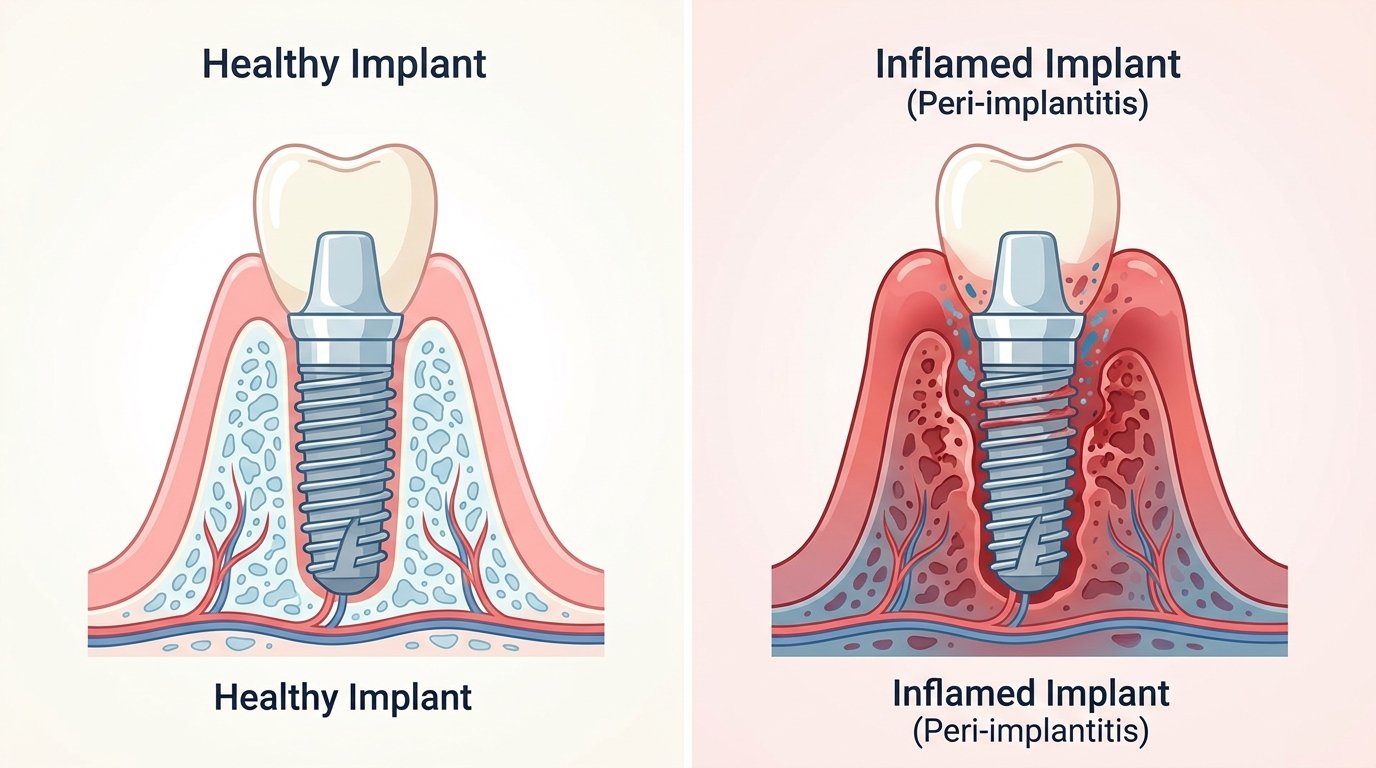
What is peri-implantitis?
Peri-implantitis is an inflammatory disease of infectious origin that affects the tissues surrounding a dental implant. It shares its mechanism with periodontitis — the infection that destroys the bone around natural teeth — but has its own characteristics that make it particularly aggressive.
The process almost always begins as peri-implant mucositis: a reversible inflammation of the mucosa surrounding the implant, without bone loss. If left untreated, the bacterial biofilm advances toward the bone and triggers peri-implantitis proper, with progressive marginal bone loss that can compromise the stability of the implant and even lead to its loss.
The most common symptoms include:
- Reddened, swollen gum that bleeds on probing
- Suppuration around the implant
- Formation of a peri-implant pocket (increased probing depth)
- Implant mobility in advanced stages
- Pain or discomfort when chewing
The problem is that, in many cases, peri-implantitis progresses without noticeable pain. That is why periodic check-ups are the only way to detect it in time.
Why peri-implantitis appears at 5–7 years
One of the most striking findings that Dr. Alomar presented in Barcelona is the temporal curve of the disease. The studies published at the time of the conference — including landmark papers in journals such as Clinical Oral Implants Research and Journal of Clinical Periodontology — indicate that the prevalence of this group of conditions increases notably from 5–7 years after the implants are in function, potentially affecting approximately 10–20% of patients and between 12% and 35% of implants, according to the systematic reviews available at that time.
Why that inflection point? Several reasons combine:
- Biofilm accumulation: over time, if plaque control is not optimal, bacteria colonise the rough surface of the implant and organise into resistant communities.
- Physiological bone remodelling: the bone around the implant undergoes minimal and natural marginal loss during the first years; when combined with infection, the damage accelerates.
- Individual risk factors: smoking, poorly controlled diabetes, a prior history of periodontitis, or genetic predisposition act as catalysts that shorten that timeframe or worsen the progression of peri-implantitis.
- Relaxation of follow-up: many patients — and, on occasion, clinical teams as well — reduce the frequency of check-ups once the osseointegration phase has been completed.
How to prevent peri-implantitis: actionable steps
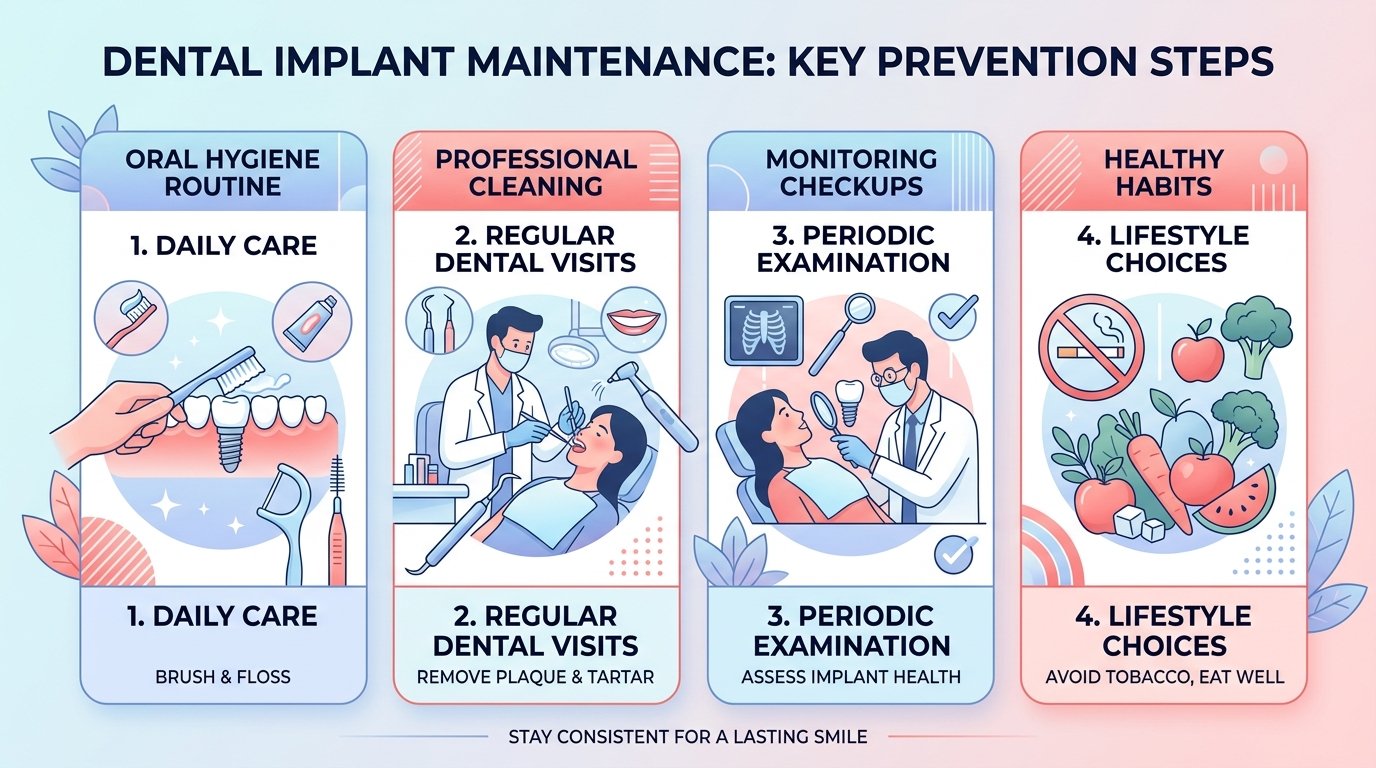
The good news is that peri-implantitis is, to a large extent, preventable. Dr. Alomar emphasised that preventive strategies must be applied throughout all phases of treatment and maintenance, involving the entire dental clinic team. This is not rhetoric: it implies specific protocols for both the patient and the professionals.
For the patient
- Correct brushing twice a day with a small-headed or electric toothbrush, paying special attention to the gum line around the implant.
- Daily use of interdental brushes of the appropriate size to clean the spaces between the implant and adjacent teeth.
- Dental floss or oral irrigator to remove biofilm in hard-to-reach areas.
- Attending periodontal maintenance check-ups at the frequency indicated by the clinical team (generally every 3–6 months for at-risk patients), as these are the main tool for preventing peri-implantitis.
- Informing the dentist at any warning sign: bleeding, inflammation, or a feeling of pressure around the implant.
For the clinical team
- Periodontal risk assessment before placing the implant and design of an individualised maintenance plan.
- Peri-implant probing and periodic radiographic records to detect marginal bone loss in early stages.
- Professional decontamination of the implant surface when mucositis is detected, before it progresses to peri-implantitis.
- Coordination between the implant surgeon, the periodontist, and the dental hygienist to ensure continuity of follow-up.
Scientific societies such as SEPA (Spanish Society of Periodontics and Osseointegration) have published consensus guidelines covering these protocols, which can serve as a reference for both professionals and patients who wish to explore the topic further.
A final reflection
Peri-implantitis is not a rare complication or a failure of the implant itself: it is, in most cases, the consequence of an infection that was not detected in time. The data presented by Dr. Alomar in Barcelona 2014 made clear that the long-term success of an implant depends as much on the surgical procedure as on subsequent maintenance. Understanding the disease, recognising its signs, and maintaining regular follow-up are the three keys that make the difference between an implant that lasts for decades and one that is lost prematurely.