 Whatsapp


Imagine you have been noticing for months that one of your teeth moves very slightly when you chew. It doesn’t hurt. It doesn’t bleed. There is nothing that truly alarms you. And yet, just beneath that seemingly healthy gum, the bone supporting that tooth has been silently disappearing for some time. That is bone resorption: a silent bone loss that advances without asking permission and that, by the time it finally becomes visible, has already caused damage that cannot be undone.
This article is written for those who suspect something is wrong but don’t know how to interpret it, and for those who simply want to understand what is happening inside their mouth before sitting down in the dentist’s chair.
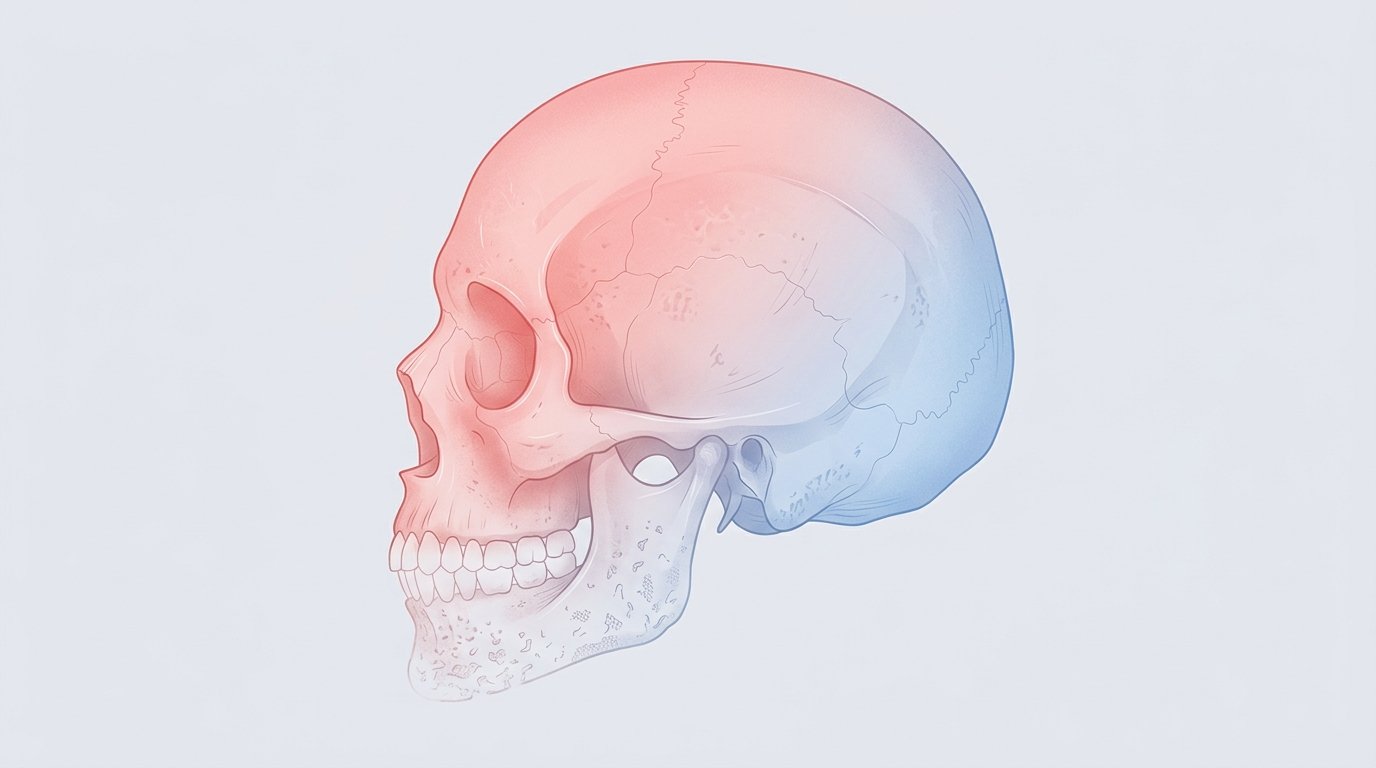
What dental bone resorption actually is
The alveolar bone is the bony tissue that surrounds and anchors the roots of your teeth. Without it, teeth have no support: they loosen, shift, and ultimately are lost. Bone resorption is the process by which that bone is destroyed or reabsorbed, progressively reducing its volume and density.
There are two fundamental types. Physiological resorption occurs naturally when the bone stops receiving mechanical stimuli —for example, after the loss of a tooth that is not replaced—. Pathological resorption, on the other hand, is associated with diseases or factors that accelerate the destruction of bone tissue, such as periodontitis or dental trauma. The first is predictable; the second is dangerous if not detected in time.
What makes pathological bone resorption especially treacherous is its silent nature. Bone loss can develop without causing obvious pain and, when detected, it usually requires specialist attention to avoid more serious consequences such as tooth mobility or even tooth loss. Understanding the mechanisms of bone resorption is therefore the first step toward being able to prevent it.
Why it happens: the most common causes
Bone resorption does not appear out of nowhere. There is always a trigger, and knowing it is the first step toward taking action. It is worth distinguishing between factors you can control and those you cannot, because that distinction completely changes what you can do.
Periodontitis: the main cause
Periodontitis is, by far, the most common cause of bone resorption in adults. It is a chronic bacterial infection that destroys the supporting tissues of the tooth, including the alveolar bone, and can go completely unnoticed if periodic check-ups are not carried out. The chronic inflammation caused by the accumulation of bacterial plaque progressively damages the periodontium until it reaches the bone.
The clinical paradox is that periodontitis is generally painless. Many patients arrive at the clinic with significant bone loss without ever having felt pain that alerted them. The process of bone resorption is irreversible once established, which makes early detection an absolute priority.
Lost teeth that are not replaced
When a tooth is lost and not replaced with an implant or prosthesis, the bone that supported it stops receiving mechanical stimuli. Within a few months, bone resorption begins, causing a progressive collapse in the affected area that can compromise the placement of implants in the future. It is an inevitable biological reaction: bone only maintains its volume if it receives functional load.
Bruxism, trauma and systemic factors
Bruxism —the involuntary clenching or grinding of teeth— generates repeated microtraumas that affect the periodontal ligament and stimulate bone resorption over time. Blows or injuries to the mouth can also directly damage bone tissue. Systemic conditions such as menopause, diabetes or osteoporosis are associated with alterations in bone metabolism that can accelerate resorption in predisposed individuals.
Modifiable and non-modifiable factors: a key distinction
Not all risk factors carry the same weight or respond equally to your actions. Separating them is useful because it changes what you can do right now.
Factors you can control:
- Smoking: tobacco reduces the gingival immune response and masks inflammation, accelerating bone loss. Quitting smoking is the modifiable intervention with the greatest demonstrated impact on the progression of periodontitis.
- Poor oral hygiene: the accumulation of bacterial plaque is the direct trigger of periodontal infection. A correct brushing technique and systematic use of dental floss significantly reduce the risk.
- Glycaemic control in diabetics: keeping glucose levels within the recommended range decreases susceptibility to periodontal infection and slows associated bone resorption.
Factors you cannot control:
- Genetic predisposition: some people have a more intense inflammatory response to the same bacterial load, which accelerates bone destruction regardless of their hygiene.
- Menopause: the drop in oestrogen reduces systemic bone density, including the alveolar bone, increasing vulnerability to bone resorption.
- Osteoporosis: generalised bone mass loss can potentiate local resorption in the presence of periodontal infection.
The fact that you cannot control some factors does not mean you are defenceless: acting on the modifiable ones —especially tobacco and hygiene— reduces the risk even in genetically predisposed individuals.
The great myth that needs to be dispelled
There is a very widespread belief among patients: “If it doesn’t hurt, there’s no problem.” In dentistry, and especially in everything related to bone resorption and periodontal disease, that belief is a serious mistake.
The absence of pain does not indicate the absence of disease. Periodontitis —the main cause of silent bone loss— is a chronic condition that advances for years without generating significant discomfort. By the time the patient begins to notice that a tooth is moving or that the gums have visibly receded, bone resorption has already been present for some time and the accumulated damage can be considerable.
Waiting for pain before going to the dentist is, in this context, waiting too long. The clinical reality is simple: bone damage does not warn with pain; it warns with subtle signs that you need to know how to read.
Warning signs: what you should watch for
Bone loss does not always give clear signals in its early stages, but there are signs that can alert you to possible deterioration. Learning them can make the difference between a conservative treatment and a much more complex one.
Real warning signs (act without delay)
- Tooth mobility: a tooth that moves when chewing or when touched with the tongue is a direct sign of loss of bone support. Even mild mobility warrants immediate evaluation.
- Gingival recession: gums that “recede” make teeth appear longer. It is one of the most visible signs that the underlying bone is retreating.
- Changes in bite: if you notice that your teeth do not fit together as before or that your bite has changed, it may be a sign that the teeth have shifted due to loss of bone support.
- New spaces between teeth: the appearance of black triangles between teeth or the feeling that there is more separation between them may indicate interdental bone resorption.
Secondary signs (do not ignore them)
- Frequent bleeding when brushing or using dental floss.
- Persistent bad breath that does not improve with regular hygiene.
- Dental sensitivity without apparent cause, especially to cold.
- Difficulty chewing or gums that hurt when pressed.
The difference between both groups is one of urgency, not importance. Any sign from the first list should take you to the clinic within days, not weeks. Those in the second list deserve a check-up at the next scheduled appointment.
How bone resorption is diagnosed: the role of radiographic diagnosis
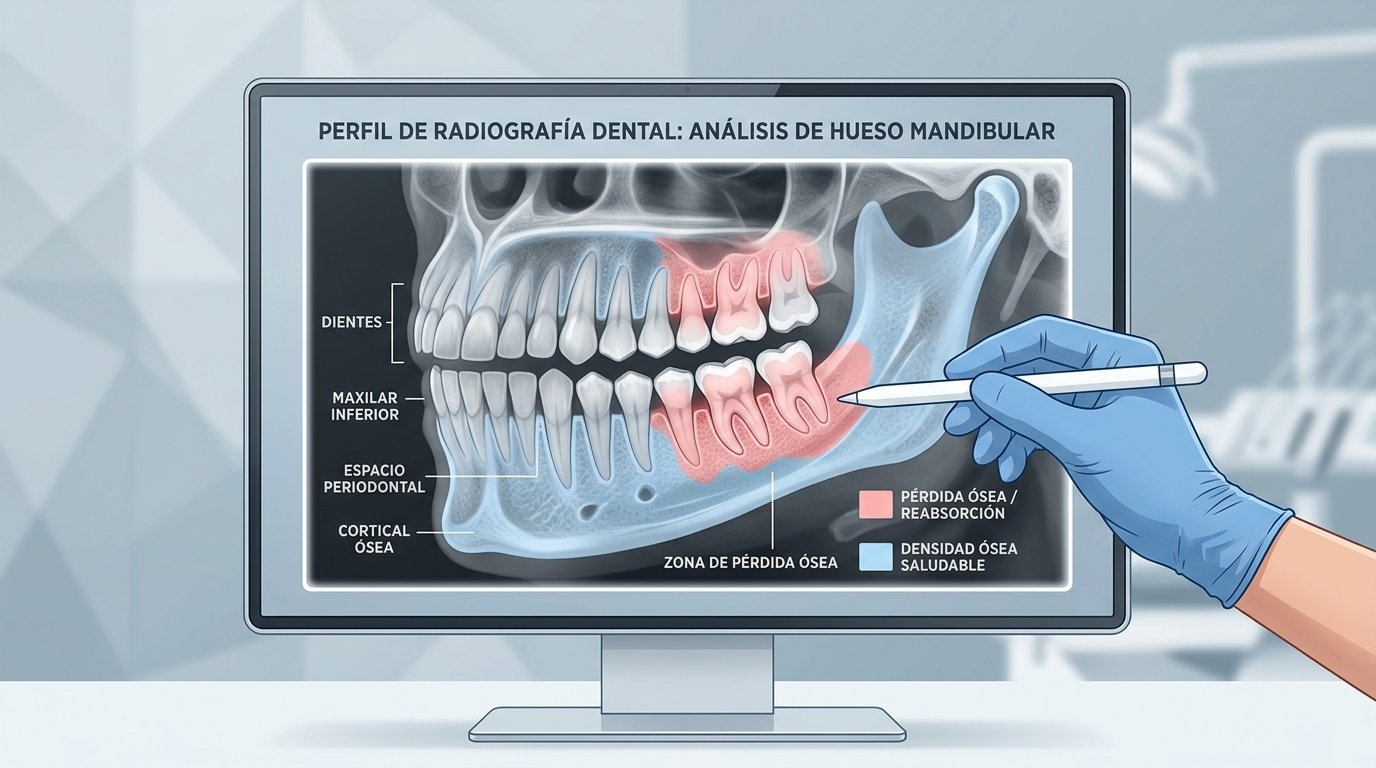
This is where one of the most important tools of modern dentistry comes into play: radiographic diagnosis. Because bone resorption, by its silent nature, can only be accurately quantified through imaging.
Clinical examination as the first step
The first level of diagnosis is the clinical examination: the professional visually evaluates the gums, measures the depth of periodontal pockets by probing and assesses the mobility of each tooth. Periodontal probing is the reference clinical parameter for determining how far the destruction of supporting tissues has progressed and for quantifying the degree of bone resorption present.
However, clinical examination has a limit: it cannot see what is happening inside the bone. For that, imaging is essential.
X-rays and 3D tomography
Periapical X-rays allow evaluation of the height of the alveolar bone, detection of vertical or horizontal bone defects and assessment of the state of the bone crests. The periapical X-ray with parallel technique is the primary choice for evaluating periodontal disease, as it offers the greatest precision in measuring bone resorption. The 2017 AAP/EFP periodontitis classification —the international reference consensus— establishes the level of radiographic bone loss as one of the diagnostic criteria for staging the disease.
The panoramic X-ray offers a general view of the entire mouth and is useful as a starting point, although its precision for detecting small defects is lower. 3D computed tomography (CBCT) is the most comprehensive tool: it allows measurement of bone density and detection of affected areas even before visible symptoms appear, with a resolution that conventional X-rays cannot match.
At Clínicas dentales Platón, the periodontal diagnostic protocol always combines clinical examination with radiographic study, because it is mandatory to combine both sources of information to make a reliable diagnosis. An X-ray without clinical examination, or an examination without imaging, are incomplete diagnoses.
The progression nobody wants to reach
Understanding how bone resorption evolves without treatment helps explain why early detection matters so much. The typical progression in an untreated periodontitis patient follows an escalation that is worth knowing:
- Gingivitis: inflammation of the gums due to plaque accumulation. Reversible with hygiene and professional cleaning. The bone is not yet affected.
- Initial periodontitis: the infection reaches the supporting tissues. Bone resorption begins. There is still room for conservative action.
- Moderate periodontitis: bone resorption is already significant. Mild tooth mobility appears. Periodontal treatment is necessary and urgent.
- Advanced periodontitis: severe bone loss, marked tooth mobility, real risk of tooth loss. Treatment options become more complicated and the prognosis for some teeth may be unfavourable.
Each stage in this progression reduces treatment options and increases their complexity. Detecting bone resorption at stage 1 or 2 is a completely different scenario from arriving at stage 4.
What can be done when bone loss has already occurred
Established bone loss cannot be spontaneously reversed, but that does not mean there is nothing to be done. Modern dentistry offers effective tools both for stopping progression and for recovering part of the lost volume.
Periodontal treatment: stopping the cause
The first objective is always to eliminate the infection that is destroying the bone. Scaling and root planing (SRP) is the reference treatment for removing tartar and bacterial biofilm from root surfaces, reducing inflammation and halting the progression of bone resorption. In clinical practice, SRP is usually carried out in 2 to 4 sessions depending on the extent of the disease and the number of teeth affected; in advanced cases it may be supplemented with periodontal surgery, which adds additional phases to the process.
At Clínicas dentales Platón, periodontal treatment is always planned on an individualised basis, assessing the extent of bone resorption, the patient’s risk factors and the prognosis of each tooth. There is no single protocol: there is a protocol for each mouth.
Guided bone regeneration: recovering what was lost
When bone resorption has left significant defects, guided bone regeneration makes it possible to reconstruct part of the lost volume by placing bone graft materials and membranes that guide the formation of new bone. This technique is especially relevant when implant placement is planned in areas with little available bone. The process typically involves a surgical intervention followed by a healing period of several months —typically between four and nine— before proceeding with the implant phase.
Bone regeneration is not an emergency treatment: it requires planning, healing time and a previously stable periodontal condition. That is why the sooner bone resorption is detected, the more options are available.
Peri-implant bone resorption: when the problem affects implants
Bone resorption does not only affect natural teeth. Dental implants can also suffer bone loss around them, a process known as peri-implantitis that shares many mechanisms with periodontitis but has its own particularities.
Peri-implantitis is a bacterial infection that destroys the bone surrounding the implant. Unlike periodontitis, peri-implant bone resorption can progress more rapidly and with fewer visible clinical signs, because the implant lacks the periodontal ligament that in natural teeth acts as a shock absorber and alarm sensor. This means that periodic radiographic monitoring is, if anything, even more important in patients with implants than in patients with natural dentition.
The risk factors for peri-implantitis are similar to those for periodontitis: smoking, poorly controlled diabetes, poor oral hygiene and a history of periodontal disease. A patient who has lost bone due to periodontitis has a higher risk of developing bone resorption around their implants if they do not maintain active periodontal control. That is why, at Clínicas dentales Platón, implant placement is always preceded by a complete periodontal evaluation and, when necessary, prior treatment of active periodontal disease.
Active home prevention: what you can do every day
Silent bone resorption cannot be diagnosed at home, but it can be slowed down with specific habits. Daily oral hygiene is the first line of defence against the accumulation of bacterial plaque that triggers periodontitis and, with it, bone loss.
These are the measures with the greatest demonstrated impact:
- Correct brushing technique: use a brush with a small head and soft bristles, and apply the modified Bass technique —45-degree angle toward the gingival sulcus, short circular movements—. Oscillating-rotating electric brushing has been shown to be more effective than manual brushing for reducing plaque in hard-to-reach areas. Two minutes, twice a day, is the minimum; not the goal.
- Dental floss or interdental brushes: the toothbrush does not reach the spaces between teeth, where most of the plaque that triggers periodontal infection accumulates. Daily use of floss or interdental brushes is essential, not optional, especially in people with risk factors.
- Oral irrigator: it complements —but does not replace— floss, and is especially useful in people with periodontal pockets, fixed appliances or implants. It helps reduce the bacterial load in deep areas.
- Chlorhexidine mouthwashes during risk periods: chlorhexidine is the oral antiseptic with the greatest scientific evidence. It is not indicated for indefinite daily use —it can stain teeth and alter the oral microbiota—, but its prescribed use during risk periods (after periodontal surgery, during phases of active inflammation or on professional prescription) significantly reduces the bacterial load and the progression of bone resorption.
None of these measures replaces professional check-ups. But applied consistently, they reduce the rate at which plaque accumulates and give the periodontium more time and more resources to stay healthy between visits.
Why periodic check-ups are the only real prevention
Silent bone resorption has one characteristic that makes it especially difficult to combat at home: you cannot diagnose yourself. You can observe signs, you can suspect, but the actual measurement of bone loss requires clinical examination and X-rays. No app, mirror or subjective sensation can replace that.
A survey by the Spanish Society of Periodontics (SEPA) revealed that 49% of the adult population in Spain does not know what periodontitis is, and that four in ten respondents had at least one symptom related to periodontal disease —gingival recession, tooth mobility or gum infection— without knowing it. These figures illustrate the problem well: silent bone resorption affects many more people than those who believe they have it.
The annual check-up —or twice-yearly in patients with risk factors such as smoking, diabetes or a history of periodontitis— is the only tool that allows bone resorption to be detected in its early stages, when there is still real room to act. At Clínicas dentales Platón, every periodontal check-up includes probing, mobility assessment and, when indicated, a radiographic control study. Not to alarm, but to act in time.
If you have not had a check-up for a while, if you have noticed any of the signs described in this article, or if you simply have doubts, the time to act is now. Silent bone loss does not wait: but you can get ahead of it.
Frequently asked questions
Can bone lost through bone resorption be recovered?
Established bone loss does not regenerate spontaneously. However, through guided bone regeneration techniques it is possible to recover part of the lost volume in certain cases. What can always be done is to stop the progression of bone resorption by eliminating the cause —generally the periodontal infection— and plan reconstruction once the environment is under control.
Does bone resorption hurt?
In most cases, no. Bone resorption associated with periodontitis is generally painless, which makes it a silent threat. Pain, when it appears, usually indicates that the process is already at an advanced stage or that there is a superimposed acute infection. The absence of pain should not be interpreted as the absence of disease.
How often should I have a control X-ray?
It depends on your risk profile. In patients with no known risk factors, a control X-ray every two or three years is usually sufficient. In patients with diagnosed periodontitis, smoking, diabetes or a history of bone resorption, the frequency should be greater and is decided by the professional according to the evolution. At Clínicas dentales Platón, the control interval is personalised in each case.
Does tooth mobility always indicate bone loss?
Not always, but it is a sign that should never be ignored. Tooth mobility can have other causes —trauma, severe bruxism, periapical infection—, but loss of bone support due to periodontitis is the most common cause in adults. In the face of any degree of tooth mobility, clinical and radiographic evaluation is essential to determine the origin and act accordingly.
Can I have bone resorption even if I take good care of my teeth?
Yes. Oral hygiene is fundamental, but it is not the only factor. Genetic predisposition, smoking, diabetes, menopause or bruxism can promote bone resorption even in people with good hygiene. Furthermore, there are hard-to-reach areas where plaque accumulates even if you brush carefully. Periodic check-ups are necessary precisely because home hygiene, however good it may be, does not replace professional evaluation.