 Whatsapp

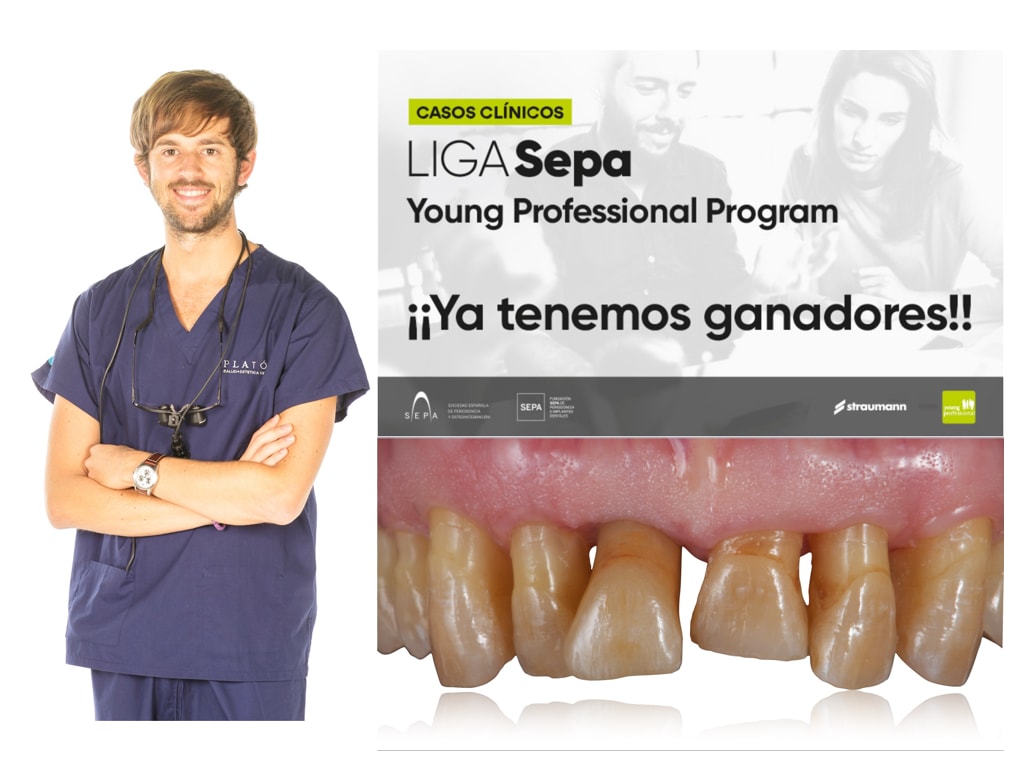
She had diabetes, was on anticoagulant therapy, and needed an implant on the very same day as the extraction. A profile that many clinicians would consider high-risk — or would outright rule out for an immediate technique — and one that Dr. Platón turned into the clinical case that earned him the second prize in the SEPA Young Professionals programme. This is not merely an award: it is scientific validation that, with the right protocol, systemically compromised patients can benefit from precision implantology with predictable outcomes.
This recognition is granted by the Spanish Society of Periodontology and Osseointegration (SEPA), the leading Spanish scientific society in periodontology and implantology. As the second-place winner of the SEPA Young Professionals award, Dr. Platón will be named ambassador of the Young Professionals Program at the institution’s next congress, held in Valencia in 2019.
What is the SEPA Young Professionals programme?
SEPA carries out its activities on a non-profit basis, with particular emphasis on its commitment to members, universities, and professional health entities. The SEPA Young Professionals programme, promoted together with Straumann, seeks to involve young professionals in the development of periodontology as a scientific discipline and in improving the quality of dental care. Within that structure, the clinical cases competition associated with the SEPA Young Professionals award is the reference platform in Spanish for dentists under 35 who want to develop and gain visibility in the field of periodontology and osseointegration.
Once the panel of experts announces the finalists for the SEPA Young Professionals award, each case is presented at a SEPA Master Clinic session, before a jury of specialists who evaluate both methodological rigour and clinical applicability. It is the quintessential Spanish-language training event in Periodontology for young dentists, and each edition brings together hundreds of professionals from across Spain. Those awarded the SEPA Young Professionals prize become ambassadors of the Young Professional Program, enjoying a stay at a leading clinic. Receiving the SEPA Young Professionals award is not merely an academic recognition: it is a signal that the work presented brings real value to the scientific community and, ultimately, to patients.
Why diabetes and anticoagulation complicate implantology
Before understanding the merit of the clinical case distinguished with the SEPA Young Professionals award, it is worth knowing why this patient profile poses a real challenge for any implantologist. This is not a theoretical risk: these are two conditions that directly affect the mechanisms that make an implant work.
Diabetes acts on several fronts simultaneously. It has an adverse effect on periodontal tissues and, above all, on the healing process, affecting collagen formation and growth factors. In practice, this means that the alveolus — the socket left by the extracted tooth — takes longer to regenerate and is more vulnerable to infection. Patients with diabetes present a higher risk of chronic peri-implant inflammation, which can compromise osseointegration in the long term. With adequate glycaemic control (HbA1c below 8%), implant survival rates approach those of non-diabetic patients; the risk escalates as control worsens.
Anticoagulation adds another layer of complexity: the haemorrhagic risk during and after surgery requires coordinating treatment with the patient’s responsible physician before any intervention. Modifying or suspending anticoagulant medication without supervision can be more dangerous than the surgical bleeding itself, so the protocol must be designed with millimetric precision. Before indicating implants in these patients, the specialist must carry out a comprehensive assessment that includes the current status of the systemic condition and, in many cases, review a recent blood test. The management of these types of situations is precisely one of the aspects that the SEPA Young Professionals award jury evaluates most rigorously.
Placing the implant on the same day as the extraction — what is known as an immediate implant — in this context raises the demands even further. By performing immediate implants, the double risk of infection or tissue manipulation is avoided, since the patient undergoes surgery only once, which can be particularly beneficial in patients whose recovery capacity is compromised. But it requires impeccable planning, the kind that deserves to be recognised with a SEPA Young Professionals award.
The clinical case: immediate implant in a compromised patient
The article awarded the SEPA Young Professionals prize is entitled Immediate Implant in a Clinically Compromised Patient and addresses one of the most demanding challenges in modern implantology. The key to the approach presented by Dr. Platón lies in meticulous planning and a minimally invasive protocol: minimising surgical trauma to reduce the inflammatory response and promote osseointegration even in tissues whose healing capacity may be compromised.
The clinical case demonstrates that the minimally invasive rehabilitative approach is associated with better long-term recovery, even in patient profiles that in other contexts might be considered high-risk candidates. This is precisely the finding that SEPA has chosen to highlight with the SEPA Young Professionals award: not only the technique, but the evidence that it can be applied safely and with predictable results.
Current studies show that immediate placement of a dental implant following extraction yields better long-term outcomes and preserves the natural alveolar space, provided the extraction is atraumatic and uncomplicated. Dr. Platón’s work adds to that evidence a patient profile that is typically underrepresented in the clinical literature, and does so with the methodological rigour that characterises his career as a clinician and researcher. The fact that this work has been recognised with the SEPA Young Professionals award reinforces its relevance to the scientific community.
Minimally invasive protocol: phases of the case
So that the reader — whether a professional or a patient — understands what this type of intervention awarded the SEPA Young Professionals prize entails, here are the key milestones of the protocol applied:
- Prior systemic evaluation: coordination with the patient’s physician to review glycaemic control (HbA1c) and anticoagulation status; medication adjustment if necessary.
- Digital planning: detailed radiological study of the available bone, alveolar anatomy, and optimal implant position before entering the operating theatre.
- Atraumatic extraction: flapless technique or minimal flap to preserve the alveolar bone and surrounding soft tissues.
- Immediate implant placement: insertion in the same surgical procedure, taking advantage of the natural alveolus and reducing the number of interventions.
- Management of the peri-implant space: use of regenerative materials when necessary to compensate for the gap between the implant and the alveolar walls.
- Enhanced follow-up: more frequent reviews than for a standard patient to detect early any signs of peri-implant inflammation or delayed osseointegration.
Implant placement in systemically compromised patients should not be considered a contraindication if the patient is under the control of their specialist physician and the necessary measures are followed to avoid any unfavourable response, including antibiotic prophylaxis, aseptic and antiseptic measures, and postoperative medication. This approach, endorsed by the SEPA Young Professionals award, serves as a reference for many young specialists who face similar cases.
Dr. Platón and his commitment to precision implantology
Dr. Platón has been at the helm of Platón Dental for more than three decades, a leading clinic in Mallorca with locations in Palma and Manacor. His career in the field of dental implants in Mallorca has been built on the conviction that the best surgery is the one the patient barely notices: minimal aggression, maximum precision, and rigorous follow-up of results. Receiving the SEPA Young Professionals award has done nothing but publicly ratify that working philosophy.
That principle, which guides every intervention in the practice, is exactly what the SEPA Young Professionals programme jury has recognised. It is not only the technique that is rewarded: it is the ability to apply it safely in a patient who, a priori, concentrates several risk factors. That is what distinguishes an expert clinician from a merely skilled one. The SEPA Young Professionals award acts, in that sense, as a first-rate scientific endorsement.
The replacement of missing natural teeth through implantological osseointegration has well-documented satisfactory outcomes in the literature. Along with the restoration of function, patient satisfaction is the key element for an implantological treatment to be considered a success. If you have been trusting Platón Dental to care for your smile for years, this second SEPA Young Professionals award confirms something you already knew: you are in the hands of a specialist whose work transcends the practice and reaches the most demanding scientific forums in the country.
Frequently asked questions
Can dental implants be placed in patients with diabetes?
Yes, provided that diabetes is well controlled. With an adequate glycated haemoglobin (HbA1c) level and careful planning, implant success rates approach those of patients without diabetes. The specialist must coordinate treatment with the patient’s physician and establish a more rigorous follow-up protocol. This type of planning is precisely what the SEPA Young Professionals award recognised in the case presented by Dr. Platón.
What is an immediate implant and how does it differ from a conventional one?
An immediate implant is one that is placed in the same surgical procedure as the tooth extraction, without waiting for the bone to heal. It reduces the number of interventions and better preserves bone volume and soft tissues. A conventional implant, on the other hand, is placed weeks or months after the extraction, once the alveolus has healed. The immediate implant case in a compromised patient presented for the SEPA Young Professionals award illustrates in detail the advantages of this approach.
What is the SEPA Young Professionals programme?
It is a programme of the SEPA Foundation, organised together with Straumann, aimed at dentists under 35 years of age. It includes a clinical cases competition in periodontology and implantology whose objective is to promote training, research, and the visibility of young specialists in the Spanish scientific arena. The SEPA Young Professionals award is the most prominent recognition granted by this programme to the best clinical cases submitted.
How does anticoagulation affect implant surgery?
Anticoagulants increase the risk of bleeding during and after the intervention. Before any implant surgery, the specialist must review the patient’s medication and coordinate with their physician to decide whether a dose adjustment is necessary. Suspending anticoagulation without supervision can be more dangerous than the surgical haemorrhagic risk itself. The correct management of this situation in a real case is part of what the SEPA Young Professionals award evaluated in Dr. Platón’s work.
Sources
- (PDF) Article: Immediate dental implant in a diabetic patient
- SEPA 2026 Congress Awards: great anticipation and high scientific level – SEPA – Official SEPA page for oral health professionals.
- De Vicente Dental participates in SEPA Granada 2026 to continue driving excellence in periodontology and implantology – De Vicente Dental. Advanced Dentistry. Orthodontics – Periodontology – Implants – Aesthetic Dentistry
- SEPA Granada 2026: more than 4,000 oral health professionals address advances in periodontology and implant therapy – iSanidad
- Dental implants in diabetic patients: when can they be placed