 Whatsapp


There is a particular photo that many people remember: a birthday, a graduation or a wedding where they are smiling with their lips pressed together. Not because they are not happy, but because they have spent years feeling uncomfortable with their teeth and have learned to hide their smile. If that sounds familiar, you are not alone. And the good news is that today orthodontics offers discreet, comfortable and effective solutions for all ages, without the treatment interfering with your daily life.
At Platón Dental we have been improving smiles at our clinics in Palma and Manacor for more than 30 years. We know that wearing “braces” is no longer the great inconvenience it once was: in many cases they are practically invisible, and in all of them the patient starts to feel better about themselves from the very first moment. Orthodontics is, therefore, much more than correcting the position of teeth: it is confidence, it is self-assurance, it is smiling genuinely in photos again.
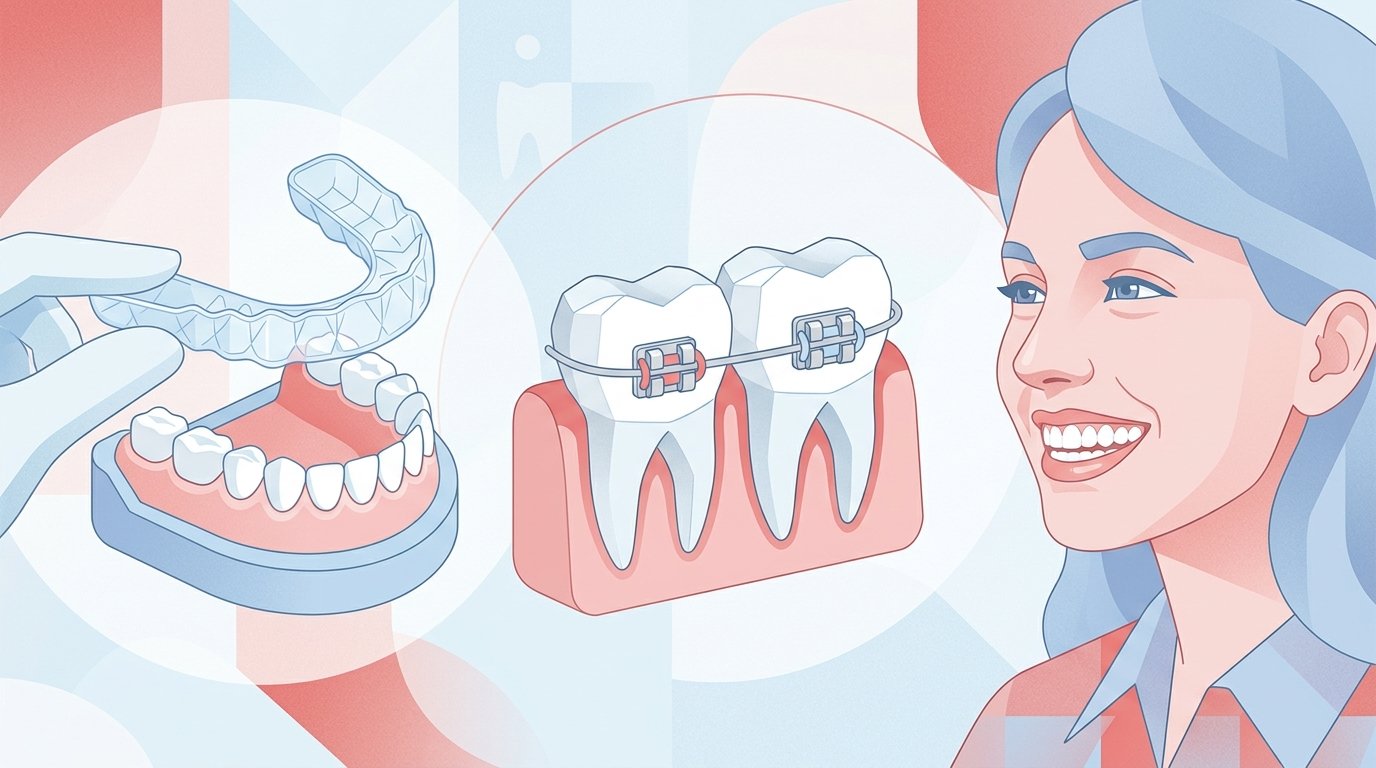
Types of orthodontics at Platón Dental
At our clinics we offer a wide variety of treatments to suit each clinical case, each age and each lifestyle. Below we explain what each one involves, who the ideal candidate is and what you can expect from the process.
Invisible orthodontics (Invisalign)
Invisalign is a computerised invisible orthodontics system that straightens teeth using custom-made transparent aligners. Each aligner is worn for one to two weeks and is replaced by the next one according to the digital treatment plan, which provides great precision and predictability.
Because they are removable, you can eat, brush your teeth and lead a completely normal life. The aligners make daily oral hygiene easier, as they can be removed for eating and brushing as normal. This makes them the preferred option for adults with an active professional life and for teenagers who play sport or wind instruments.
Who is a candidate for Invisalign? It works very well for mild or moderate crowding, diastemas (gaps between teeth) and not very complex bite corrections. When the patient has a good bite but mild or moderate dental crowding, Invisalign can be a good option with good results in a short time. For more severe cases — complex crossbites, skeletal malocclusions — braces remain the most robust alternative.
In terms of duration, the average length of an invisible orthodontics treatment in Spain ranges between 12 and 18 months, depending on the complexity of the case. The budget varies according to the plan chosen: different clinics offer Invisalign Lite and Comprehensive options, with costs that can range from 2,500 to 5,650 euros, depending on the services included. At Platón Dental we always carry out a free preliminary study to guide you towards the most suitable option for your case.
Visible orthodontics: metal and aesthetic braces
Braces are the most established orthodontic system and the one that allows the widest variety of clinical cases to be addressed, from simple crowding to complex malocclusions. There are two main variants: metal braces and aesthetic braces (sapphire or ceramic), the latter practically tooth-coloured and much less visible than traditional ones.
Unlike aligners, braces work continuously 24 hours a day, which can result in more controlled movements in complex cases. The main limitation is dietary: fixed braces require avoiding hard or sticky foods to avoid damaging them. Hygiene also requires a little more attention, although with the right interdental brushes it is perfectly manageable.
The duration of orthodontic treatment for adults usually ranges between 18 and 24 months on average, although in cases with more complex malocclusions it may extend somewhat longer. The ideal patient profile for braces is broad: they work equally well in teenagers and adults, and are the main indication when Invisalign cannot resolve the complexity of the case.
Dentofacial orthopaedics
Dentofacial orthopaedics goes one step further than moving teeth: its aim is to guide and develop the facial bone structure during growth stages, to subsequently facilitate the work of conventional orthodontics. It is a treatment designed primarily for children and teenagers, as it acts on the jaws while they are still forming.
The period of bone growth in children ends between the ages of 11 and 12, so it is up until this point that it is possible to act on the bones and guide their growth. Intervening at the right time can greatly simplify — or even avoid — a longer orthodontic treatment in adolescence.
When is it recommended to start? The Spanish Society of Orthodontics (SEDO) and the American Association of Orthodontists agree on a clear recommendation: the first orthodontic evaluation should be carried out between the ages of 6 and 7. This does not mean that all children need treatment at that age, but it does allow any deviation from normal development to be detected in time.
Accelerated orthodontics using piezoelectric techniques (ultrasound)
The team at Platón Dental offers an orthodontic technique that consists of shortening treatment timescales through the use of ultrasound, which promotes tooth movement by reducing the natural resistance of teeth to displacement. This is a particularly interesting option for adult patients seeking results in less time without sacrificing precision.
This piezoelectric technique can be combined with braces or aligners, acting as an accelerator of the process and reducing the number of months needed to achieve the final result. It is not suitable for all cases, so a prior assessment by the orthodontist is essential.
How to choose your orthodontic treatment?
The choice between one system or another should never be based solely on aesthetics or price. The fundamental criterion is the clinical diagnosis: the complexity of the malocclusion, the patient’s age, their usual hygiene and their lifestyle are factors that the orthodontist weighs before making any recommendation.
As a general guide: if you are looking for discretion and have a mild or moderate case, Invisalign is usually the most comfortable option. If your case is complex or you need maximum biomechanical efficiency, braces — metal or aesthetic — are the most versatile alternative. And if you have a child of growing age, do not wait until the problems are obvious: an early check-up can save you years of treatment later on.
At what age should orthodontics begin?
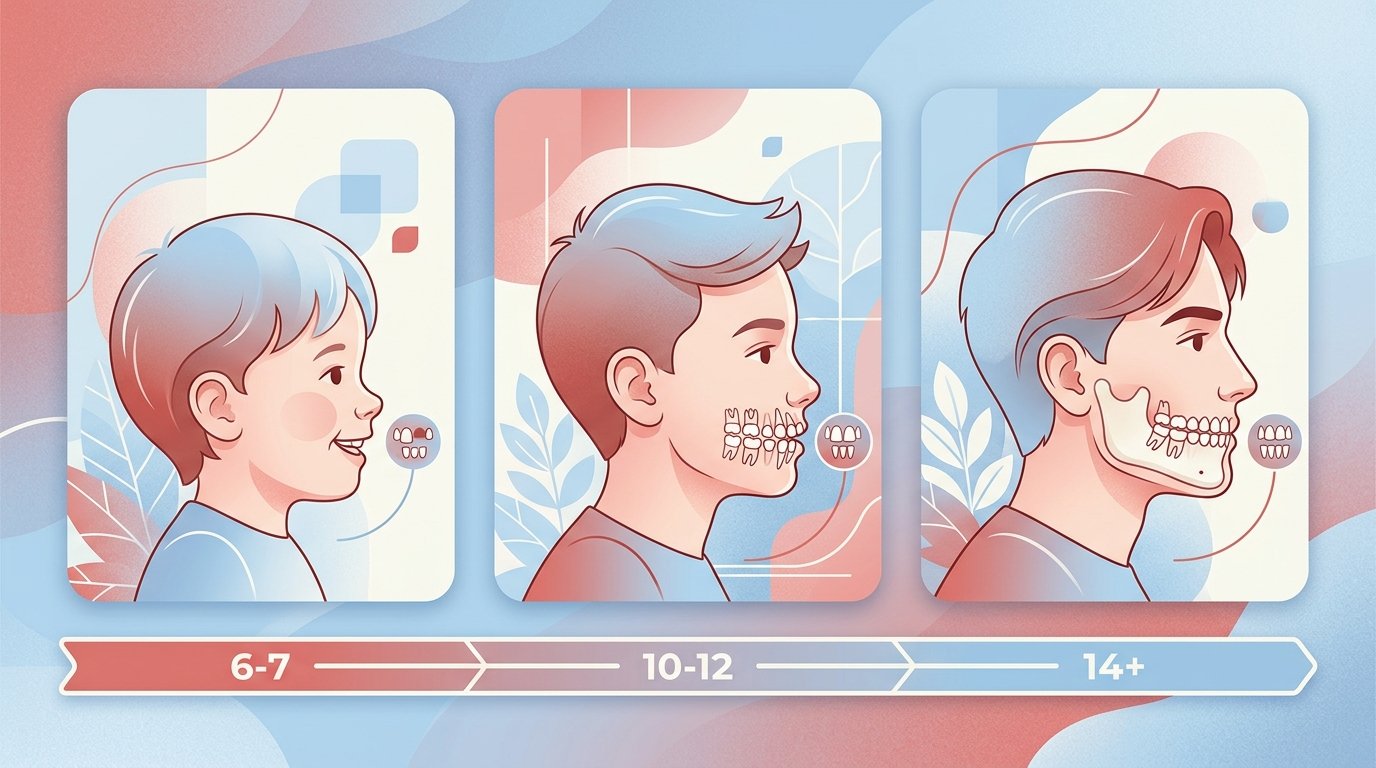
One of the questions we are asked most often in the clinic is: “When is the right time?” The answer depends on whether we are talking about children, teenagers or adults.
- Children (6-10 years): between the ages of 6 and 9, interceptive orthodontic treatments can be started to correct skeletal or functional alterations, such as crossbite, mouth breathing or early crowding.
- Teenagers (11-14 years): from the age of 11 or 12 it is common to begin corrective orthodontics with braces or aligners once all the permanent teeth have erupted.
- Adults: orthodontics for adults has no age limit and can be carried out at any point in life. In fact, more and more adults over 40 are starting treatments with excellent results.
Debunking myths about orthodontics
There are ideas circulating about orthodontics that lead many people to postpone a decision that would improve their quality of life. Let us debunk the most common ones.
Frequently asked questions
Does orthodontics hurt?
In the first few days after fitting or adjusting braces — or when changing aligner — it is normal to feel a slight pressure or discomfort. It is not a sharp pain: it feels more like the sensation of having “loaded” teeth. It usually disappears within 48-72 hours and can be managed perfectly well with over-the-counter painkillers if necessary. Over time, the body adapts and check-up appointments become increasingly easy to handle.
Can you eat all foods with braces?
With fixed braces you need to avoid very hard foods (whole nuts, very crusty bread) and sticky foods (sweets, chewing gum) to avoid damaging the brackets or archwires. With Invisalign there are no restrictions, as the aligners are removed for eating. In both cases, good hygiene after every meal is the key to ensuring the treatment progresses without setbacks.
Is orthodontics only for children and teenagers?
Absolutely not. Today, a very significant proportion of orthodontic treatments are carried out on adults. The physiology of tooth movement does not change with age: teeth can be moved at 20, at 40 or at 60, provided there is a good underlying periodontal health. There is no age limit for improving your smile.
How many check-up visits do I need during treatment?
With braces, check-ups are usually every 4-6 weeks to adjust the archwires. With Invisalign, control appointments are somewhat more spaced out — every 6-8 weeks — as the patient manages the aligner changes at home. At the first visit to Platón Dental we carry out a complete study, with X-rays and photographs, to design a personalised treatment plan before starting.
In short, orthodontics today offers more options than ever to suit each person, each case and each stage of life. More than 30 years of improving smiles in Mallorca have taught us that it is never too early or too late to take the step. Are you ready to smile better?