 Whatsapp

You’ve just crossed the finish line, or finished that long training run that took so much effort to start. You open your favourite sports drink and take a long swig. What you probably don’t know is that, at that very moment, the acids in that drink are already attacking your tooth enamel. This isn’t alarmism: it’s pure chemistry, and it’s worth understanding before the symptoms arrive.
Sports drinks have become a regular fixture for millions of athletes. Aquarius, Gatorade, Powerade… their names are part of the landscape of any gym or popular race. They provide electrolytes, replenish mineral salts and aid rehydration after physical exertion. So far, so good. The problem appears when consumption becomes excessive or when they are drunk outside a sporting context, something that is increasingly common.
Why do sports drinks damage tooth enamel?
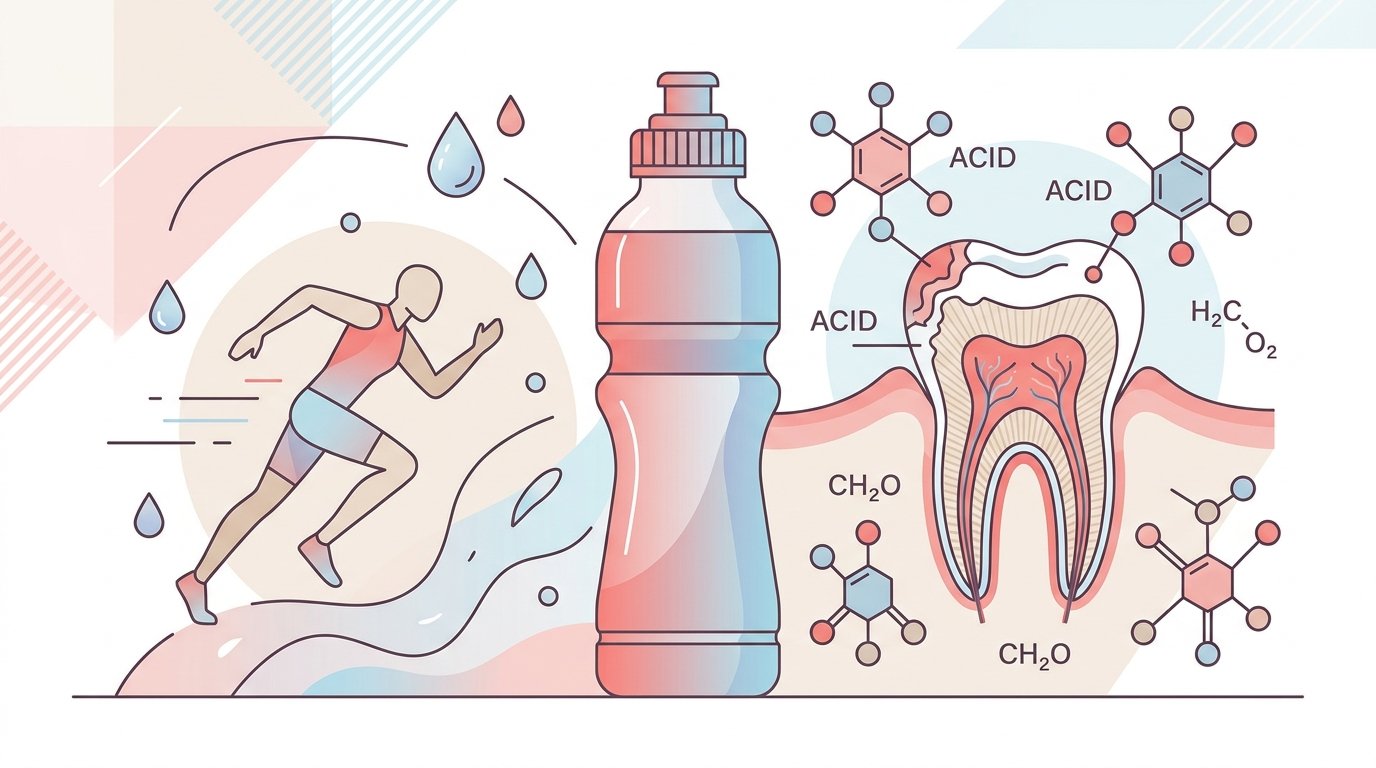
The key lies in pH. Tooth enamel begins to demineralise when the oral environment falls below pH 5.5, the so-called critical demineralisation threshold. Above that value, saliva can neutralise acids and remineralise enamel naturally. Below it, the process reverses: the minerals that make up the hydroxyapatite of the enamel begin to dissolve.
Sports drinks sit clearly below that threshold. Laboratory studies published in the International Journal of Interdisciplinary Dentistry have measured the pH of commercial sports drinks, recording values such as 2.71 for Gatorade and 2.63 for Powerade. These figures are well below the critical pH threshold of 5.5, meaning that every sip exposes enamel to a strongly erosive environment. Any acidic substance with a pH below the critical threshold for enamel has the capacity to dissolve hydroxyapatites, causing demineralisation, particularly when the attack is chronic and prolonged.
Added to this is the role of citric acid, present in the majority of these sports drinks. Citric acid is an organic acid with erosive properties that, in addition to causing a drop in salivary pH and triggering the dissolution of tooth enamel, also acts as a calcium-chelating substance. Think of citric acid as a magnet that attracts and sequesters the calcium ions floating in saliva: it captures them before they can return to the enamel to repair it. The result is that it not only attacks the tooth surface directly, but also removes the building material that saliva needs to carry out repairs. Double damage, same sip.
Xerostomia during exercise: when the shield disappears
There is an aggravating factor that the typical post about sports drinks rarely mentions: dry mouth induced by physical exertion. During intense exercise, the body prioritises blood flow to the muscles and vital organs. The result is a reduction in salivary flow that specialists call functional or transient xerostomia.
The mechanism is twofold. On one hand, dehydration forces the body to cut saliva production to conserve fluids: if you don’t replace what you sweat out, the salivary glands are among the first to feel the shortage. On the other, many athletes breathe through their mouths while training, which accelerates the evaporation of saliva and worsens dryness. Research published in Scielo España on rowing and canoeing athletes confirms that the majority of athletes show a drop in salivary pH values after intense physical exercise, which reduces the buffering capacity of saliva.
Why does this matter? Because saliva is the main defence mechanism for enamel: it neutralises acids, provides calcium and phosphates for remineralisation and physically clears away drink residue. When salivary flow drops during training, that shield disappears at precisely the moment when sports drinks are consumed most. The sporting context is, paradoxically, the most aggressive for enamel: dry mouth combined with an acidic sports drink is a combination that multiplies the potential damage.
Dental erosion and cavities: two distinct types of damage
It is worth distinguishing two damage mechanisms that are often confused. Tooth decay is an infectious disease: bacteria in dental plaque ferment the sugars in food and produce acids that attack enamel in a localised way. Sports drinks contribute to tooth decay because their sugar content feeds precisely those bacteria.
Dental erosion, on the other hand, is a different process. It corresponds to the irreversible loss of the dental surface through the chemical action of acids, in which bacteria play no part. It does not depend on plaque: it occurs directly when the acidic liquid comes into contact with the enamel. Erosive lesions are characterised clinically by a smooth, opaque and transparent surface, an intact enamel border at the gingival margin, loss of dental morphology and the presence of surface depressions; in severe cases they affect the dentine and dental pulp.
The practical result is that sports drinks can cause both types of damage simultaneously: erosion due to their acidic pH and a greater risk of tooth decay due to their sugar content. An in vitro study published in the International Journal of Interdisciplinary Dentistry found a positive correlation between frequent intake of sports drinks and the presence of dental erosion, especially when the liquid was held in the mouth before swallowing. A combination that, over time and with regular consumption, has visible and painful consequences.
Dentinal sensitivity: the most common warning sign
When enamel thins due to ongoing erosion, the dentine becomes exposed. The dentine is traversed by thousands of microscopic tubules connected to the tooth’s nerve, which explains dentinal sensitivity: that sharp, fleeting pain that appears when consuming something cold, hot or sweet. It is one of the first symptoms patients notice after frequent consumption of sports drinks, and a clear signal that the enamel has suffered damage.
What makes the situation worse is that many athletes consume these drinks regularly, not only after intense training sessions, but as an everyday hydration drink. Consuming sports drinks habitually outside a sporting context means accepting dental risk without the physiological benefit that justifies them. A circumstance that, without doubt, opens broader debates about hydration habits and oral health.
Comparison: are sports drinks more aggressive than other liquids?
To put the risk in perspective, it is worth making a comparison. The pH range of the most common industrial drinks sits between 2.30 and 3.40; Coca-Cola, with a pH of 2.30, is the most acidic, while still water approaches neutral pH with values of 6.23 to 6.54. Sports drinks move within that same acidic range, although their actual erosive potential also depends on other factors such as frequency of consumption, contact time with the enamel and each person’s salivary buffering capacity.
Water, of course, has a neutral pH and poses no risk to enamel. Natural fruit juices, while more nutritious, are also acidic. The key is not to demonise any particular drink, but to understand that the frequency and context of consumption determine the real risk. This is especially relevant in the case of sports drinks, whose use has spread far beyond high-intensity sport.
More enamel-friendly sports hydration alternatives
If the problem with sports drinks is their acidic pH and sugar content, the logical question is: what should you drink instead? The answer depends on the type and intensity of the effort.
For workouts of less than 60 minutes at moderate intensity, water is sufficient. It doesn’t provide electrolytes, but you don’t need them either: the body’s reserves cope perfectly well with a standard session. Water has a neutral pH and zero risk for enamel, compared to the inherent acidity of commercial sports drinks.
For long or high-intensity sessions — more than an hour, high heat, intense sweating — replenishing electrolytes may be justified. Here there are options with less dental impact:
- Mineral water with salts. Some natural mineral waters with a high content of sodium, magnesium and calcium have a pH close to neutral (between 6 and 7.5) and provide electrolytes without the citric acid or added sugars of commercial sports drinks.
- Oral rehydration salts (ORS). Formulated according to WHO guidelines to replenish water and electrolytes, specific oral rehydration solutions should not be confused with commercial sports drinks: they have a more controlled composition and generally present lower acidity. They are dissolved in water and the athlete regulates the concentration.
- Natural coconut water. A glass of coconut water can provide up to 470 milligrams of potassium, along with sodium, calcium and magnesium, with a pH that ranges between 4.7 and 5.5 — closer to neutral than most commercial sports drinks — and without added citric acid. It is a valid alternative for recovery after moderate exercise.
- Homemade low-acidity sports drink. Dissolving a pinch of sea salt, a teaspoon of honey and a little very diluted lemon juice in a litre of water produces a homemade sports drink with electrolytes without the concentrated acid load of commercial products. It is not perfect, but it reduces contact with the enamel.
The practical conclusion is that commercial sports drinks are justified during prolonged and intense efforts, not as an everyday hydration drink. The shorter and more moderate the training session, the fewer reasons there are to expose yourself to the acidic pH of sports drinks.
How to protect your teeth if you play sport
The good news is that the damage is avoidable with simple habits. The post-sport hygiene protocol does not require major changes, but it does require a certain discipline:
- Rinse with water immediately. As soon as you finish drinking your sports drink, take a sip of water and rinse your mouth. This dilutes the acids and helps raise the oral pH before the damage sets in.
- Wait at least 30 minutes before brushing. The sugars and acids in sports drinks temporarily soften the enamel. If you brush immediately, the toothbrush acts like sandpaper on an already weakened surface. Waiting 30 minutes gives saliva time to neutralise the environment and the enamel to recover some of its hardness.
- Use fluoride toothpaste. Fluoride strengthens the enamel structure and promotes remineralisation. It is the most effective ally against mild dental erosion caused by sports drinks. A toothpaste with an adequate fluoride concentration, used twice a day, makes a real difference.
- Chew sugar-free gum after exercise. This stimulates saliva production, which is the enamel’s natural defence mechanism. Saliva contains calcium and phosphates that contribute to remineralisation, and is especially useful when salivary flow has decreased during training.
- Limit sports drinks to the moments that truly justify them. The sugars contained in this type of drink directly affect enamel and dentine, weakening them and increasing the risk of tooth decay. Sports drinks should be a supplement for rehydration after intense sporting activity, not a daily drink.
- Drink through a straw when possible. This reduces the direct contact of the acidic liquid with the front teeth, which are the most exposed. This measure is especially useful when consuming sports drinks during prolonged training sessions.
When to see a dentist and what treatments are available
There are signs that should not be ignored. If you notice any of these symptoms persistently, it is time to make an appointment with your dentist:
- Sensitivity to cold, heat or sweet foods that you did not previously have.
- Teeth that appear shorter or with thinner, more transparent edges.
- A dental surface that has lost its shine and looks more matt or slightly yellowish (the darker dentine is beginning to show through).
- Spontaneous pain or discomfort when biting.
Dental erosion detected in time can be treated. Depending on the degree of damage, the dentist can turn to various clinical options:
High-concentration fluoride varnishes. Fluoride varnish is a high-concentration topical prevention method — generally 5% sodium fluoride — designed to adhere to the tooth surface immediately. Its resinous consistency allows the product to remain in contact with the enamel for several hours, even in the presence of saliva. In cases of dentinal hypersensitivity due to erosion associated with the consumption of sports drinks, the varnish creates a barrier that occludes the dentinal tubules, reducing dentine permeability and significantly reducing pain.
Dentinal sealants. When the dentine is exposed due to enamel loss, sealants act as a protective layer that isolates the dentinal tubules from the oral environment. They are especially useful in localised erosions that do not yet require reconstruction.
Composite restorations in advanced erosion. If the loss of dental tissue is significant, the dentist can reconstruct the original morphology of the tooth using composite resins. These restorations restore masticatory function, protect the exposed dentine and halt the progression of damage, although they do not recover the original lost enamel.
What cannot be reversed is the enamel already lost: once eroded, it does not regenerate on its own. This is why prevention and early detection are fundamental, especially in people who consume sports drinks regularly.
Ultimately, it is not about giving up sports drinks if they are part of your sporting routine. It is about using them wisely, understanding what happens to your mouth every time you consume a sports drink and taking the simple measures that can make the difference between healthy enamel and irreversibly damaged enamel. Dental health is also something you train.
Frequently asked questions
What is the pH of the most common sports drinks?
Commercial sports drinks have very acidic pH values. Laboratory studies have recorded values of approximately 2.71 for Gatorade and 2.63 for Powerade. These values are well below the critical enamel demineralisation threshold, which sits at pH 5.5, giving them significant erosive potential on dental structure.
How long should I wait before brushing my teeth after drinking a sports drink?
It is recommended to wait at least 30 minutes before brushing. The acids in sports drinks temporarily soften tooth enamel, and brushing immediately can accelerate wear. During that time, rinsing with water helps neutralise the oral pH and allows saliva to begin the natural remineralisation of the enamel.
What is the difference between dental erosion and tooth decay?
They are two distinct processes. Tooth decay is an infectious disease caused by bacteria that ferment sugars and produce acids in a localised way. Dental erosion, on the other hand, is the irreversible loss of dental surface through direct contact with acidic substances, without bacterial involvement. Sports drinks can cause both types of damage: erosion due to their acidic pH and a greater risk of tooth decay due to their sugar content.
Are sports drinks more damaging to enamel than fizzy drinks?
It depends on the specific product. Some cola drinks have an even lower pH than sports drinks. However, sports drinks are frequently consumed during and after exercise, when the mouth is drier and saliva — the natural defence mechanism — produces less flow, which worsens their erosive effect. The frequency and context of consumption are just as important as the pH of the drink.
When should I see a dentist if I regularly drink sports drinks?
You should consult a dentist if you notice sensitivity to cold or heat, if your teeth appear shorter or transparent at the edges, if the dental surface has lost its shine or if you feel pain when biting. These are symptoms of erosion or demineralisation that should be evaluated as soon as possible, since lost enamel does not regenerate naturally.
Sources
- Sealants or fluoride varnishes: which treatment is better for preventing decay in permanent back teeth in children
- Effect of lactic anaerobic exercise on salivary pH | Apunts Sports Medicine
- Dental enamel erosion in teeth exposed to industrial drinks. Pilot in vitro study.
- Sports drinks – APSAL – Association of Health and Food Professionals
- Everyday drinks and foods that accelerate dental enamel wear – Infobae