 Whatsapp


You wake up in the middle of an August night with your mouth feeling like sandpaper. You swallow saliva—or try to—and notice your tongue sticking to the roof of your mouth. You haven’t had alcohol, you don’t have a fever: you simply have a dry mouth. That deeply uncomfortable sensation has a clinical name: xerostomia, also known as dry mouth syndrome. And although in summer heat and dehydration trigger it, its causes go far beyond not drinking enough water.
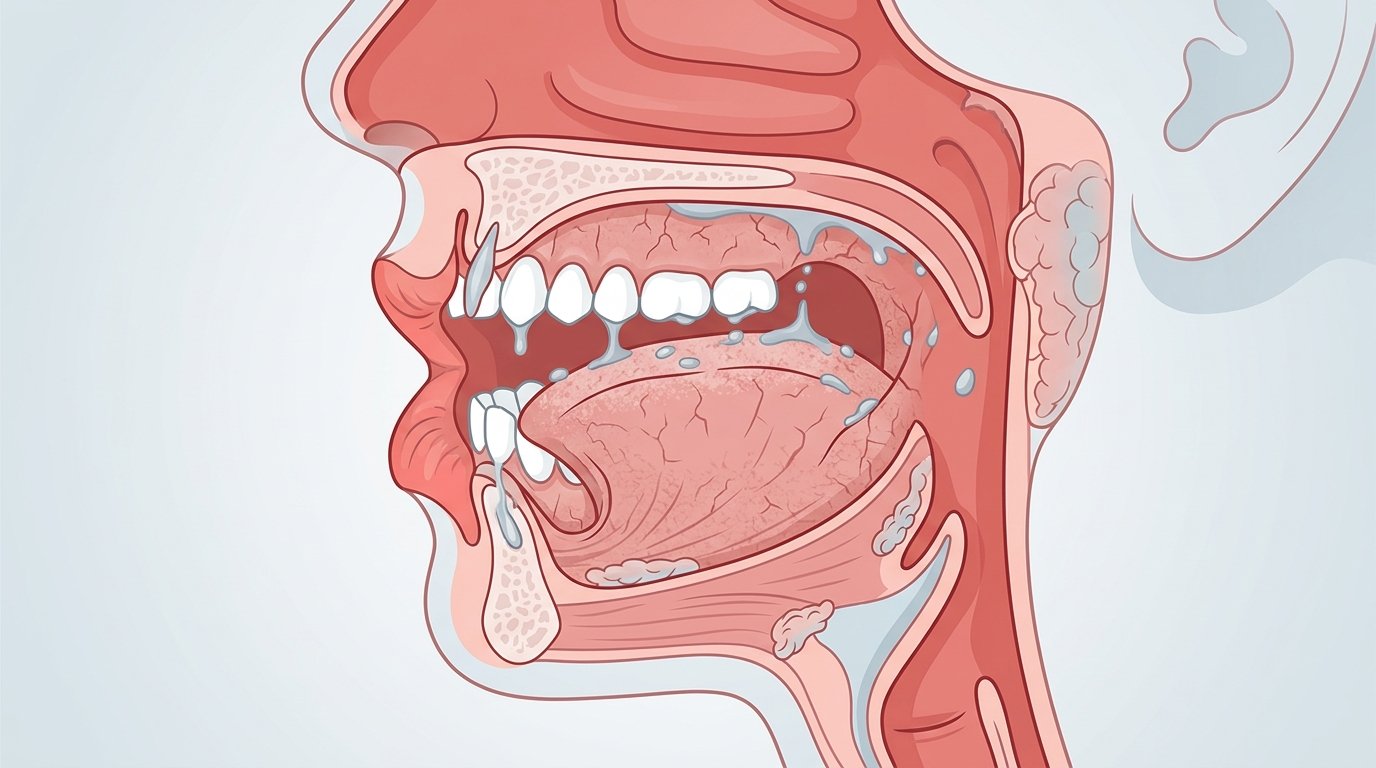
What is dry mouth syndrome?
Xerostomia is the subjective sensation of scarce or absent saliva in the oral cavity, resulting from a malfunction of the salivary glands. Dry mouth syndrome affects millions of people worldwide and its prevalence increases with age. There are three main pairs of glands: the parotid glands (the largest, located in front of the ears), the submandibular glands (under the jaw) and the sublingual glands (under the tongue). When any of them reduces its output, salivary flow drops, oral pH becomes destabilized and the oral mucosa is left unprotected.
Think of saliva as the irrigation system of the mouth: without it, bacteria run rampant like weeds in dry soil. Saliva is not just water: it lubricates, neutralizes acids, aids digestion and acts as the first antimicrobial barrier. Without enough saliva, the mouth loses one of its most important defense mechanisms. That is why dry mouth syndrome should never be ignored.
How to recognize the symptoms?
Before looking for solutions, it is worth identifying the condition. Dry mouth syndrome can present with very varied signs:
- A sticky feeling or persistent dryness in the mouth and throat.
- Burning tongue and cracked lips, especially upon waking.
- Difficulty chewing, swallowing or speaking, especially with dry foods.
- Bad breath (halitosis) that does not improve with regular brushing.
- Frequent cavities or cavities appearing in unusual areas, such as the neck of the tooth.
- Changes in taste or the sensation that food tastes different.
- Greater susceptibility to infections such as oral candidiasis.
If you recognize several of these symptoms on a continuous basis, do not attribute them solely to heat or stress: they may be indicating an underlying cause that deserves attention. Persistent dry mouth is, in many cases, the first sign that something is not working properly. Having a dry mouth on a recurring basis should never be normalized without first seeking its origin.
Dry mouth at night vs. dry mouth during the day: they are not the same
A distinction that the classic article tends to overlook: nocturnal and daytime xerostomia have different causes and solutions, and confusing them leads to applying remedies that do not work.
Nocturnal xerostomia
If dry mouth appears mainly upon waking, the most likely cause is mouth breathing during sleep. The flow of air through the mouth evaporates residual saliva and dries out the mucosa within a few hours. Behind that mouth breathing there may be chronic nasal congestion, a deviated septum or—and this is important—sleep apnea. Obstructive apnea causes micro-awakenings that promote mouth breathing and, with it, dryness. If you also snore or wake up tired, consult your doctor: the problem may be in the airways, not in the salivary glands.
Specific measures for nocturnal xerostomia: a humidifier in the bedroom, nasal strips to facilitate nasal breathing, and artificial saliva gel applied before sleeping (it lasts more hours than the spray). If sleep apnea has been diagnosed, CPAP treatment usually also improves morning dryness.
Daytime xerostomia
When dry mouth persists throughout the day, the most frequent causes are pharmacological, systemic or related to habits. This is where medications, autoimmune diseases, chronic dehydration and tobacco come in. The daytime approach involves frequent hydration in small sips, reviewing medication with the doctor and adopting the dietary habits detailed below.
What are the causes of dry mouth syndrome?
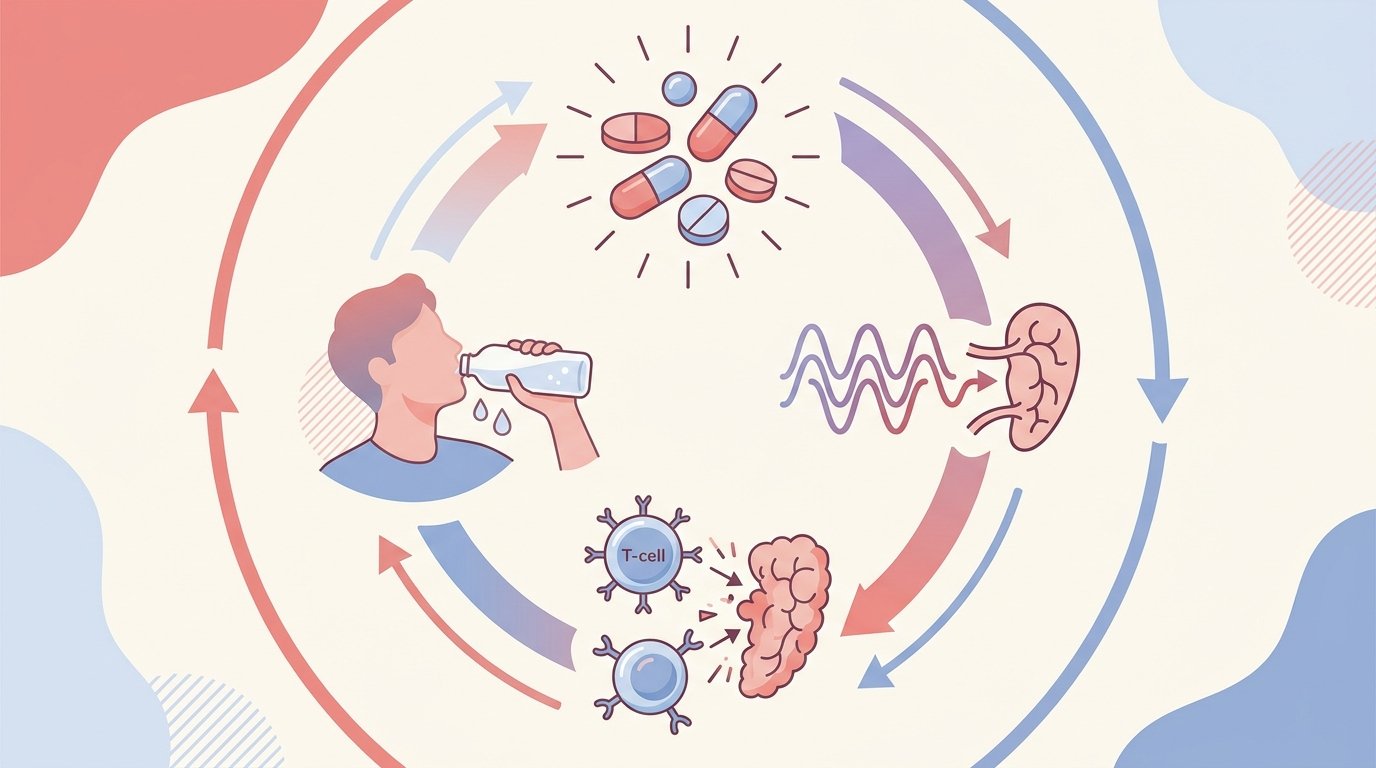
Everyday and temporary causes
The most frequent in summer: dehydration from heat, intense physical exercise, mouth breathing during sleep or a cold that forces breathing through the mouth. In these cases, dry mouth syndrome is mild and disappears as soon as the triggering factor is corrected. Even so, it is worth not underestimating xerostomia even when it is temporary, since even in its temporary form it can promote the appearance of cavities.
Medications: the most frequent cause of chronic xerostomia
Here lies the major blind spot that many people are unaware of. The most frequent cause of xerostomia in clinical practice is pharmacological: it is estimated that more than 500 commonly used drugs can produce dry mouth as a side effect. The most implicated groups are anticholinergics, tricyclic antidepressants and selective serotonin reuptake inhibitors, antihistamines, antihypertensives (diuretics, beta-blockers), anxiolytics and opioids. All of them can trigger dry mouth syndrome with greater or lesser intensity depending on the dose and duration of treatment.
The risk increases when several medications are taken at the same time. It is estimated that more than 500 commonly prescribed medications list dry mouth among their side effects, making the elderly population the most exposed group: one in three people over 60 years of age presents symptoms of dry mouth, a proportion that rises even further in individuals on multiple medications, according to data gathered by oral health specialists. In chronically medicated patients, the prevalence of xerostomia can reach 25–40%, according to a study published in Atención Primaria.
Important: never stop or modify a medication on your own. If the dryness began when starting a treatment or changing the dose, discuss it with your doctor; after evaluating the case, they may be able to adjust the schedule, review the amount administered or consider another alternative. In many cases it will not be possible to change the medication, but it will be possible to adopt measures to protect the mouth and relieve the discomfort of dry mouth.
Systemic diseases
Sjögren’s syndrome is an autoimmune disease that frequently affects the salivary and lacrimal glands, so it usually causes dryness of the mouth and eyes. Diseases such as diabetes, HIV/AIDS or Parkinson’s disease can also affect saliva production and cause dry mouth syndrome. In these cases, xerostomia is part of the clinical picture and requires a joint approach with the corresponding specialist.
Radiotherapy to the head and neck
Head and neck radiotherapy is the second most important cause and the one that produces the most severe and persistent xerostomia. In oncology patients, damage to the salivary glands can be irreversible, giving rise to a severe and difficult-to-treat dry mouth syndrome. Ionizing radiation can cause alterations in the glands whose degree and severity are directly proportional to the intensity and duration of exposure; the submandibular, sublingual and especially the parotid glands are more sensitive, and doses above 52 Gy cause severe glandular dysfunction. Faced with this situation, the dentist must evaluate on a case-by-case basis how to activate or supplement residual salivary function.
Diet and habits that affect saliva
What you eat and drink directly influences how much saliva you produce. Knowing which foods stimulate the glands and which inhibit them is one of the most accessible tools for managing xerostomia on a daily basis.
Foods that stimulate saliva production
- Crunchy fruits and vegetables: apple, raw carrot or celery require prolonged chewing, which mechanically activates the salivary glands.
- Citrus fruits in moderation: lemon and orange stimulate secretion via a reflex pathway (the sour taste triggers the glands), although in excess they can erode enamel already weakened by the lack of saliva.
- Water-rich foods: cucumber, watermelon, melon and broths contribute to mucosal hydration from within.
- Sugar-free gum or candy with xylitol: chewing activates the glands and xylitol also inhibits cariogenic bacteria.
Foods and habits that worsen dry mouth
- Caffeine: coffee, black tea and energy drinks have a diuretic effect and reduce overall hydration; limit consumption to 1–2 cups a day and always accompany them with water.
- Alcohol: dehydrates the oral mucosa and directly reduces salivary flow; mouthwashes containing alcohol also worsen xerostomia.
- Very spicy or very salty foods: they irritate the already dry mucosa and can intensify the burning sensation of the tongue.
- Dry or starchy foods (toast, crackers): they stick to the palate and make swallowing more difficult when the mouth is dry; if you eat them, always accompany them with liquid.
- Tobacco: reduces salivary flow and alters the composition of saliva, worsening both xerostomia and the risk of periodontal disease.
Three myths about dry mouth worth debunking
There are very widespread beliefs about xerostomia that lead to undertreating the problem or seeking solutions that do not work. Let us debunk the most common ones.
Myth 1: “Drinking more water solves it.” Water relieves dryness momentarily, but does not restore the function of the salivary glands. Saliva is not pure water: it contains mucins, enzymes, antibodies and minerals that water cannot replace. Drinking more is necessary but insufficient when the cause is pharmacological, autoimmune or due to glandular damage.
Myth 2: “It is normal to have a dry mouth as you get older.” Xerostomia should not be considered an exclusive symptom of old age or an inevitable process of aging. Although salivary function is usually well preserved in elderly people with good general health and no other health problems, xerostomia affects around 30% of those over 65, with the most frequent cause being secondary to the effects of medications. In other words, it is not age that dries the mouth, but the drugs that accumulate over the years.
Myth 3: “If it doesn’t hurt, it’s not serious.” Chronic xerostomia is silent at first: it does not hurt, but progressively destroys tooth enamel. Rampant caries—which advances quickly and affects multiple teeth at once—and oral candidiasis are two of the most common complications in patients with chronically reduced salivary flow. By the time pain appears, the damage is already done. Acting before it hurts is always more effective and less costly.
Consequences of not treating dry mouth
Untreated xerostomia is not just a nuisance: it can directly affect basic functions such as speaking, chewing or swallowing, and promote the appearance of cavities, oral infections, halitosis, taste alterations or persistent discomfort in the mucous membranes. Chronic dry mouth syndrome significantly deteriorates the quality of life of those who suffer from it. Rampant caries and oral candidiasis are two of the most common complications in patients with chronically reduced salivary flow. Sialometry (clinical measurement of salivary flow) makes it possible to quantify the problem and guide treatment.
Remedies and treatment of dry mouth syndrome
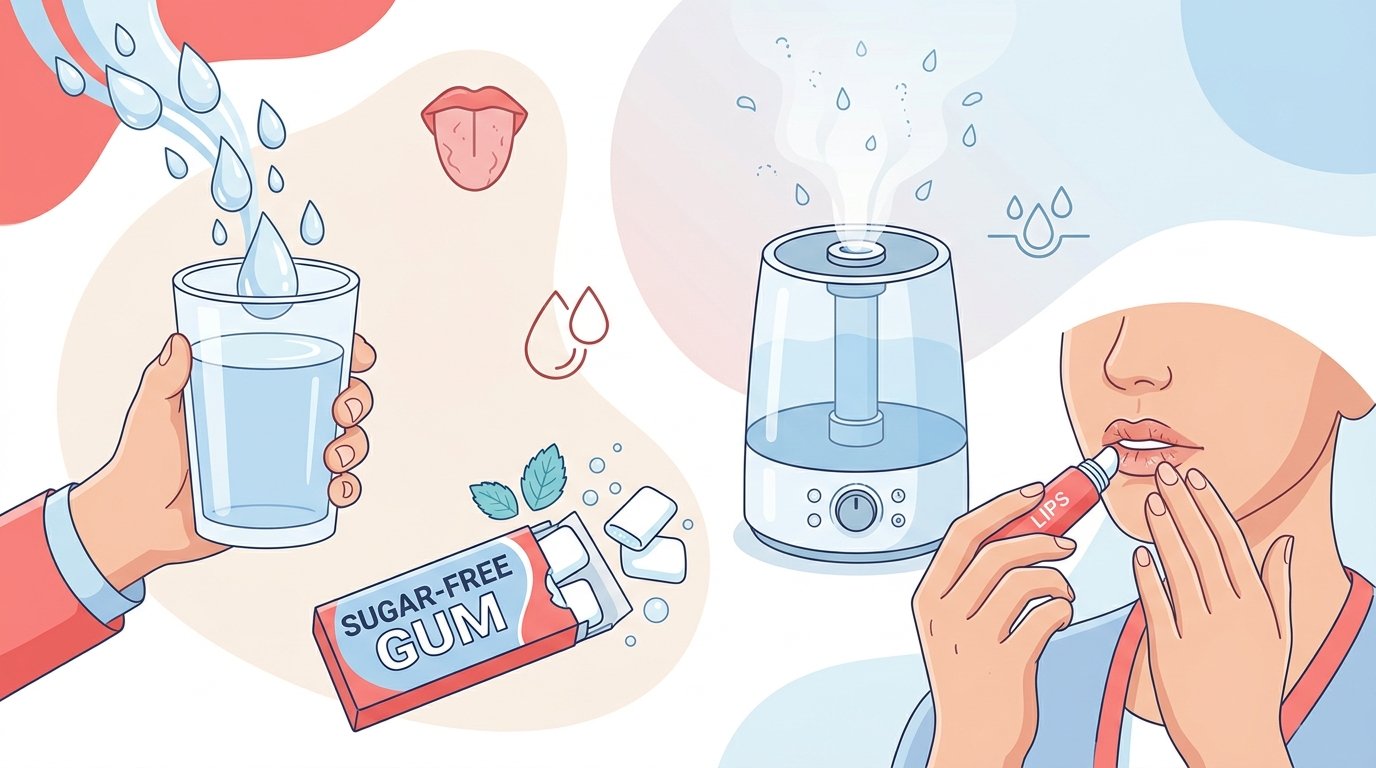
Measures within everyone's reach
- Constant hydration in small sips. Even if you are not thirsty, drinking liquids regularly delays or prevents the onset of dry mouth syndrome, especially in summer. Frequent sips work better than large glasses spaced far apart.
- Sugar-free gums and candies with xylitol. They promote the activation of the salivary glands through chewing and xylitol also inhibits cariogenic bacteria. Always choose sugar-free varieties to avoid increasing the risk of cavities.
- Rigorous oral hygiene. Brush two to three times a day and complement the routine with mouthwashes specifically for dry mouth based on xylitol, a substance with great moisturizing power. Avoid mouthwashes containing alcohol, which worsen dryness.
- Avoid tobacco and alcohol. Both dehydrate the oral mucosa and worsen the symptoms of xerostomia.
- Breathe through your nose. Sleeping with your mouth open dries out the oral cavity for hours and worsens dry mouth syndrome; if you have chronic congestion or suspect sleep apnea, consult your doctor.
- Humidifier in the bedroom. Especially useful if xerostomia is predominantly nocturnal: increasing ambient humidity reduces the evaporation of residual saliva during sleep.
Clinical treatments
When home remedies are not enough to control dry mouth syndrome, there are more specific clinical options:
- Saliva substitutes in the form of gel, spray or rinse. When choosing a product, look on the label for ingredients such as mucin, carboxymethylcellulose or xylitol: these are the ones that best replicate the viscosity and protective function of natural saliva. Gel lasts more hours than spray and is especially useful at night for those who suffer from nocturnal dry mouth.
- Sialogogues (salivary secretion stimulants): in some cases, medications can be prescribed to help stimulate saliva production, including pilocarpine and cevimeline, both approved for the treatment of xerostomia associated with Sjögren’s syndrome and radiotherapy.
- Frequent preventive fluoride treatments to slow the rampant caries associated with chronic xerostomia.
- Close periodontal monitoring to detect periodontal disease early, which advances more quickly without the protection of saliva.
When should you see a dentist?
Consult your dentist if dry mouth lasts more than two weeks, if it is accompanied by burning or sores in the oral mucosa, if you notice you are getting cavities more frequently than usual, or if you suspect that a medication you are taking may be causing dry mouth syndrome. Early detection allows action to be taken before complications arise: the time to treat dry mouth is before it hurts, not after.
In short, dry mouth syndrome can range from a one-off summer nuisance to a chronic condition with serious consequences for your oral health. Knowing its real causes—beyond thirst—and acting in time makes the difference between a healthy mouth and one that suffers in silence.
Frequently asked questions
Is dry mouth always a sign of a serious disease?
Not necessarily. In many cases dry mouth syndrome has mild and reversible causes: dehydration, occasional mouth breathing or a medication that can be adjusted. However, when xerostomia is chronic or accompanied by other symptoms (dry eyes, fatigue, multiple cavities), it may indicate a systemic disease such as Sjögren’s syndrome or diabetes. The prudent course is to consult a doctor if the dryness lasts more than two weeks.
What is the difference between xerostomia and hyposalivation?
Xerostomia is the subjective sensation of having a dry mouth, while hyposalivation is the objective and measurable reduction of salivary flow. They can coincide, but not always: some people feel their mouth is dry with normal saliva levels, and others with reduced flow do not perceive it. Sialometry (clinical measurement of flow) allows the dentist to distinguish between both situations and guide treatment.
Do saliva substitutes protect teeth the same way as real saliva?
Not entirely. Saliva substitutes relieve discomfort and protect the mucosa, but do not replicate all the functions of natural saliva, especially its remineralizing and antimicrobial capacity. For this reason, in patients with chronic xerostomia, the use of substitutes must be complemented with frequent preventive fluoride treatments and regular check-ups with the dentist.
Can dry mouth improve if I stop taking the medication causing it?
In many cases yes, salivary production recovers when the drug is stopped or changed. However, that decision always belongs to your doctor: never modify or interrupt a treatment on your own. In some patients it is not possible to change the medication, but it is possible to adopt oral protection measures that minimize damage while treatment continues.